Key Takeaways
Your brand is the full experience (not just the logo) and it must feel consistent online and offline.
Win local discovery first with Google Business Profile, reviews, and basic local SEO-this is your highest-ROI foundation.
Your website + online menu should convert fast on mobile, with great photos and clear paths to reserve/order.
Social media should build community (80/20 storytelling vs promos) to earn attention before selling.
Email + SMS drive repeat revenue when segmented and timed well, especially with strong welcome flows and behavior-based offers.
Measure what matters (orders, reservations, repeat visits, AOV, LTV) and improve in cycles-marketing only scales operational excellence
Running a restaurant today isn't just about great food anymore. In our hyper-connected world where customers discover dining options through Instagram stories and make reservations via Google searches, your marketing strategy can make or break your business. Whether you're opening your first location or looking to revitalize an established restaurant, this guide will walk you through proven strategies that actually work in 2026.
Let's be honest, the restaurant industry has completely transformed. Your potential customers are:
- Scrolling through TikTok food videos during their lunch break
- Checking Google reviews before making dinner plans
- Expecting seamless online ordering experiences
The old days of relying solely on word-of-mouth and location are gone. Today's successful restaurants master both the art of hospitality and the science of digital marketing.
Discovering Your Restaurant's Unique Story
1. Building Your Brand Identity That Actually Resonates
Think about your favorite restaurant for a moment. What comes to mind first? Is it just the food, or is it something deeper like the way you feel when you walk in, the stories the staff tell, the Instagram-worthy corner booth where you celebrated your anniversary? That's the brand identity at work.
Creating a memorable restaurant brand goes way beyond choosing a cool logo or picking trendy colors for your walls. Your brand is the complete emotional experience customers have with your restaurant, from the moment they discover you online to the way they talk about their meal with friends the next day. It's what makes someone choose your taco truck over the one parked next door, or why they drive across town for your pizza instead of ordering from the place down the street.
2. Finding Your Unique Selling Proposition (USP)
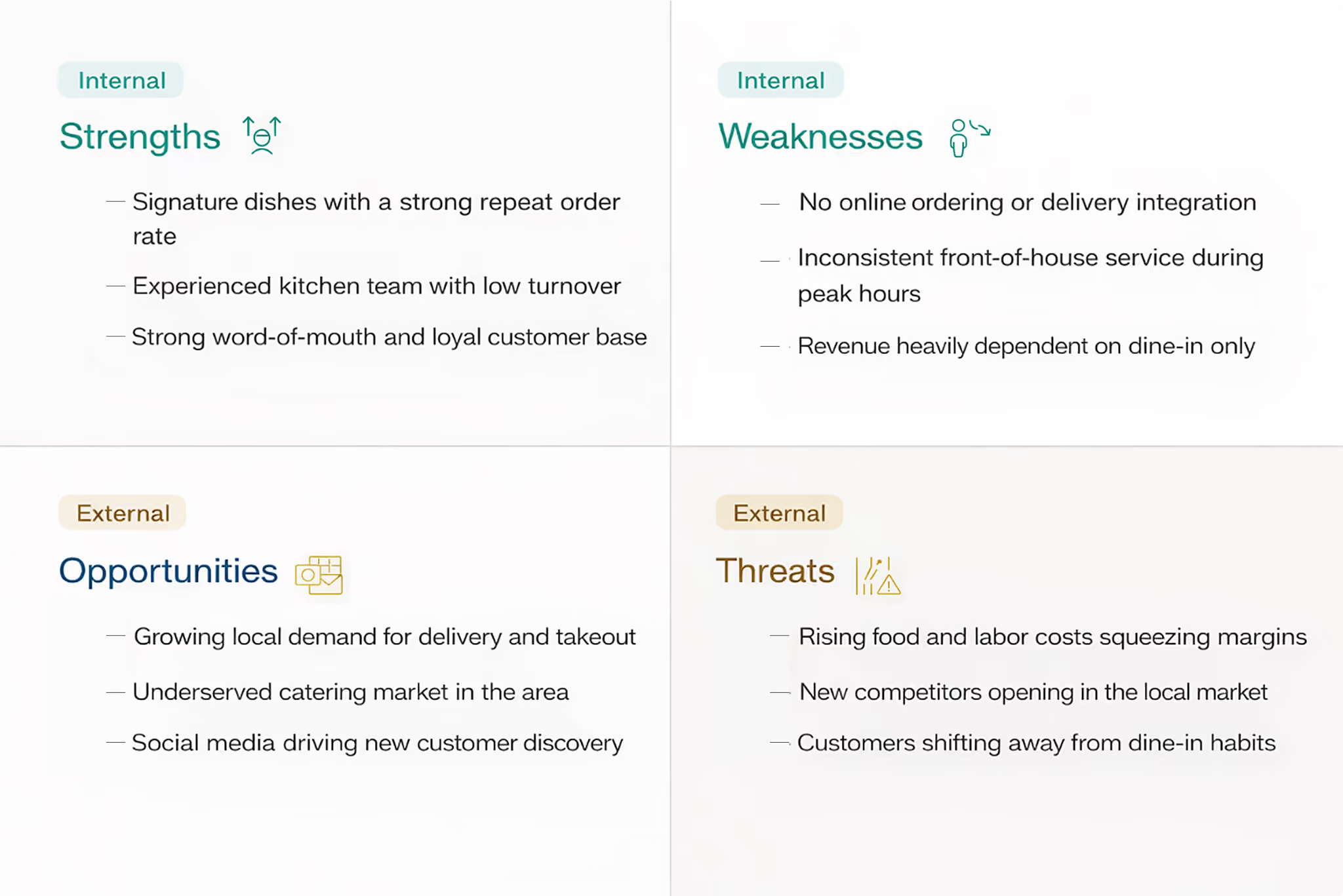
To find your unique selling proposition (USP), start by playing detective in your own neighborhood:
- Visit your competitors - yes, seriously. Eat at their restaurants, scroll through their social media, read their reviews
- Identify what they're doing well - and more importantly, what are they missing?
- Look for gaps in the market - Maybe every Italian restaurant in your area focuses on traditional recipes, but you could be the one bringing modern twists to classic dishes
- Consider different positioning - Perhaps everyone's competing on price, but you could win by emphasizing farm-to-table sourcing or exceptional service
3. Visual Identity and Consistency
Your visual identity needs to work everywhere - from your storefront sign to your Instagram posts to your delivery packaging. Consistency builds trust:
- When a customer sees your brand colors on a food delivery bag, they should immediately know it's from your restaurant
- When they scroll past your social media post, it should look unmistakably like you
- This visual consistency becomes a psychological shortcut that helps customers remember and choose your restaurant
4. Brand Voice Development
Your brand voice is equally important:
- Are you the friendly neighborhood spot that uses casual language and emoji?
- Or are you the sophisticated establishment that speaks in refined, elegant tones?
- Your voice should feel authentic to who you are while appealing to the customers you want to attract
- This voice guides everything from your menu descriptions to your email newsletters to how your staff answers the phone
5. Crafting Your Mission That Actually Matters
Your mission statement shouldn't be corporate jargon hanging on your office wall that nobody reads. It should be the North Star that guides every decision you make, from menu development to hiring to customer service training. A great mission statement tells your team and your customers exactly why your restaurant exists and what makes it worth caring about.
Mission Statement Examples:
- Chipotle's mission to serve 'Food with Integrity' - simple, memorable, and drives real business decisions about sourcing and preparation
- Local coffee shops often center their mission around creating community gathering spaces
- Your mission might emphasize: quality ingredients, exceptional service, cultural authenticity, environmental sustainability, or bringing families together over great food
Whatever you choose, make sure it's something you genuinely believe in and can consistently deliver on.
Building Your Digital Foundation for 2026
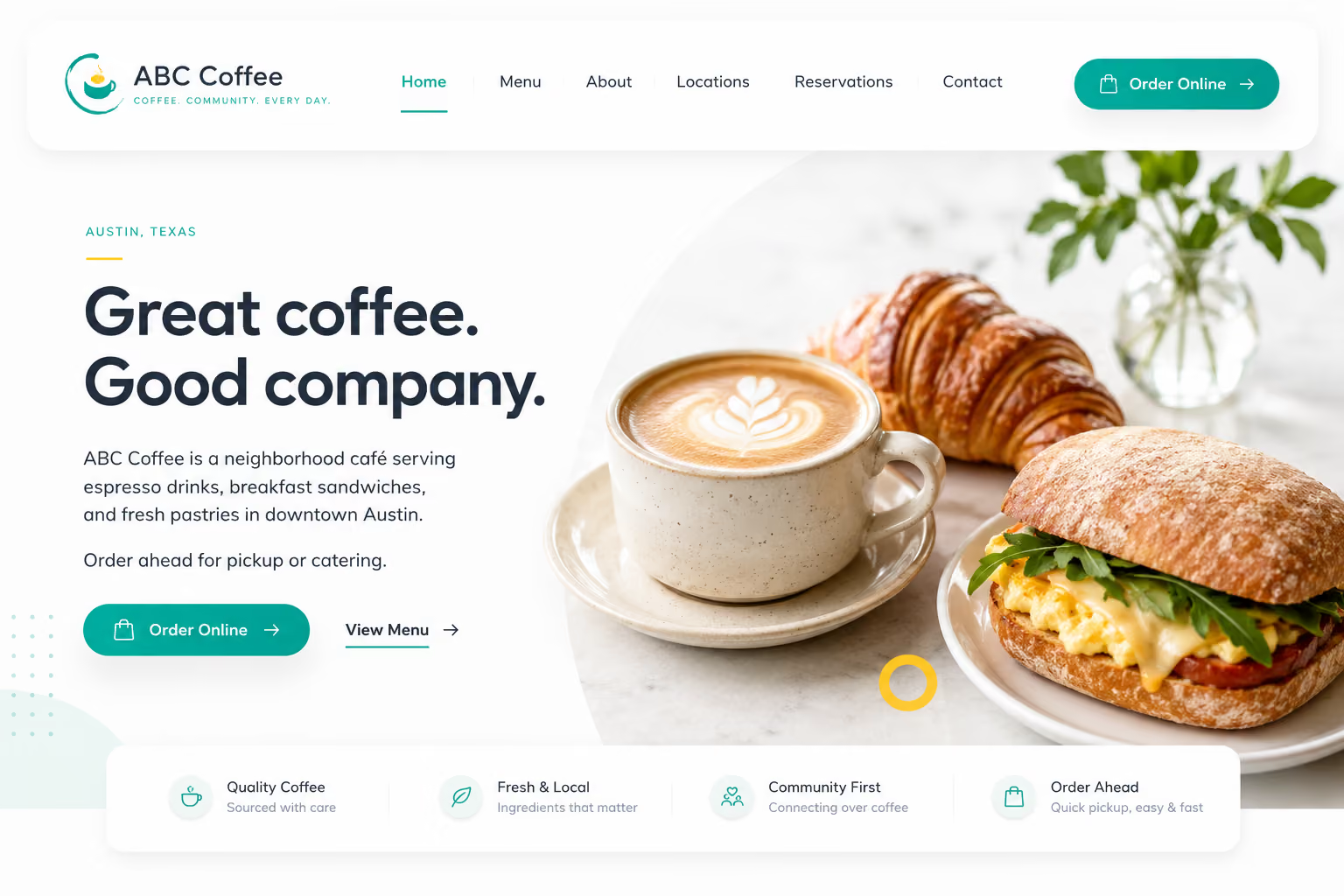
1. Creating a Website That Actually Converts Visitors to Customers
Your website is working 24/7, even when your restaurant is closed. It's answering questions, showcasing your food, and convincing people to make reservations or place orders. But here's the reality check: most restaurant websites are terrible. They're slow, hard to navigate on mobile, missing essential information, or buried so deep in Google search results that nobody finds them.
2. Essential Information Your Website Must Include
Your website needs to answer the five questions every potential customer has within seconds of landing on your homepage:
- What kind of food do you serve?
- Where are you located?
- When are you open?
- How much does it cost?
- How do I order or make a reservation?
If visitors can't find these answers quickly, they'll bounce to a competitor's site faster than you can say 'check, please.'
3. Photography Investment
Photography makes or breaks restaurant websites:
- Invest in professional food photography that makes people hungry just looking at it
- Show your dining room when it's full of happy customers
- Include pictures of your team in action
- Remember, people eat with their eyes first, and your website photos are often their first taste of your restaurant
- Poor photos suggest poor food quality, while mouth-watering images create cravings that drive reservations
4. Search Engine Optimization (SEO) Basics
Search engine optimization (SEO) might sound technical, but it's actually straightforward:
- When someone searches Google for 'best Italian restaurant near me' or 'pizza delivery in [your neighborhood],' you want your restaurant to appear in those results
- This happens when you naturally include relevant keywords throughout your website content
- Optimize your page titles and descriptions
- Ensure your site loads quickly on mobile devices
5. Mobile Optimization is Critical
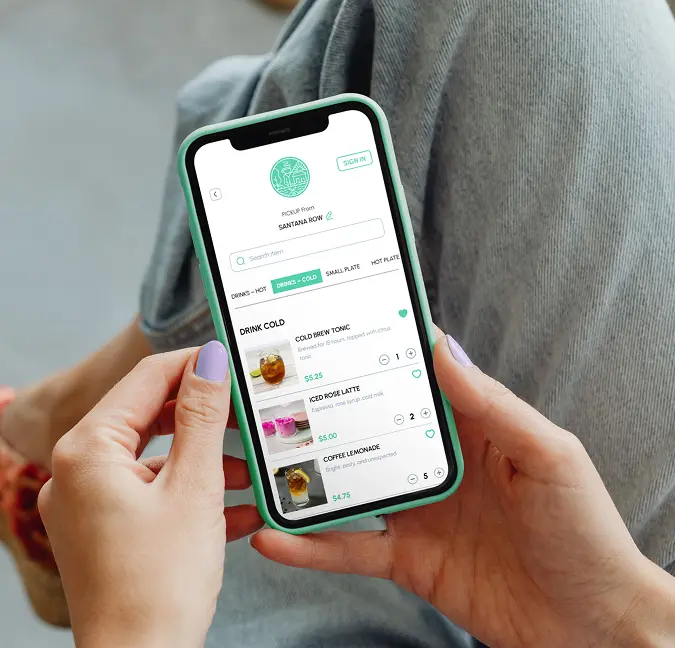
Over 70% of restaurant orders now happen on smartphones. If your website doesn't work perfectly on phones, you're literally turning away business:
- Your mobile site needs touch-friendly buttons
- Readable text without zooming
- A streamlined path from menu browsing to order completion
- Test your website on your own phone regularly
- Ask friends to try ordering from different devices
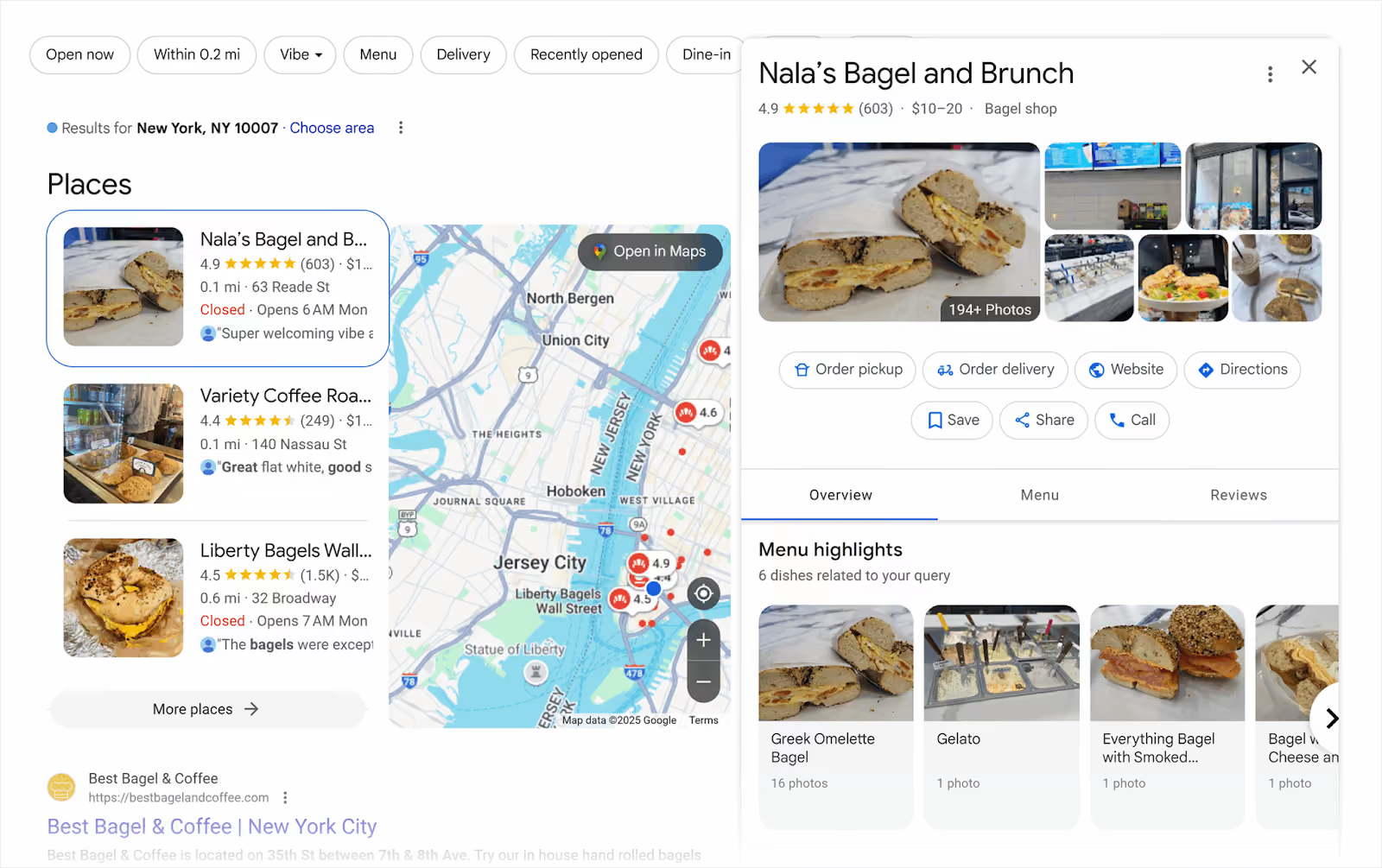
6. Mastering Google Business Profile and Local Search
Your Google Business Profile is probably the most important piece of free marketing available to restaurants, yet many owners barely pay attention to it. This is where you appear when someone searches for restaurants in your area, and it's often the first impression potential customers have of your business. A complete, optimized Google profile dramatically increases your visibility in local searches and gives customers confidence in choosing your restaurant.
7. Complete Profile Optimization
Fill out every field in your Google Business Profile completely and accurately:
- Full address, phone number, website link
- Business category and detailed description
- Hours (including holiday hours)
- High-quality photos of your food, dining space, and team regularly
- Fresh content - Google's algorithm favors businesses that actively maintain their profiles
8. Review Management Strategy
Reviews are the modern equivalent of word-of-mouth recommendations, and they directly impact your search visibility:
- Restaurants with more reviews and higher ratings rank higher in local search results
- Responding to reviews (both positive and negative) shows Google and potential customers that you care about feedback and actively manage your business
9. Handling Negative Reviews
When responding to negative reviews, resist the urge to get defensive:
- Acknowledge the customer's experience
- Apologize sincerely
- Explain any relevant context
- Offer a specific solution
A thoughtful response to a critical review can actually improve your reputation more than a dozen positive reviews, because it shows potential customers that you take feedback seriously and work to fix problems.
10. Optimizing Your Online Menu for Maximum Profit
Your online menu is accessed more frequently than any other marketing material you create, yet most restaurants treat it like an afterthought. They simply upload a PDF of their print menu and call it done. That's a missed opportunity to guide customer choices, increase order values, and highlight your most profitable items.
11. Online Menu Best Practices
Online menus need different organization than print menus:
- Group items logically
- Use high-quality photos for signature dishes
- Write descriptions that emphasize ingredients and preparation methods that justify your prices
Example: 'Grilled chicken sandwich' doesn't sound worth $16, but 'Free-range chicken breast grilled with herb butter, served on house-made brioche with arugula and heirloom tomatoes' tells a story that supports your pricing.
12. Menu Engineering Psychology
Menu engineering applies psychological principles to encourage customers to order high-margin items:
- Position your most profitable dishes prominently
- Use attractive photos and compelling descriptions for items you want to promote
- Create combo deals that increase average order values while simplifying decision-making for overwhelmed customers
13. Platform Economics Consideration
Consider the economics of your online ordering platform carefully:
- Some charge commission on each order
- Others charge flat monthly fees
- Understanding your order volume and average ticket size helps determine which model works better for your business
- Ensure your ordering system integrates with your POS system to prevent overselling items and maintain accurate inventory in real-time
Mastering Social Media That Actually Drives Business
1. Building a Social Media Strategy That Feels Authentic
Social media has evolved from a 'nice-to-have' to an absolute necessity for restaurants. Research shows 84% of diners want to see food and drink photos on restaurant social accounts. But here's the key insight most restaurants miss: successful restaurant social media marketing isn't about constant promotion. It's about building community and telling your story in ways that make people want to be part of your restaurant's world.
2. The 80/20 Content Rule
The magic formula for social media content is the 80/20 rule:
- 80% of your posts should focus on community, storytelling, and entertainment
- Only 20% directly promote sales or discounts
This approach builds an engaged audience that actually pays attention when you do share promotional content.
3. Community-Focused Content Ideas:
- Staff spotlights
- Behind-the-scenes kitchen moments
- Ingredient spotlights
- Customer features
- Fun facts about your cuisine
4. Platform Selection Strategy
Don't try to be everywhere at once. Choose 2-3 platforms where your target customers actually spend time, and do them well rather than spreading yourself thin:
- Instagram - remains the top platform for food discovery, especially with its visual focus and shopping features
- TikTok - drives viral discovery among younger audiences who love authentic, entertaining content
- Facebook - works well for community engagement and customer service, particularly with older demographics
5. Consistency Over Perfection
Consistency matters more than perfection:
- Posting 3-5 times per week is better than posting daily for two weeks, then disappearing for a month
- Create themed posting days to simplify content planning:
- Monday menu spotlights
- Wednesday customer features
- Friday behind-the-scenes content
- Sunday loyalty program reminders
- Stay flexible enough to capitalize on trending topics or spontaneous moments that generate genuine engagement
6. Instagram Stories and Reels Strategy
Instagram Stories and Reels deserve special attention because they dominate the platform's algorithm:
Stories are perfect for:
- Authentic, less polished content
- Quick kitchen tours
- Staff introductions
- Limited-time offers
- Polls asking followers to choose tomorrow's special
Reels (short videos up to 60 seconds):
- Get massive organic reach
- Show signature dishes being prepared
- Feature team members
- Participate in trending sounds
- Create quick tutorials related to your cuisine
7. Photography That Makes People Hungry
Professional food photography is an investment, not an expense. The difference between smartphone photos and professional shots is immediately obvious to customers, and it significantly influences whether they choose to dine at your restaurant. Food photography tells stories about your quality, care, and culinary identity. Poor photos suggest poor food, while stunning images create cravings that drive orders.
Essential Photography Angles
Learn the three essential angles for food photography:
- The overhead 90-degree shot - creates a graphic, modern look perfect for flat lay compositions with complementary props
- The 45-degree angle - mimics how diners actually see food at table level, providing the most natural perspective
- The 3/4 angle - creates depth and draws viewers into the composition
Capture your signature dishes from multiple angles to create variety across your social media content.
Lighting Techniques
Natural light produces the best food photography results:
- Photograph dishes near windows where natural light creates appealing shadows and highlights
- If natural light isn't available, invest in proper lighting equipment rather than relying on harsh overhead fluorescents or dim ambient lighting
- Warm lighting creates comfort and appetite appeal
- Cool lighting conveys sophistication but can make food look less appetizing
Composition Best Practices
Composition techniques like layering, framing, and including human elements make your photos more engaging:
- Layer foreground and background elements to create depth - maybe include a hand reaching for food, complementary ingredients, or elegant table settings
- Frame your main dish with props and background elements that provide context about your restaurant's aesthetic
- Include human elements like hands holding utensils or diners mid-bite adds authenticity that pure product shots lack
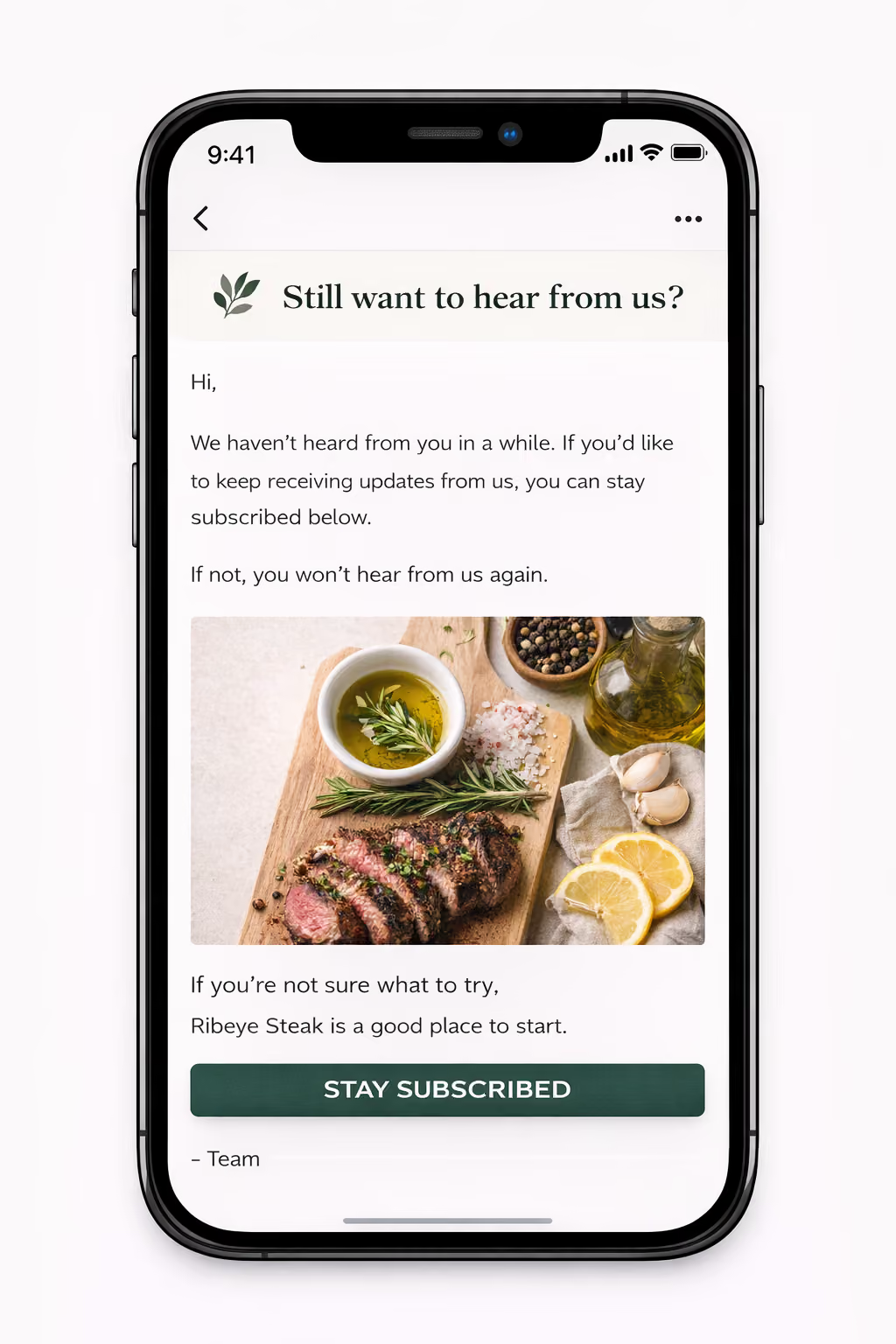
Email Marketing That Customers Actually Want to Receive
1. Building an Email List That Drives Revenue
Email marketing delivers exceptional ROI for restaurants, but only when done strategically. The secret isn't sending more emails - it's sending the right emails to the right customers at the right time. Your welcome email sequence is pure gold, achieving an incredible 91% open rate on average. This makes it your single most powerful email marketing opportunity.
2. Welcome Sequence Strategy
Your welcome sequence should deliver immediate value while telling your brand story:
- Include the promised signup incentive (like a discount code)
- Introduce your restaurant's story and values
- Highlight signature menu items with mouth-watering photos
- Share customer testimonials that build trust
This sequence sets expectations for future emails and begins building the relationship that drives repeat visits.
3. List Building Tactics
Build your email list by offering genuine value rather than just collecting addresses:
Effective Signup Strategies:
- Create compelling signup forms on your website with irresistible offers: 'Join our list and receive a complimentary appetizer on your next visit'
- Include QR codes on receipts, table tents, and takeout bags that direct customers to exclusive member benefits
- Train your staff to mention email signup perks during transactions - word-of-mouth promotion from your team converts better than any popup form
4. Timing Optimization
Understanding the importance of proper timing is crucial for email marketing success:
- The best time to send promotional newsletters varies by audience, but research suggests mid-morning and early evening generally perform best
- Test different send times with your specific audience to optimize open rates and engagement
5. Email Segmentation That Increases Engagement
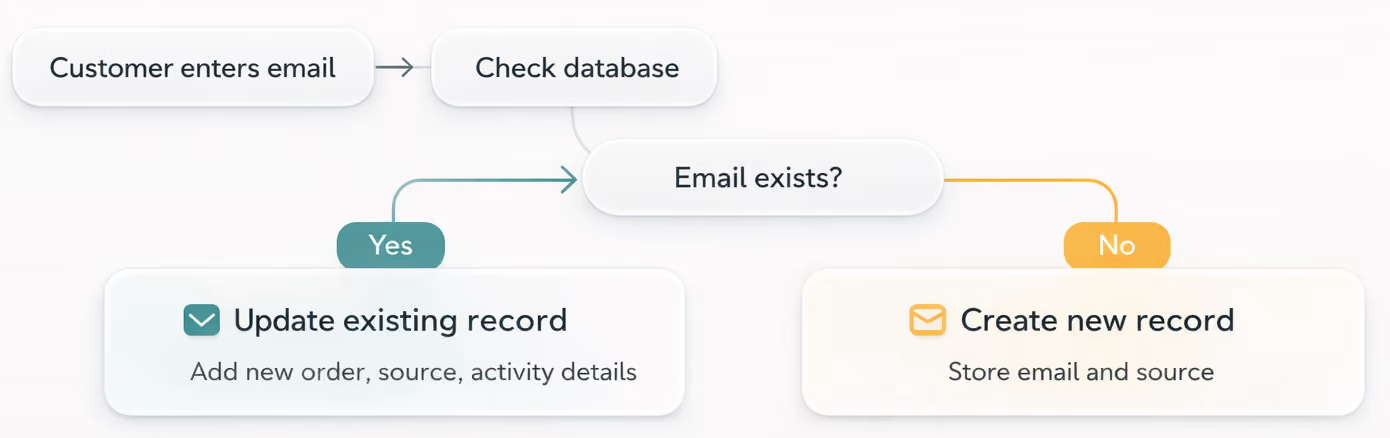
Segmentation transforms email marketing from a broadcast tool into personalized communication that dramatically improves engagement and conversion rates. Instead of sending the same message to everyone, divide your subscriber list into groups based on customer behavior, preferences, and characteristics. This allows you to send highly relevant messages that feel personally crafted for each segment.
Effective Segmentation Criteria:
- Visit frequency - first-time visitors vs. regulars
- Spending habits - budget-conscious vs. high-value customers
- Menu preferences - vegetarians, customers who order specific items frequently
- Life events - birthdays, anniversaries
A customer who orders delivery every Friday night receives different emails than someone who dines in for special occasions only.
6. Email Calendar Strategy
Create an email calendar that balances different types of content using a strategic rotation:
- Week one - seasonal menu highlights or limited-time specials
- Week two - loyalty program updates and exclusive member benefits
- Week three - educational content about ingredients or cooking techniques
- Week four - targeted promotions
This variety keeps subscribers engaged while preventing the perception that you only email to sell something.
For restaurants looking to maximize their email marketing effectiveness, exploring key elements for organizing effective email marketing can provide deeper insights into building campaigns that consistently deliver results and strengthen customer relationships.
Leveraging User-Generated Content for Authentic Marketing
1. Encouraging Customers to Become Your Brand Ambassadors
User-generated content (UGC) represents the most authentic and influential form of restaurant marketing available. When customers voluntarily share photos of your dishes, write enthusiastic reviews, or tag your location in their social media posts, they're providing social proof that influences hundreds of potential customers who trust peer recommendations far more than brand-created advertising.
2. UGC Impact Statistics
Research shows consumers find user-generated content 9.8 times more impactful than influencer content. Think about it from your own experience - when you're choosing a new restaurant, do you trust the perfectly staged photos on their Instagram account, or do you scroll through tagged photos from real customers to see what the food actually looks like? That honest customer content becomes exponentially more valuable than even the most expertly crafted promotional material your marketing team could produce.
3. Encouraging UGC Creation
Encouraging UGC requires removing friction and providing genuine incentives:
Make the desired action crystal clear with simple prompts:
- 'Tag us in your Instagram stories with #[YourRestaurantName] to enter our monthly drawing for a free appetizer'
- 'Show us your favorite dish and we'll feature you on our page
The most effective incentives balance:
- Recognition - featuring customers on your social media
- Tangible rewards - discounts, free menu items, exclusive event access
4. UGC Campaign Ideas
Create themed UGC campaigns that generate excitement and participation:
- 'Fan Photo Friday' - consistently repost customer photos, establishes expectation and encourages ongoing participation
- Seasonal campaigns like 'Fall Favorites' where customers share photos of limited-time menu items using branded hashtags
- Create both marketing content and social proof that drives awareness and orders for featured dishes
5. Multi-Channel UGC Distribution
Incorporate user-generated content throughout your broader marketing strategy to amplify its value:
- Repost customer photos on your restaurant's social media feeds
- Feature them prominently on your website
- Include them in email newsletters
- Create physical displays in your restaurant showcasing customer photos and reviews
This multi-channel approach extends the reach of authentic customer advocacy while signaling to customers that their content is valued and appreciated.
Advanced Marketing Tactics for Competitive Advantage
1. Influencer Marketing That Actually Delivers Results
The influencer marketing landscape has fundamentally shifted. Many restaurants have discovered that their most expensive celebrity influencer campaigns don't deliver the engagement or conversion rates they expected. The industry is experiencing a turning point where authenticity trumps celebrity status, with the most successful restaurants completely reimagining their approach to prioritize micro-influencers over macro-influencers or celebrities.
2. Micro-Influencer Advantages
Micro-influencers - individuals with 10,000 to 100,000 followers - offer superior benefits:
- Higher engagement rates compared to influencers with millions of followers
- More genuine connections with their audiences
- Targeted reach - a micro-influencer who exclusively features vegan restaurants reaches a highly targeted audience of plant-based diners
- Local credibility - a local food blogger who frequents neighborhood establishments builds credibility with community members seeking authentic recommendations
3. Building Authentic Partnerships
The most effective influencer partnerships move beyond transactional arrangements to building genuine relationships:
- Work with influencers who become authentic fans of your restaurant
- Continue visiting and posting about their experiences long after any formal partnership ends
- Evaluate potential partners on:
- Audience relevance (do their followers match your target demographic?)
- Engagement quality (do people actually interact with their content?)
- Brand value alignment
- Willingness to create authentic content rather than simply reposting provided images
4. Building Loyalty Programs That Keep Customers Coming Back
Restaurant loyalty programs have become table stakes in competitive markets, with nearly 71% of quick-service establishments and 68% of full-service restaurants now offering formal programs. But there's a huge difference between mediocre programs and exceptional ones. Restaurants with well-designed loyalty programs report 20% higher customer retention rates and members who visit 20% more frequently than non-members.
5. Beyond Basic Rewards
While 74% of customers initially join loyalty programs for discounts and free items, what keeps them engaged long-term is feeling valued and recognized:
- Personalization matters as much as the actual rewards
- Recognition and emotional connection drive long-term engagement
- Modern loyalty programs incorporate gamification elements that transform passive point accumulation into active engagement through challenges, achievement badges, and tiered status levels
6. Data-Driven Personalization
Sophisticated loyalty programs leverage customer data to deliver hyper-personalized rewards reflecting individual preferences and behaviors:
- A customer who regularly orders dessert receives free dessert offers
- Someone who consistently skips dessert might receive appetizer rewards instead
- Behavior-based automation triggers personalized communications at key moments:
- 'We miss you' messages to customers whose visit patterns change
- Birthday and anniversary greetings that feel personal
- Immediate recognition when customers reach status milestones
7. SMS Marketing for Immediate Customer Communication
Text message marketing represents one of the most underutilized yet incredibly effective customer communication channels available to restaurants. With an astonishing 98% open rate compared to email's average 20%, and 90% of texts read within three minutes of delivery, SMS creates unprecedented opportunity for time-sensitive communication.
8. Immediate Opportunity Leverage
SMS marketing enables rapid response to operational opportunities:
- Last-minute available tables due to cancellations
- Flash deals during slow periods
- Exclusive promotions for your most loyal customers
A simple message can help your restaurant shore up revenues during typically slow periods by alerting customers to immediate opportunities they can't get elsewhere.
9. Building SMS Subscribers
Growing a quality SMS subscriber list requires making signup easy while being transparent about communication expectations:
Signup Optimization:
- Include SMS signup options at checkout, on your website, in table tents, on receipts, and in Wi-Fi login screens
- Clear value propositions motivate initial subscription - 'Get 20% off your next order' or 'Exclusive SMS member deals'
- Always be transparent about frequency and content to prevent unsubscribes and comply with regulations
10. Strategic SMS Campaign Types
Strategic SMS campaigns capitalize on text messaging's immediacy:
- Flash deals announcing limited-time offers expiring today drive immediate traffic during slow periods
- Loyalty reminders showing customers they're close to earning rewards encourage completing another purchase
- Order confirmations branded with your restaurant name provide professional polish and reduce confusion about order sources
Strategic Planning and Marketing Optimization
1. Creating Your Restaurant Marketing Calendar
Strategic marketing success depends on planning rather than reactive, last-minute efforts. A comprehensive restaurant marketing calendar maps promotions, campaigns, and key dates across the entire year, helping restaurants plan what to promote, when to promote it, and which channels to utilize. This coordination ensures consistent messaging across channels while preventing conflicting promotions or resource conflicts.
2. Annual Planning Process
Effective marketing calendars begin with identifying key revenue-driving dates throughout the year:
- Major holidays like Valentine's Day and Mother's Day
- Seasonal transitions suggesting menu changes
- Local events creating dining opportunities
- Customer milestones like loyalty program anniversaries
For each major date, determine what campaign will drive interest:
- Seasonal menu launches
- Holiday gift card promotions
- Limited-time prix fixe menus
- Community event partnerships
3. Campaign Development Timelines
Build planning timelines into your calendar:
- Major promotional campaigns require 4-6 weeks advance planning for:
- Creative development
- Content creation
- Supplier coordination
- Staff training
- Document campaign objectives and specific KPIs before launching
- Allow data-driven evaluation afterward
Example: A Valentine's Day campaign might aim to increase average check value by 15% and drive 100 new email signups through promoted offers.
4. Internal Coordination
The calendar should coordinate internal requirements with public-facing campaigns:
- If launching a seasonal menu requires kitchen modifications, new suppliers, and staff training, these requirements should appear on the calendar with associated timelines
- Ensure everything aligns with the public launch date
- Prevent the common problem of announcing promotions before operations are ready to deliver them
5. Smart Budgeting for Restaurant Marketing
Restaurant marketing budgets vary significantly based on establishment size, growth stage, and competitive intensity. Understanding restaurant marketing budget allocation helps ensure you're investing appropriately without overspending or underinvesting in growth opportunities.
Budget Allocation Guidelines
- Established restaurants typically allocate 3-6% of annual revenue to marketing
- New restaurants or those in aggressive growth phases invest 10-30% of revenue in marketing activities
Digital Marketing Focus (60-70% of total marketing budget):
- 20-25% for social media marketing and advertising
- 10-15% for SEO
- 15-20% for pay-per-click advertising
- 5-10% for email marketing
Remaining 30-40% divides between:
- Online ordering systems
- Promotional spending
- Loyalty program administration
- Testing new strategies
6. Budget Flexibility Strategy
Budget flexibility allows restaurants to respond to market opportunities and performance data:
- Structure your budget with reserve funds (5-15%) specifically allocated to testing new marketing approaches
- Capitalize on unexpected opportunities - perhaps a viral food trend emerges that aligns perfectly with your menu, or an opportunity arises to partner with a popular influencer
- Budget flexibility lets you capitalize before these moments pass
7. Measuring Marketing ROI That Actually Matters
Understanding which marketing efforts drive actual revenue remains the critical distinction between effective and ineffective marketing. Too many restaurants measure vanity metrics - social media followers, email opens, website traffic - without connecting these metrics to meaningful business outcomes like reservations, orders, or customer lifetime value.
ROI Calculation Formula
The fundamental equation is: ROI = (Attributed Revenue - Marketing Spend) / Marketing Spend × 100
8. Channel-Specific Measurement Strategies
Channel-specific measurement strategies must match each channel's characteristics:
Social Media ROI:
- Track unique promo codes used by social followers
- UTM parameters measuring website traffic from social platforms
- Platform analytics showing click-through rates to reservations or ordering pages
Email ROI:
- Segmented sends with distinct offers tracking which subscriber segments convert at highest rates
Paid Advertising:
- Platforms provide detailed conversion tracking
- Show precisely how many visits, calls, reservations, or orders resulted from specific campaigns
9. Google Analytics Foundation
Google Analytics provides foundational infrastructure for understanding website performance and conversion patterns:
- Set up e-commerce tracking to measure online ordering revenue
- Configure goal tracking for reservations and contact form submissions
- Use UTM parameters in campaign links to attribute website traffic to specific marketing initiatives
The most sophisticated restaurants implement unified reporting dashboards consolidating data across POS systems, reservation platforms, email tools, social media, and paid advertising.
Community Integration and Event Marketing
1. Building Meaningful Community Partnerships
Effective community partnerships extend beyond superficial sponsorships to meaningful collaborations that integrate into your restaurant's brand story and values. The strongest partnerships align naturally with your restaurant's mission - a sustainability-focused restaurant partners with local farms or environmental organizations, while a family-oriented restaurant might collaborate with youth sports programs or schools. These aligned partnerships feel authentic rather than opportunistic.
2. Win-Win Partnership Examples
Successful community partnerships typically involve win-win collaborations providing value to both parties:
- A bakery donating treats to a school fundraiser gains brand exposure among parents while supporting education
- A restaurant hosting networking happy hours for local business associations fills typically slow periods while providing valuable community service
- The most strategic partnerships extend beyond one-time events to ongoing relationships creating repeated touchpoints and consistent brand presence
3. Customer Involvement Strategy
Involve customers in community efforts to transform them from passive observers into active participants in your restaurant's mission:
- Ask customers which causes matter most to them, then align community efforts with their passions
- Foster brand loyalty and encourage participation
- Feature quarterly community votes where customers choose which nonprofit receives monthly donation proceeds, creating investment in supporting that organization
4. Creating Events That Drive Revenue and Engagement
Private events and special experiences represent increasingly significant revenue drivers while creating opportunities for brand building and customer engagement. Event hosting converts slow periods into revenue opportunities - hosting wine tasting dinners on traditionally slow Tuesday evenings fills tables and attracts customers who might not otherwise visit. Beyond immediate revenue, events create memorable experiences that deepen emotional connections with your brand.
5. Diverse Event Concepts
Diverse event concepts appeal to different customer segments and occasions:
- Networking happy hours - attract business professionals seeking community connections
- Wine pairing dinners - appeal to sophisticated food and beverage enthusiasts
- Cooking classes - provide interactive experiences blending entertainment with education
- Pop-up dinners featuring visiting chefs create excitement and exclusivity
- Speed dating events, charity fundraisers, game nights, and comedy shows transform your restaurant into a community gathering place beyond typical dining occasions
6. Event Marketing Strategy
Event marketing requires dedicated effort separate from general restaurant marketing. Many owners mistakenly assume beautiful spaces automatically attract bookings without active promotion:
7. Effective Event Promotion:
- Share event space photos across social media
- Feature private events prominently on your website
- Include event details in email newsletters
- Train staff to mention capabilities during customer interactions
- Reach out to specific target audiences:
- Past clients
- Corporate planners
- Nonprofit organizations
- Wedding planners
Seasonal Marketing and Specialized Campaigns
1. Seasonal Menu Planning and Promotion
Seasonal menu changes create natural opportunities for marketing campaigns, content creation, and customer excitement while aligning offerings with ingredient availability and customer expectations. Seasonal menus work psychologically - customers expect different foods at different times of year, making seasonal offerings feel fresh and timely rather than stale. Operationally, seasonal menus reduce food costs by featuring ingredients at peak availability when prices drop and quality peaks.
For restaurants looking to maximize seasonal opportunities, there are specific strategies that work particularly well during peak holiday periods. Preparing for the holiday season requires advance planning and coordinated campaigns across all marketing channels to capture increased customer spending during these crucial revenue periods.
2. Seasonal Menu Strategy by Season
Effective seasonal planning begins months in advance with research into local growing seasons, ingredient availability, and customer preference patterns:
- Spring menus emphasize fresh greens celebrating renewal
- Summer features grilled items and cold preparations
- Fall highlights comfort foods using root vegetables
- Winter showcases hearty preparations and holiday flavors
Planning timelines require coordinating supplier relationships, testing recipes, training staff, and developing marketing materials 4-8 weeks before launch.
3. Seasonal Marketing Campaign Timeline
Seasonal menu marketing should begin weeks before launch through teaser campaigns building anticipation:
Pre-Launch (2-4 weeks before):
- Email campaigns preview items with enticing descriptions and photography
- Social media posts announce menus are 'coming soon'
- Pre-order campaigns offer exclusive early access to loyal customers
Launch Week:
- Coordinated campaigns across all channels simultaneously announcing availability
- Newsletters, social posts, paid advertising, and in-restaurant promotions
4. Black Friday and Holiday Promotions
The holiday shopping season presents unique opportunities for restaurants to capitalize on increased consumer spending and gift-giving behavior. Black Friday restaurant deals can significantly boost sales during typically slower periods while introducing new customers to your restaurant through attractive limited-time offers and gift card promotions.
5. Gift Card Promotion Strategies
Gift card promotions during the holiday season can drive immediate revenue while securing future visits:
- Bonus value offers like 'Buy a $100 gift card, get $20 free'
- Gift card packages combining dining experiences with branded merchandise
- These promotions generate cash flow during the current period while guaranteeing future revenue when recipients redeem their cards, often bringing additional guests who wouldn't have visited otherwise
6. Halloween Marketing Opportunities
Halloween offers unique opportunities for creative restaurant promotions that can significantly boost revenue during typically slower fall periods. Creative Halloween marketing strategies can include themed menu items, costume contests, special events, and social media campaigns that generate buzz and drive traffic during this fun, engaging holiday period.
- Themed menu items
- Costume contests
- Special events
- Social media campaigns that generate buzz and drive traffic during this fun, engaging holiday period
Technology Integration and Advanced Marketing Tools
1. Maximizing Technology for Marketing Efficiency
Modern restaurant marketing success increasingly depends on leveraging technology to create seamless customer experiences while maximizing operational efficiency. The right technology stack can automate repetitive marketing tasks, provide deeper customer insights, and create personalized experiences that would be impossible to manage manually.
2. Technology Stack Components
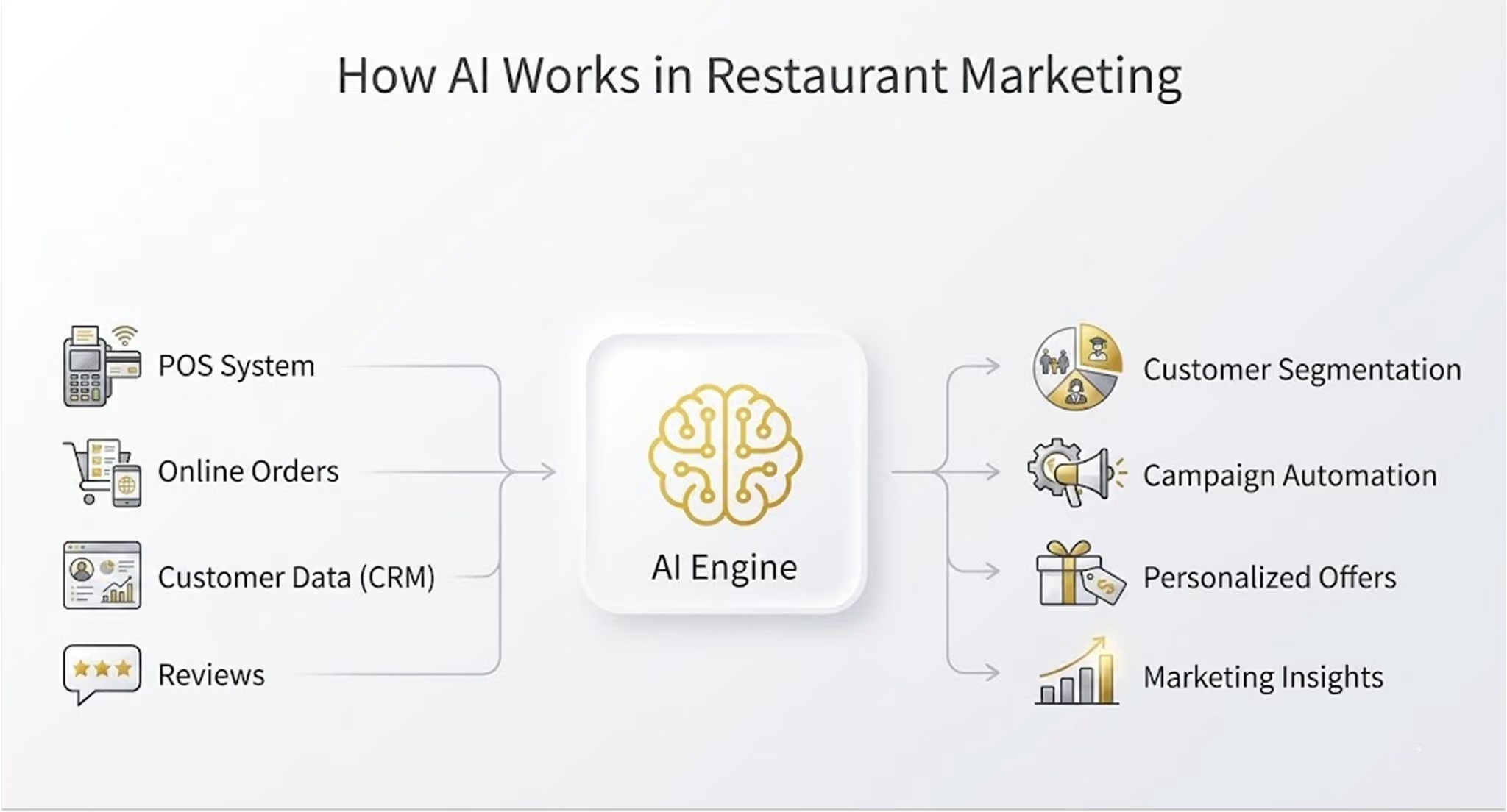
Understanding the various technology options available helps restaurants make informed decisions about their marketing infrastructure. Restaurant technology solutions range from basic POS integration to sophisticated customer relationship management systems that track dining preferences, automatically trigger personalized communications, and predict customer behavior patterns to optimize marketing campaigns.
- Basic POS integration
- Sophisticated customer relationship management systems that track dining preferences
- Automated personalized communications
- Predictive customer behavior patterns to optimize marketing campaigns
3. CRM Systems for Restaurants
Customer relationship management (CRM) systems specifically designed for restaurants can track:
- Dining history and preferences
- Special occasions
- Communication preferences
These systems automatically create highly personalized marketing campaigns:
- Birthday offers
- Anniversary reminders
- 'We miss you' messages to customers whose visit patterns change
- Personalized menu recommendations based on past orders
4. Online Ordering and Delivery Optimization
The shift toward online ordering and delivery has permanently changed restaurant operations and marketing strategies. Restaurants that master these channels while maintaining quality and profitability position themselves for sustainable growth, while those that treat them as afterthoughts struggle with thin margins and poor customer experiences.
5. Platform Strategy Decisions
Choosing the right approach for your restaurant's online presence is crucial for long-term success:
- Branded mobile ordering apps can provide greater control over customer relationships and reduce commission fees
- Third-party platforms offer broader reach but at the cost of customer data and higher fees
6. Commission Structure Analysis
Understanding commission structures and their impact on profitability helps restaurants make strategic decisions about platform participation:
- Some platforms charge 15-30% commission on each order, significantly impacting margins on items that already operate on thin profit margins
- Calculating the true cost of platform participation requires factoring in:
- Commission fees
- Marketing costs
- Packaging expenses
- Opportunity cost of kitchen capacity dedicated to delivery orders versus higher-margin dine-in customers
For restaurants committed to maximizing their online ordering potential, exploring comprehensive online food ordering software solutions can provide the foundation for building direct customer relationships while maintaining control over pricing, promotions, and customer data that drives long-term profitability.
Reputation Management and Crisis Communication
1. Proactive Online Reputation Management
Online reputation directly influences restaurant success, with strong positive reviews dramatically increasing customer bookings and orders while negative reviews deter potential customers. Restaurant reputation management represents the ongoing process of monitoring, analyzing, and responding to guest reviews across platforms like Google, Yelp, Facebook, OpenTable, and TripAdvisor. Effective reputation management requires centralizing review monitoring through dedicated platforms that consolidate reviews from multiple sources.
2. Positive Review Response Strategy
Responding thoughtfully to both positive and negative reviews demonstrates commitment to customer satisfaction while improving search engine rankings:
Positive review responses should:
- Thank customers
- Reinforce specific positive experiences they mentioned
- Encourage return visits
- Show potential customers that you value feedback and maintain active engagement with your community
Negative Review Management
Negative review responses require particular care and strategic thinking. The goal isn't just to address the unhappy customer - it's to show potential customers how you handle problems:
Effective negative review responses:
- Acknowledge the customer's experience without getting defensive
- Offer sincere apology
- Explain any relevant context
- Suggest specific remedies
A thoughtful response to criticism can actually improve your reputation more than positive reviews because it demonstrates genuine commitment to customer satisfaction.
3. Crisis Communication Strategies
Reputation crises - food safety incidents, employee misconduct, failed events, or operational problems - require rapid, transparent communication across all channels. Restaurants that respond quickly with clear information, acknowledge problems without deflecting blame, and communicate specific corrective actions minimize reputational damage. Ignoring problems or providing inadequate responses allows negative narratives to develop and spread unchecked.
4. Crisis Recovery Process
Successful crisis recovery involves:
- Comprehensive damage assessment
- Transparent communication about improvements
- Demonstrating ongoing commitment to preventing recurrence
This might include:
- Implementing new training programs
- Upgrading equipment
- Revising policies
- Bringing in external consultants to address systemic issues
The key is showing customers that you've taken meaningful action, not just apologized.
5. Building Crisis Resilience
Building resilience against future crises requires establishing strong operational foundations that prevent problems before they occur:
- Comprehensive staff training
- Regular equipment maintenance
- Clear policies and procedures
- Systems for quickly identifying and addressing issues before they escalate
Restaurants with strong operational foundations recover from crises more quickly because they can credibly demonstrate their commitment to quality and safety.
Customer Service Excellence as Marketing
1. Training Staff to Become Brand Ambassadors
Marketing effectiveness depends not only on attracting new customers but converting them into satisfied, loyal guests who return repeatedly and recommend your restaurant to others. Restaurant customer experience represents the frontline of brand experience, with every staff interaction either strengthening or weakening customer loyalty. Exceptional service training directly impacts marketing effectiveness - satisfied customers become willing promoters spreading positive word-of-mouth, while poorly served customers actively discourage friends from visiting.
2. Comprehensive Service Training Components
Comprehensive service training programs integrate:
Technical Skills:
- Taking orders accurately
- Understanding menu items
- Processing payments
Emotional Intelligence:
- Reading customer cues
- Responding to frustrations
- Adapting to diverse personalities
Personalization Skills:
- Remembering guest names and preferences
- Creating memorable experiences
Continuous Development Approach
Modern training moves beyond one-time onboarding to continuous development incorporating:
- Interactive workshops
- Role-playing exercises
- Mentorship programs
- Digital learning modules
Brand Story Integration
Staff members who understand your restaurant's brand story and values can authentically communicate what makes your establishment special:
- Train team members to share the stories behind signature dishes
- Explain sourcing practices
- Describe preparation methods
- Recommend items based on customer preferences
This knowledge transforms servers from order-takers into brand ambassadors who create connections that drive repeat visits and positive reviews.
3. Problem Resolution Empowerment
Empowering staff to resolve problems immediately prevents negative experiences from escalating into poor reviews or lost customers:
Establish clear guidelines about what staff can offer unhappy customers:
- Complimentary appetizers
- Desserts
- Discount on current bill
- Invitation to return for complimentary meal
When staff can immediately address concerns, problems become opportunities to demonstrate exceptional service that often creates more loyal customers than if the problem never occurred.
Data Analytics for Continuous Marketing Optimization
1. Leveraging Restaurant Data for Strategic Decisions
Modern restaurant operations generate enormous amounts of data - POS transactions, online ordering patterns, reservation systems activity, loyalty program engagement - yet many restaurants fail to leverage this information for strategic decision-making. Restaurant data analytics transforms raw data into actionable insights revealing customer behavior patterns, menu performance trends, operational efficiency opportunities, and marketing effectiveness metrics.
Understanding how to maximize ROI from your restaurant operations requires systematic analysis of performance across all revenue streams. Maximizing restaurant ROI involves analyzing which menu items, marketing channels, customer segments, and operational improvements deliver the highest returns on investment, allowing restaurants to focus resources on initiatives that drive sustainable profitability.
2. Key Analytics Focus Areas
Key analytics focus areas include:
Customer Behavior Insights:
- Who your customers are
- What they order
- When they visit
- How much they spend
Menu Optimization:
- Identifying high-performing and underperforming items
Sales Trend Analysis:
- Revealing seasonal patterns and growth opportunities
Operational Metrics:
- Table turnover rates
- Average ticket values
- Labor productivity
This data directly informs strategic decisions about menu changes, staffing levels, marketing investments, and operational improvements.
3. Advanced Pattern Recognition
Advanced analytics can identify patterns that aren't immediately obvious but significantly impact profitability:
Example discoveries:
- Data might reveal that customers who order appetizers are 40% more likely to order dessert, suggesting strategic opportunities to promote appetizer sales
- Analysis might show that customers who visit during happy hour return for full-price meals within two weeks, indicating that happy hour discounts actually drive long-term revenue rather than cannibalizing profits
4. Competitive Analysis and Market Positioning
Restaurant competitive analysis represents an ongoing process rather than one-time research, allowing continuous refinement of your competitive strategy as market conditions evolve. Effective competitive analysis examines both direct competitors offering similar cuisine and indirect competitors offering alternative dining solutions in your market. This research informs strategic decisions about menu positioning, pricing, marketing messaging, and operational innovations.
5. Competitive Intelligence Areas
Competitive intelligence should examine:
- Menu offerings and pricing strategies
- Online presence and digital marketing effectiveness
- Customer reviews revealing competitors' perceived strengths and weaknesses
- Operational tactics including technology adoption and event hosting
This information identifies legitimate opportunities for differentiation rather than simple copying.
6. Differentiation Strategy Examples
For example:
- If competitive analysis reveals multiple restaurants offering traditional versions of popular dishes, you might differentiate through innovative preparation methods, premium ingredients, or unique flavor profiles
- If competitors heavily promote loyalty programs with minimal rewards, you might position your program with more generous benefits
- If competitors neglect community engagement, you might emphasize local partnerships and community events as differentiating brand attributes
Building Your Restaurant Marketing Success Story
Restaurant marketing success in 2026 requires balancing multiple simultaneous initiatives - brand building, customer acquisition, loyalty development, operational excellence, and continuous refinement - into an integrated system generating consistent growth and sustainable profitability. The strategies outlined throughout this guide represent a comprehensive framework applicable across diverse restaurant types, from quick-service establishments to fine dining venues, casual family restaurants to specialized concepts.
1. Foundation of Marketing Excellence
The foundation of marketing excellence rests upon clear understanding of your unique brand identity, expressed through authentic voice and consistent visual presentation across all customer touchpoints. This strong foundation creates the psychological anchor that helps customers remember and choose your restaurant when making dining decisions. Building from this foundation, digital channels create discovery pathways, social media converts awareness into engagement, and loyalty programs transform first-time guests into lifetime customers.
For restaurants looking to organize comprehensive marketing campaigns that deliver measurable results, understanding effective restaurant marketing campaigns provides the framework for coordinating multiple marketing initiatives into cohesive strategies that amplify each other's effectiveness while maintaining consistent brand messaging across all channels.
2. Advanced Tactics Integration
Advanced tactics including influencer partnerships, community engagement, event hosting, and specialized campaigns create additional touchpoints that deepen emotional connections with your brand. Throughout all initiatives, data analytics provide an objective foundation for decision-making, allowing continuous optimization as you identify what drives actual revenue versus what underperforms expectations.
3. Operational Excellence Foundation
Perhaps most importantly, recognize that marketing effectiveness ultimately depends on operational excellence and genuine customer satisfaction. No marketing strategy can overcome poor food quality, inconsistent service, or unclean facilities. Instead, marketing amplifies operational excellence - when your restaurant delivers exceptional experiences, marketing ensures more people discover this excellence, while satisfied customers become ambassadors spreading positive word-of-mouth that creates sustainable growth substantially more cost-effective than paid advertising alone.
4. Implementation Prioritization Strategy
Implementation should begin with prioritizing initiatives that align with your restaurant's current situation and resources:
- Newly opened restaurants with limited budgets should prioritize local SEO optimization and email list building over expensive influencer partnerships
- Established restaurants with strong local reputation might invest in sophisticated loyalty program features or comprehensive event hosting capabilities
5. Sequential Implementation Approach:
- Rather than attempting everything simultaneously, thoughtfully sequence initiatives
- Allow each campaign to reach maturity before launching additional projects
- Establish measurement systems quantifying results
- Systematically optimize based on performance data
- Over time, this disciplined approach generates compounding returns as each successful initiative builds momentum toward sustainable growth and market leadership in your community
6. Future-Proofing Your Strategy
The restaurant industry will continue evolving rapidly, with new technologies, changing customer expectations, and shifting market dynamics creating both challenges and opportunities. Restaurants that master these fundamental marketing principles while remaining agile enough to adapt to changes position themselves not just to survive but to thrive in an increasingly competitive landscape.
Your marketing success story begins with understanding these principles and consistently executing them with authenticity, creativity, and genuine commitment to customer satisfaction.
Frequently Asked Questions
Restaurant marketing in 2026 starts with strong local visibility (Google Business Profile, reviews, local SEO), followed by a mobile-first website, optimized online menu, and consistent social media storytelling. Email, SMS, loyalty programs, and community-driven content then help turn first-time diners into repeat customers. The most effective approach connects digital marketing with in-restaurant experience and service quality.
The four core types of restaurant marketing are: 1.Digital marketing – SEO, Google Business Profile, social media, email, SMS, and online ordering. 2.Local marketing – community partnerships, events, and local search visibility. 3.Paid marketing – social ads, Google Ads, and limited influencer collaborations. 4.Relationship marketing – loyalty programs, personalized communication, and customer retention strategies. Successful restaurants combine all four instead of relying on just one channel.
The 30/30/30/10 rule is a simple way to balance effort: 30% brand & content (storytelling, social media, photography) 30% customer acquisition (SEO, Google Business Profile, paid ads) 30% retention & loyalty (email, SMS, rewards programs) 10% experimentation (new platforms, events, influencer tests) This mirrors the guide’s emphasis on balancing growth, loyalty, and innovation.
A practical restaurant marketing strategy follows these seven steps: Define your brand identity and unique selling proposition (USP) Understand your target customers and local competition Build a strong digital foundation (website, SEO, Google profile) Choose the right channels (social, email, SMS, events) Create consistent, authentic content Launch campaigns with clear goals and timelines Measure results and optimize based on revenue impact These steps help avoid reactive, one-off promotions.
Google Business Profile is one of the highest-ROI marketing tools for restaurants. It directly affects local search visibility, customer trust, and decision-making through reviews, photos, and accurate business information. Many customers decide where to eat before even visiting a restaurant’s website.
Yes-when used correctly. Social media works best for restaurants when it builds community and brand affinity first, then promotes offers selectively. Following the 80/20 rule (80% storytelling, 20% promotion) leads to higher engagement, stronger recall, and better conversion when customers are ready to dine or order.


.gif)


.jpg)