

Key Takeaways
- Calculate ROI regularly to track where your money is going and what’s paying off.
- Use ROI calculator to understand where you stand.
- Engineer your menu to promote profitable dishes and reduce waste.
- Switch from third-party ordering to direct channels to retain more margin and reduce commissions.
- Use sales data to optimize staffing and automate marketing.
- A platform like RestoLabs can centralize it all, from ordering to analytics to loyalty.
ROI isn’t just a finance term. It’s the clearest indicator of whether your restaurant is thriving or barely breaking even. Every dollar you spend on staffing, food, tech, or marketing should come back stronger. But in reality, restaurants lose money in places they don’t even notice: rising food costs, third-party commissions, abandoned orders, underused staff hours.
This guide will show you how to calculate your ROI, spot those hidden leaks, and use powerful strategies to turn every investment into measurable growth. Whether you’re a single-location café or a fast-growing chain, it’s time to make every dollar count.
What Is Restaurant ROI (and How to Actually Use It)?
Restaurant ROI (Return on Investment) measures how much profit you make for every rupee spent. Here’s the formula:
ROI % = (Final Revenue - Initial Investment) / Initial Investment x 100
Let’s say you spent ₹10,000 running a weekend promotion and saw ₹15,000 in additional profit.
Your ROI is:
(₹15,000 - ₹10,000) / ₹10,000 × 100 = 50%
A positive ROI means your investment is working. But the real goal is to keep increasing this ratio across marketing, menu, staffing, and technology investments.
Proven Strategies to Boost Restaurant ROI
Factors like COGS, menu planning, budgeting, and pricing strategy affect restaurant ROI. We'll examine seven actionable strategies that consider these factors and ways to optimize them.
1. Optimize Your Menu to Maximize Profits
Running a restaurant means walking a tightrope between food quality and cost control. Order too much, and you waste stock. Order too little, and you're out of customer favorites. And with rising ingredient prices, even small mistakes cut deep into your margins.
So how do you strike the perfect balance?
Start with data-driven menu planning. The most profitable menus don’t just look good, they’re built on smart insights. Here's how:
- Survey your customers to find out what they really want
- Use feedback forms to identify go-to dishes and underperformers
- Watch social media to spot trends and preferences early
- Then, tweak your menu to reflect what your guests crave — and what makes you money.
💡 Menu engineering alone can increase sales by up to 15%.
Some quick wins:
- Position bestsellers in the “golden triangle” — the center or top-right of your menu, where the eyes go first.
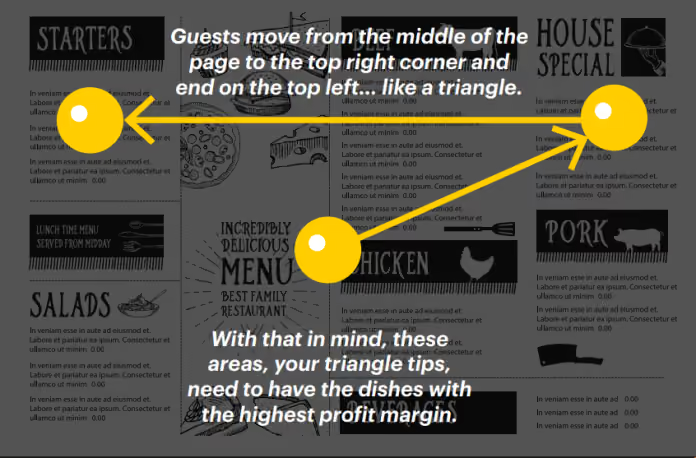
- Highlight high-margin hits with subtle markers like stars or borders.
- Shrink oversized portions that customers don’t finish, and reinvest in presentation. Less waste, same satisfaction.
- Even small design choices, like color highlights or simplified layouts, can nudge faster decisions and bigger orders.
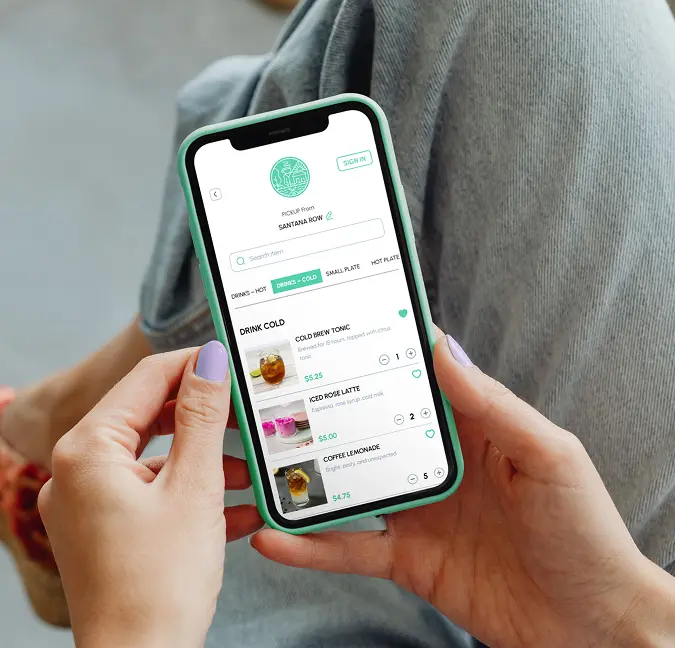
With RestoLabs, you can design your digital menu to be both conversion-optimized and customer-friendly, Book a Demo. Easily showcase top dishes, test changes, and update pricing in real time.
And remember: menu engineering is just the start. Operational efficiency is your secret weapon. Starbucks proved this with its “Back to Starbucks” revamp — cutting 30% of its menu, speeding up service, and leaning into bestsellers. Wait times dropped, and profitability surged.
🎯 Pro Tip: Platforms like RestoLabs help you spot what’s selling (and what’s not). Use that data to shape a menu your customers love — and that keeps your margins healthy.
2. Staff Smarter with Sales-Driven Scheduling
When you’re short on staff, two strategies can make all the difference: cross-training and data-backed scheduling. Cross-training gives your team the flexibility to handle multiple roles during peak hours. But the real game-changer is using past sales data to predict busy periods and schedule accordingly, so you’re not scrambling on high-traffic days like Fridays.
RestoLabs makes this easy:
- Its order throttle feature automatically adjusts online order volume based on real-time kitchen capacity.
- If your team’s juggling 25 orders, new customers see a realistic wait time — instead of getting frustrated.
- You can even pause orders when things get hectic, then auto-resume when the kitchen clears up.
RestoLabs helps you analyze past data to staff smarter, so you're one step ahead!
3. Cut Costs with Energy-Efficient Upgrades
Restaurants consume 5–10x more energy per square foot than other commercial spaces, and that adds up fast. If you’re not optimizing energy use, you're burning through dollars.
Switching to ENERGY STAR® kitchen appliances isn’t just eco-friendly, it’s profitable. Regular maintenance, turning off idle equipment, and fixing small energy leaks can slash your utility bills month after month.
But don’t stop at the kitchen:
- Use bi-level lighting to reduce excess illumination
- Install daylight sensors to automate lighting
- Change air filters monthly to avoid airflow issues that waste energy
Worried about upfront costs? Many regions offer grants and rebates — like SRP’s $300K in incentives or PACE covering up to 80% for small restaurants. Smarter energy = lower bills + a greener footprint. It’s a win-win.
4. Upsell Smart. Cross-Sell Better.
Want to grow revenue without more foot traffic? Upselling and cross-selling are your low-hanging fruit, and Olive Garden proved it.
Their Never-Ending Pasta Bowl didn’t just fill plates, it boosted same-store sales by 2%, the brand’s first positive quarter in a year. Why? It tapped into customer psychology: unlimited value at a fixed price = more visits, more add-ons like drinks and desserts, and higher overall ticket sizes.
Here’s how to bring that success to your restaurant:
- Train staff to recommend smart pairings — like a glass of wine with a steak or fries with a burger.
- Use direct online ordering to automate upsells — RestoLabs can suggest relevant add-ons based on customer behavior without feeling pushy.
- Run strategic promos — bundle items, offer limited-time combos, or reward add-ons with small discounts.
When done right, upselling doesn’t feel like a sales pitch; it feels like more value for the guest. And that’s what keeps them coming back.
5. Turn One-Time Guests into Regulars
Loyalty programs aren’t just about rewards; they’re about building habits. Top restaurant chains know this: offer value, track behavior, and make customers feel recognized.
Drift Coffee Kitchen nailed it with a simple point-based system: customers earn rewards for every dollar spent, driving repeat visits and higher spend. You can do the same and go a step further with personalized perks.
With RestoLabs, you can:
- Offer point-based rewards
- Add free add-ons for frequent orders
- Send exclusive coupons based on order history
Make loyalty feel personal and customers will keep coming back for more.
6. Use Customer Data to Power Smarter Marketing
Sometimes, all it takes is a timely nudge — a limited-time offer or a special deal — to turn a one-time visitor into a loyal customer. But to do that effectively, you need one thing: access to the right customer data.
With RestoLabs, you have full visibility into customer behavior, from order frequency and favorite dishes to peak ordering times, allowing you to:
- Send targeted emails to welcome new customers or re-engage inactive ones
- Identify buying patterns and time your campaigns for maximum impact
- Tailor promotions based on individual preferences to drive repeat orders
💡 Great Wraps, a U.S.-based QSR, used these insights to refine their outreach — and within a year, catering grew to 20% of total sales.
Customer contact details gathered through your direct ordering system can be seamlessly exported and integrated with your existing email or SMS marketing tools — enabling you to deliver consistent, personalized communication that keeps your restaurant top of mind and encourages repeat visits.
Take Control of Your Profits with RestoLabs
Maximizing ROI isn’t just about cutting costs, it’s about driving smarter, higher-yielding growth. RestoLabs helps you do both.
With a streamlined, commission-free online ordering system, you gain full control over your margins, customer experience, and revenue. From intelligent menu tools to seamless integrations, RestoLabs equips your restaurant to perform at its peak:
- Commission-free ordering to keep more of every sale
- Menu optimization to spotlight bestsellers and increase ticket sizes
- Built-in upsell & cross-sell prompts that drive more value per order
- Order throttling to match demand with real-time kitchen capacity
- Customer insights & loyalty tools to boost engagement and repeat visits
- POS & payment integrations for smooth, connected operations
Digitize your workflow. Own your customer data. Reduce your reliance on third parties. Ready to take charge of your restaurant's ROI? Book a demo with RestoLabs today!

Sakthi Vignesh is a product and technology leader specializing in scalable solutions for the hospitality industry. As the force behind Restolabs, he focuses on building robust, user-centric platforms that help restaurants streamline operations and grow efficiently. With deep expertise in technology, product strategy, and system architecture, he drives innovation at the intersection of business and tech.
Frequently Asked Questions
A healthy ROI for restaurants typically falls between 15% and 25% annually—this means the business is efficiently managing costs, driving consistent sales, and possibly using tools like direct online ordering to avoid third-party fees. The industry average hovers around 10–11%. An ROI below 5% is considered poor and may signal operational inefficiencies, high commission payouts, or weak customer retention strategies.c
Restaurant ROI (Return on Investment) measures how efficiently your business turns expenses into profit. It helps you understand if your spending—on ingredients, staff, marketing, or tech—is delivering strong returns. A healthy ROI signals sustainable, profitable operations.
Use the formula: ROI = (Total Revenue – Total Expenses) / Total Expenses × 100 Include all major costs: food, labor, rent, utilities, delivery commissions, tech, and marketing. Our ROI Calculator makes it easy.
Third-party platforms take up to 30% commission per order. Switching to a direct ordering system like RestoLabs helps restaurants save that margin, keep more profits, and own the customer relationship, driving long-term value.
Absolutely. Menu engineering helps you highlight high-margin dishes and streamline your offerings. RestoLabs shows you what’s selling, what’s not, and lets you test and optimize easily to boost profitability.
Common profit leaks include: High third-party delivery fees | Over-ordering inventory | Poor staff scheduling | Abandoned online carts | Unused customer data. RestoLabs helps plug these leaks with analytics, smart order throttling, loyalty tools, and integrated payments.



.jpg)
.jpg)
.jpg)




.webp)

.svg)
.webp)