
Key Takeaways
Well-designed restaurant loyalty programs increase repeat visits, boost customer engagement, and can significantly improve profitability by raising retention and average order value.
Frequent diners and repeat online customers are your strongest advocates. Rewarding them consistently builds emotional loyalty and long-term brand preference.
Using customer data to deliver targeted offers, upsells, and exclusive rewards leads to higher cart values and stronger repeat behavior compared to generic discounts.
High costs, complex rules, and unclear value propositions can discourage participation and erode margins. Simplicity and clarity are critical for adoption.
With loyalty programs becoming standard, success depends on aligning rewards with your brand values and offering experiences or perks that truly stand out to your audience.
Restaurant loyalty programs are designed to reward customers for their repeat visits and encourage higher spending. They drive customer engagement, boost repeat business, and increase restaurant profitability. Here are key insights on developing a successful rewards program for your restaurant. Implementing reward program for restaurants successfully is an expensive and time-consuming project. But if you don't include this in your restaurant marketing strategy, you might lose your business to competitors who do.
How Do You Reward Your Best Customers?
Your most loyal customers order from you regularly, dine at your restaurant frequently, and recommend your food to others. They are your strongest brand advocates. So, how do you make them feel valued? As Howard Schultz, former CEO of Starbucks, once said, "If people believe they share values with a company, they will stay loyal to the brand."
Studies show that engaged customers visit their favorite restaurants 56% more each month. Many restaurant owners implement loyalty programs to encourage repeat visits. These programs typically allow customers to earn points for each purchase, which they can redeem for discounts or rewards. Personalizing your program based on your business’s capacity ensures mutual benefits for both you and your customers.
However, implementing a rewards program successfully requires careful planning, investment, and effort. Without a well-structured strategy, you may lose business to competitors with more effective programs.
Let’s explore the pros and cons of restaurant loyalty programs to determine if they align with your business goals.
Pros of Restaurant Loyalty Programs
1. Customers Feel Appreciated
When customers feel valued, they are more likely to remain loyal. Retaining customers and giving them reasons to continue dining with you is essential for long-term profitability. Research shows that increasing customer retention by just 5% can boost profits by 25% to 95%. Delivering a consistently positive customer experience alongside meaningful rewards gives customers even more reasons to choose your restaurant over competitors.
2. Higher Cart Value
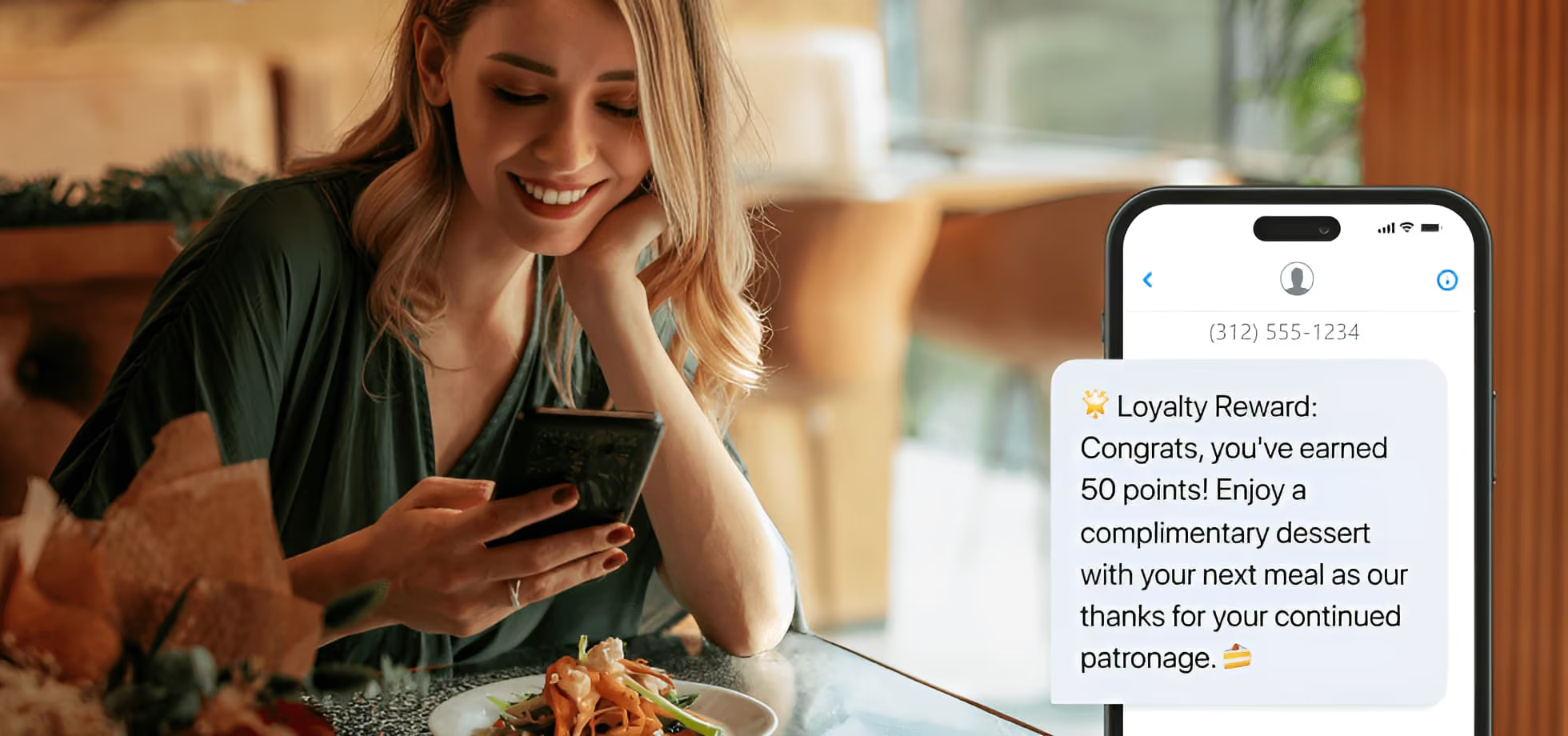
Loyalty programs use customer data to drive upselling and cross-selling. Customers often add extra items to their orders to maximize program benefits. 77% of digital consumers are willing to pay a premium to participate in a loyalty program with valuable perks.
For instance, Domino’s suggests adding Garlic Bread and Soft Drinks at checkout for a discounted price, increasing the overall order value. Such targeted promotions lead to higher revenue and better customer satisfaction.
3. Enables Targeted Promotions
Once a customer signs up for your loyalty program, their data is stored in your system. This allows you to profile customers based on their preferences and buying habits, enabling personalized promotions. Effective customer segmentation ensures that high-value customers receive exclusive offers, driving repeat business.
4. Enhances Brand Visibility
Loyalty programs offer strong branding opportunities. Branded loyalty cards, exclusive member perks, and special promotions help differentiate your restaurant from competitors. You can also engage customers by offering fun incentives, such as a “Wall of Fame” feature for customers with 50 purchases.
Additionally, promoting your loyalty program on social media and email newsletters encourages user-generated content, expanding your brand’s reach.
Cons of Restaurant Loyalty Programs
1. High Implementation Costs
Developing a successful loyalty program can be expensive. Offering significant discounts or too many free products may hurt your bottom line. Additionally, software providers or third-party administrators may charge fees to manage the program. Conducting thorough research is essential to create a balanced, cost-effective program that increases repeat purchases without significant losses.
2. Complexity Can Lead to Confusion
Designing a loyalty program requires clarity and simplicity. If customers find the program too complicated, they may disengage. A Statista study found that 34% of Millennials avoid loyalty programs due to lengthy enrollment processes.
To ensure success, your program should be easy to understand, transparent, and truly rewarding. Once customers adapt to the system, you can gradually introduce advanced features.
3. Market Saturation
With numerous loyalty programs available both online and offline, many appear similar in terms of structure, discounts, and benefits. To stand out, your loyalty program must be unique and aligned with your brand identity. Simply offering discounts may not be enough—consider exclusive perks that resonate with your audience.
Final Thoughts
Understanding the pros and cons of restaurant loyalty programs helps in developing an effective strategy that benefits both your business and your customers. With the increasing adoption of customer loyalty apps, standing out requires strategic differentiation and a clear value proposition.
A well-designed loyalty program, backed by thorough research and a solid execution plan, can become one of the most powerful tools for customer retention and brand growth. Before launching your program, ensure that it aligns with your brand’s values and provides real value to your customers.
Building Long-Term Customer Loyalty: The Path Forward
Restaurant loyalty programs have evolved from nice-to-have perks to essential business infrastructure. With loyalty traffic doubling since 2019 and now representing nearly 40% of all restaurant visits, the question isn't whether to implement a loyalty program, but how quickly you can launch one that reflects your brand and drives measurable results.
The most successful programs share three critical elements: simplicity in structure, personalization in offers, and consistency across all customer touchpoints. Your most valuable customers-those worth up to 6 times more than average patrons—are actively seeking restaurants that recognize and reward their loyalty.
Ready to transform your customer retention strategy? Restolabs' restaurant loyalty software provides the tools you need to create, manage, and optimize a program that drives repeat business without complex implementation. Book a free demo today to see how our restaurant online ordering system with integrated loyalty features can help you build lasting customer relationships and increase your bottom line.
Start Taking Orders Today
No Hidden Fees. Impeccable Support Request a Demo or Start Free Trial
💡You Might Also Like
👉 Marketing Tactics for Business
👉 How To Set Up A QR Code Ordering System For Your Restaurant Menu?
👉 Should you get a Branded Mobile Ordering App for your Restaurant?

Team Restolabs is a group of hospitality tech experts, strategists, and innovators dedicated to helping restaurants thrive in the digital age. With deep expertise in branding, growth, product development, and restaurant technology, we provide insights on scaling, streamlining operations, and enhancing customer experience.
Frequently Asked Questions
Absolutely. 81% of consumers say they would join a loyalty program if available, regardless of restaurant size. Independent restaurants often see excellent results with simpler program structures like visit-based or basic points-based systems. The key advantage for smaller restaurants is the ability to offer personalized, local experiences that larger chains can't match. Many independent restaurants use third-party platforms like Restolabs' loyalty software to reduce setup complexity while still delivering a professional loyalty experience.
There's no one-size-fits-all solution. The best program aligns with your business model, customer behavior, and operational capacity. Points-based programs work well for most restaurants because they're flexible and easy to understand. Tiered programs excel at driving incremental spending, while subscription models suit high-frequency, premium destinations. For detailed guidance on choosing the right approach, check out our comprehensive restaurant loyalty program guide.
Strategic reward selection is crucial for protecting margins. Focus on offering high-margin items (coffee, desserts, appetizers) instead of discounting entire entrees. Loyalty members spend 9% more per transaction on average, which often offsets reward costs. Additionally, set achievable but not overly generous redemption thresholds. For more insights on balancing rewards and profitability, explore our article on loyalty program mistakes restaurants should avoid.



.jpg)
.jpg)
.jpg)




.webp)

.svg)
.webp)