
%2520(1).jpeg)
Key Takeaways
- Revenue Impact: Loyalty program members visit 20% more frequently, spend 20% more per visit, and generate 12-18% incremental annual revenue
- Program Structure: Choose from points-based, tiered, visit-based, or subscription models based on your restaurant type and customer base
- Technology Integration: Seamless POS integration and mobile accessibility are critical success factors
- Personalization: 72% of customers expect personalized experiences; use data to customize offers based on preferences
- Redemption Balance: Quick-win small rewards maintain engagement while premium rewards motivate high-value customers
- Data Collection: Loyalty programs provide actionable customer insights for menu optimization and targeted marketing
- Success Measurement: Track redemption rates, customer lifetime value, and program-attributed revenue to optimize performance
- Omnichannel Experience: Ensure consistent loyalty recognition across in-store, online, and third-party ordering channels
Restaurant loyalty programs have moved from simple punch cards to digital systems that rely on data analytics and artificial intelligence to turn occasional diners into steady customers.
This guide explains how well-designed loyalty programs can help restaurant owners increase repeat visits and strengthen their position in the current market.
What Are Restaurant Loyalty Programs?
Restaurant loyalty programs are structured initiatives that reward returning customers with incentives, point-based systems, or special access. These programs give people a reason to choose your restaurant consistently instead of looking elsewhere.
Over time, loyalty programs in this industry have shifted from basic mechanical tools to digital platforms with far more capability. Punch cards introduced the core idea, but those older methods could not capture useful customer information or personalize offers, and they had no way to keep people engaged once they left the restaurant.
Modern loyalty programs operate in an environment where customer expectations are much higher. People no longer see these programs as simple discount channels. They want experiences that feel tailored to their preferences and acknowledge their ongoing support.
Because of this shift, restaurants now build programs with multiple layers such as game-style elements, special access to select items or events, experiential perks, or options tied to social good. These additions help create a deeper connection that goes beyond collecting points.
The Evolving Role of Loyalty Programs in Restaurant Operations
Loyalty programs are no longer limited to marketing. They now support daily operations and financial planning for many restaurants. The information gathered through these programs gives operators a clear view of customer habits, menu preferences, popular items, and buying patterns across different times of day and throughout the year.
This information allows restaurants to:
- Refine menu choices based on what customers enjoy
- Adjust pricing in ways that support stronger revenue
- Plan inventory with greater accuracy
- Direct marketing efforts toward guests who bring the most long-term value
- Maintain ongoing contact with customers through targeted communication
The restaurant industry has reached a point where having a loyalty program is close to an expectation. Studies show that 67 percent of restaurants now run some form of loyalty initiative, meaning that not having one can put a business at a disadvantage.
Additionally, 81 percent of consumers say they would join a loyalty program if their preferred restaurant offered it. This shows that many businesses still have an opportunity to meet existing demand.
Key Benefits of Loyalty Rewards Programs for Restaurants
Loyalty programs deliver financial, operational, and customer-focused advantages that strengthen a restaurant’s long-term performance.
Strengthen Customer Retention
The restaurant industry typically maintains a customer retention rate of about 55 percent, which falls behind sectors like media that keep roughly 84 percent. Loyalty programs help address this gap by creating meaningful reasons for customers to return rather than shift to competing options.
Key Statistics:
- 48 percent of adults and 58 percent of Gen Z adults say they are less inclined to try a new restaurant because they choose to stay with places where they already participate in a loyalty initiative
- This creates a strong barrier against customer loss
Lifetime Value Impact:
- Customer lifetime value, which reflects the total revenue generated over the course of a guest's relationship with a restaurant, rises notably among loyalty participants
- Industry reports show that members often generate far higher lifetime value than occasional visitors, with some analyses indicating increases ranging from 18 to 24 percent
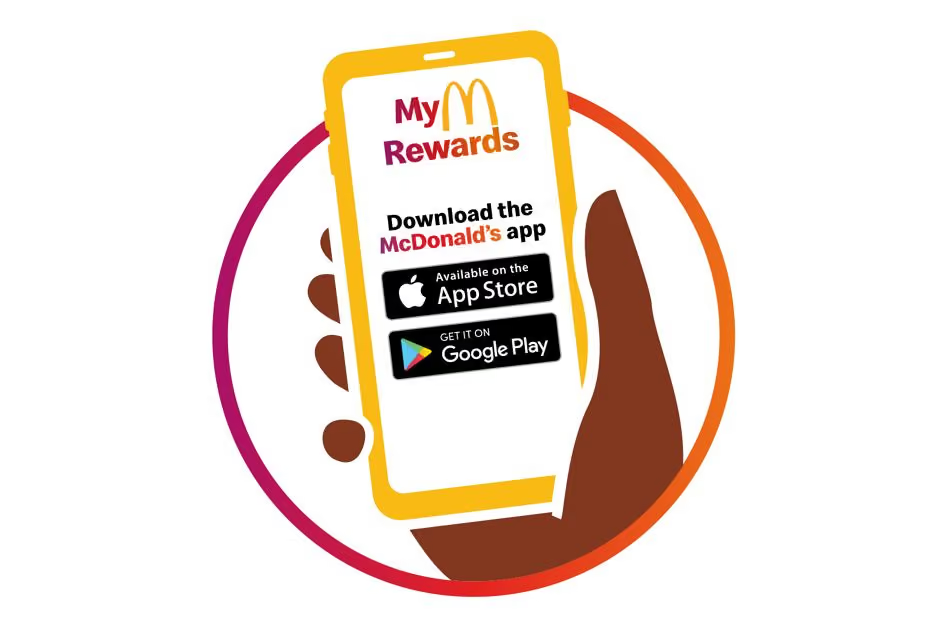
McDonald's has reported that its MyMcDonald's Rewards initiative reduced churn by 10 percent among active members. Additional internal studies show a 15 percent increase in customer retention across regions in Europe and the Asia-Pacific following the program’s rollout.
Increase Revenue and Improve Engagement
The financial impact of loyalty programs remains one of the strongest reasons restaurants continue to invest in them. Studies show that loyalty members spend noticeably more than non-members over similar time periods.
Members visit restaurants about 20 percent more often and spend roughly 20 percent more during each visit. Combined, this leads to annual revenue growth in the range of 12 to 18 percent.
Several factors drive this rise in spending:
- Reward psychology: The structure encourages customers to reach spending levels that unlock earned perks.
- Personalized marketing: These programs support targeted outreach shaped around items and occasions that matter to each customer.
- Increased check sizes: Members spend around 5 percent more during each visit than non-members.
- Impulse purchases: Guests are more willing to add items when they see those choices as helping them earn rewards faster.
Beyond the financial lift, loyalty programs reshape customer engagement. They create ongoing points of contact that extend past the dining experience, giving restaurants steady interaction with customers between visits.
Data shows that 47 percent of loyalty members use their accounts several times each month, and 32 percent engage with them multiple times per week. This level of ongoing interaction is far stronger than what most restaurants can achieve through standard marketing alone.
Data Collection and Marketing Intelligence
Loyalty programs operate as data systems that give restaurants a clear view of customer behavior, preferences, and buying patterns. Each transaction completed through a loyalty program produces information such as:
- Menu item preferences and rising choices
- Dining patterns tied to specific times of day
- Sensitivity to pricing and overall spending habits
- Reactions to targeted promotional offers
- Opportunities for more accurate customer grouping
This growing pool of information shifts restaurant decision-making away from guesswork and toward evidence-based planning. Studies show that tailored marketing messages built on this data can raise conversion rates and customer lifetime value by 18 to 24 percent compared with broad, untargeted outreach.
Top Restaurant Loyalty Programs to Inspire You
These examples show how leading brands use loyalty strategy, technology, and customer insights to strengthen participation and long-term guest relationships.
1. Starbucks Rewards
Program Structure and Success Factors
Starbucks Rewards is one of the strongest examples of a loyalty program that delivers steady engagement at a massive scale. With more than 30.4 million members in the United States, the program now contributes roughly 57 percent of the company’s total revenue, showing just how powerful a well-designed system can be.
Key strengths include:
- A layered structure that encourages members to move toward higher levels of activity
- A star-earning model that gives frequent customers meaningful value for every purchase
- Tailored recommendations based on individual purchase habits
- A mobile-first experience that makes earning and redeeming straightforward
- A direct communication channel for product launches and limited-time offers
2. Chipotle Rewards
Gamification and Engagement Innovation
Chipotle Rewards shows how creative mechanics can raise participation and keep customers active. The brand realized that its early version required too much spending before members received anything meaningful, so they introduced the Rewards Exchange, which made earning feel faster and far more satisfying.
Members can now redeem:
- Free tortilla chips at 250 points
- Guacamole at 400 points
- Beverages at 600 points
Chipotle added playful elements to deepen involvement, including "Race to Rewards Exchange," a retro-style game available only to members (one time contest held in 2021).
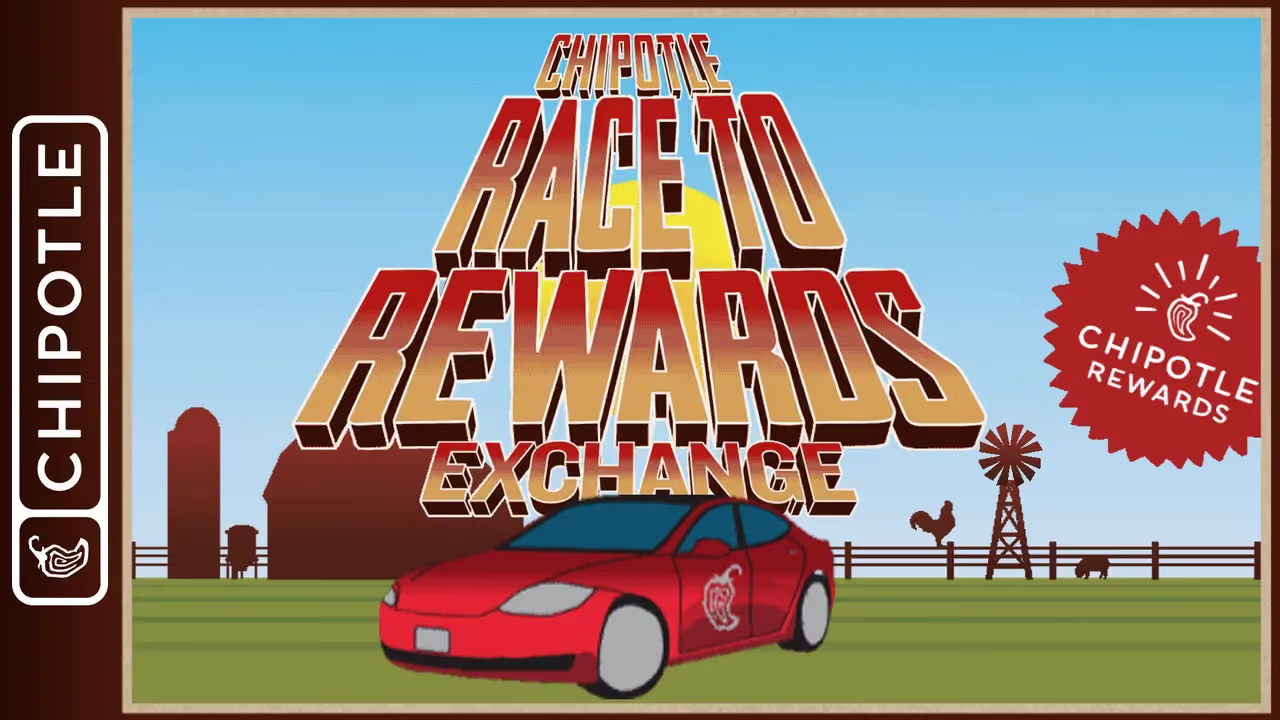
The impact was strong:
- 36 million minutes of gameplay
- 71,000 new signups in the first 48 hours
- 15,000 social posts tied to the launch
The brand later introduced Rewards Extras, where members earn additional points by completing specific actions such as trying new menu items or visiting during designated periods.
3. MyPanera Rewards
Personalization Without Point Tracking
MyPanera Rewards takes a different path compared with typical points-based systems. Instead of counting points, it uses visit habits and behavior patterns to determine reward value and timing.
The program launched in 2010 and has continued to evolve as customer expectations change. It saw a major surge during the COVID-19 period, growing to 40 million members. More than half of all Panera orders now come from loyalty members.
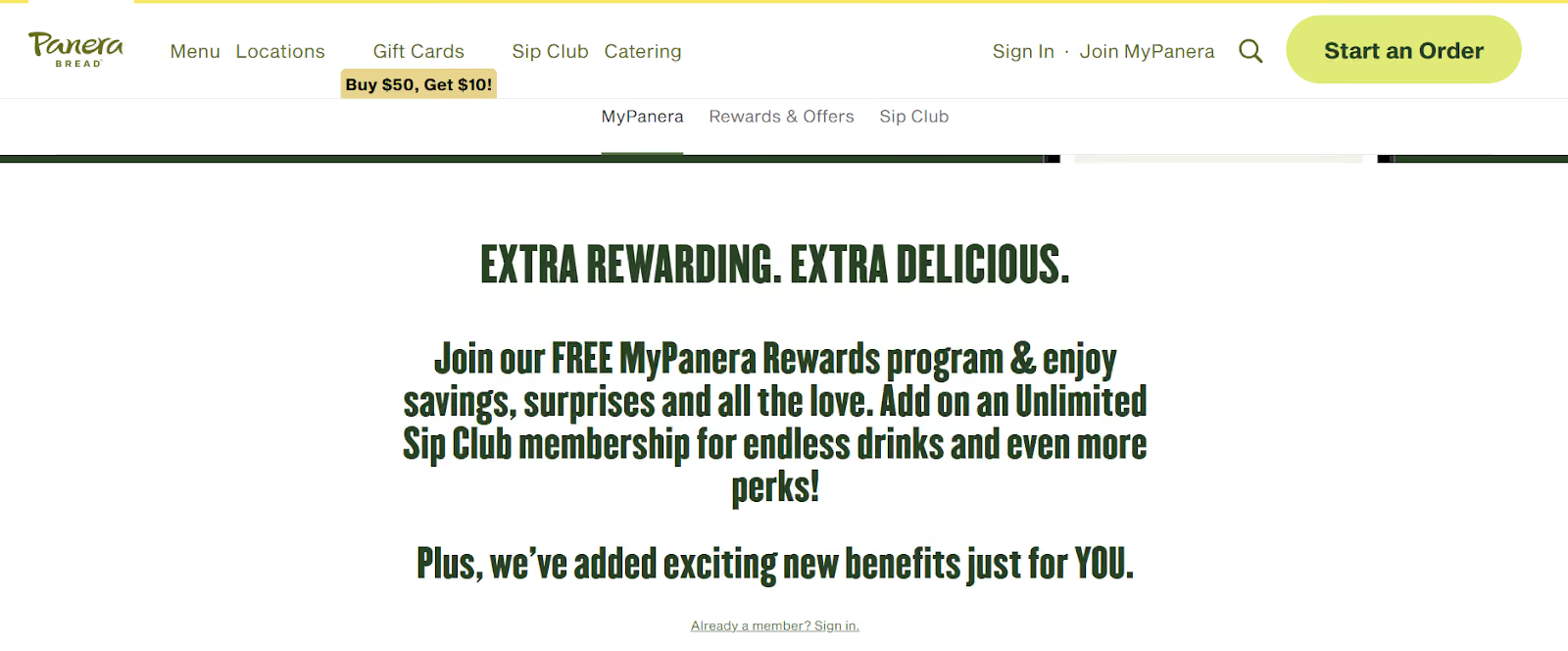
Core aspects of the MyPanera model include:
- No point management, removing the effort customers often dislike
- Visit-based recognition, where rewards reflect demonstrated activity
- Tailored offers, such as free bagels, discounted menu items, and coffee-related benefits
- A sharing feature that lets members pass select rewards to friends
- Subscription tie-ins, including the Sip Club at $11.99 monthly, which helps create predictable revenue
How to Implement a Successful Loyalty Program
A strong loyalty program starts with the right foundation, and that begins with careful choices about technology and structure.
1. Choose the Right Technology
The technology that powers a loyalty program plays a central role in how well it performs. Restaurants need platforms that connect cleanly with existing point-of-sale systems, online ordering tools, and digital marketing workflows.
2. Essential Technology Components
- Point-of-sale integration: Allows points to be added automatically during checkout without manual steps
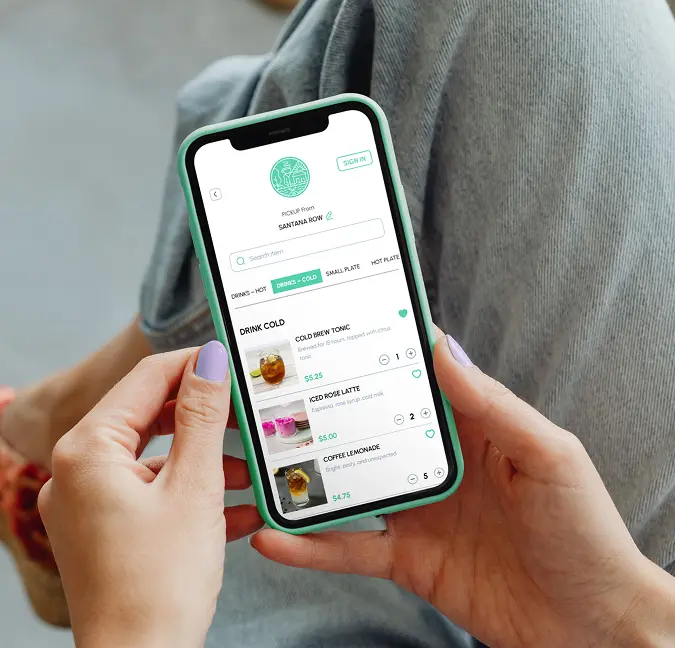
- Mobile access: Sixty percent of loyalty users prefer engaging through dedicated smartphone apps
- Analytics functions: Offer clear reporting on sign-ups, usage trends, and redemption activity
- CRM connection: Ensures customer information moves smoothly between the loyalty system and marketing channels
- Omnichannel support: Keeps the customer experience consistent across in-store, online, and delivery partners
3. Selecting the Right Program Structure
The structure you choose directs how the program operates, the type of technology required, and the outcomes it can realistically support for your business.
4. Personalize the Customer Experience
Personalization is one of the strongest ways to increase the impact of a loyalty program. Studies show that 72 percent of customers expect the businesses they visit to recognize who they are and understand what they enjoy.
Strong personalization begins with detailed data analysis that helps restaurants understand individual preferences, buying habits, visit patterns, spending levels, dietary needs, and key personal dates such as birthdays or anniversaries.
Effective Personalization Strategies
- Tailored suggestions: Recommend menu items based on past orders
- Birthday recognition: Seventy-eight percent of customers remain loyal to brands that acknowledge their birthdays
- Segment-based offers: Send messages shaped around the needs of specific customer groups
- Predictive analytics: Use advanced tools to spot emerging patterns and anticipate future choices
- Behavior-triggered messaging: Share timely updates based on defined customer actions
Advanced loyalty programs use AI-driven pattern detection to anticipate customer needs and send individualized offers that match each person’s habits and interests.
Choosing the Right Loyalty Program Software
The software you choose sets the tone for the entire loyalty program, so it’s important to rely on a platform that can support your goals and adapt as your restaurant grows.
Features to Look for in Loyalty Software
When selecting loyalty software for your restaurant, focus on capabilities that strengthen performance and support long-term growth. The following features play a central role in how well the program will run:
- POS integration: Connects directly with your point-of-sale system so points and rewards update automatically
- Mobile access: Offers native apps or mobile-friendly interfaces for easy participation
- Customer grouping tools: Allows you to organize customers based on behavior, interests, or value
- Omnichannel support: Tracks activity across in-store, online, and delivery platforms
- Flexible program setup: Supports points-based, tiered, or visit-driven models
- Campaign tools: Includes email and SMS options tied to loyalty data
- Analytics dashboard: Provides reporting on activity, enrollment trends, and reward use
- Engagement features: Offers challenges, badges, or interactive elements
- API access: Enables connections with additional business systems
- Room to scale: Handles rising transaction volume and expanding membership
Measuring Success and Optimization
Strong loyalty programs rely on clear measurement practices that show whether the system is achieving the outcomes you expect.
Key indicators to track include:
- Redemption rate: Share of awarded points that members use, commonly between 20 and 40 percent
- Participation rate: How often members engage with loyalty activities
- Customer lifetime value: Total revenue expected from each customer across their relationship with your restaurant
- Churn rate: Portion of members who stop engaging within a defined period
- Repeat purchase rate: Percentage of customers who return after joining the program
- Program-linked revenue: Additional revenue tied directly to the loyalty initiative
Scale Your Business with Restolabs
Common Restaurant Loyalty Program Mistakes to Avoid
The fastest way to drain momentum from a loyalty program is to make it feel like homework. If guests need a calculator to understand points, thresholds, or exclusions, most will stop paying attention after the first visit. Clear earning rules and visible progress keep the program in the background while the habit of reordering does the real work.
Another common miss is offering rewards that look fine on paper but feel forgettable at the counter. A free item people rarely order will not change behavior. The strongest restaurant loyalty programs match rewards to real ordering patterns, so the benefit feels attainable, relevant, and worth coming back for instead of like a coupon buried in fine print.
Operators also run into trouble when staff, signage, and ordering channels tell three different stories. A guest joins in-store, then cannot find the program online, or earns points online but not by phone. That kind of friction quietly erodes trust. Consistency across every touchpoint matters because loyalty breaks long before anyone bothers to complain.
Use the right technology to strengthen your restaurant’s growth
Restaurant loyalty has shifted from a "nice-to-have" to a core growth driver, strengthening customer relationships, improving data visibility, and building long-term revenue stability. When executed well, a loyalty program can meaningfully lift repeat orders, retention, and overall customer activity.
The best programs work because they stay simple for guests while offering the advanced capabilities restaurants need. Personalized rewards, challenge-based engagement, and seamless access across every channel all help deepen customer commitment.
For teams launching a new program or upgrading an existing one, Restolabs offers a complete, easy-to-deploy loyalty solution that fits naturally into your current operations.
With Restolabs, you get:
- Direct POS and online ordering integrations
- Multiple loyalty formats
- Detailed reporting and insights
- Mobile-friendly access
The next era of loyalty will be shaped by smarter personalization, unified digital experiences, and value-driven engagement. Now is the time to strengthen your position and get ahead.
If you're ready to build stronger loyalty and grow repeat revenue, schedule a demo to see how Restolabs can support your goals.

Sruthi Sekar specializes in brand strategy, growth, and user experience in the hospitality industry. As the driving force behind Restolabs, she helps restaurants harness technology to scale and thrive. With a background in design, branding, and entrepreneurship, she brings a sharp focus on crafting digital experiences that drive real business impact.
Frequently Asked Questions
Strong loyalty programs stay easy to understand, offer rewards that feel worthwhile, and use customer information to create experiences that feel relevant. They also work smoothly across in-store and digital channels. Well-known programs such as Starbucks Rewards succeed because they give members clear progress markers, valuable reward choices, and a mobile experience that keeps people involved.
Loyalty programs help keep customers by giving them reasons to stay with a familiar restaurant instead of trying new options. Studies show that many adults prefer returning to places where they already participate in a loyalty program. These programs also keep people involved through earned perks, tailored communication, and member-only benefits that make customers feel recognized.
Rewards work best when they feel generous and relevant. Popular options include free menu items, savings on total bills, access to special events, quicker service in busy periods, and early access to new dishes. Many restaurants also offer higher-value perks for guests who visit often or spend more across the year.
Look for software that connects smoothly with your POS and online ordering tools, offers mobile access for customers, and provides reporting that helps you understand how the program is performing. The platform should also support the program format you want, track activity across all ordering channels, and protect customer information. Before committing, review demonstrations and talk with other restaurants using the same system.
Common issues include reward levels that feel out of reach, perks that lack real value, earning rules that confuse customers, and programs that don’t work consistently across ordering channels. Another frequent issue is not training staff well enough, which leads to weak promotion at the counter. Some restaurants also overlook the need for steady measurement, making it harder to improve the program over time.




.webp)

.svg)
.webp)