
Key Takeaways
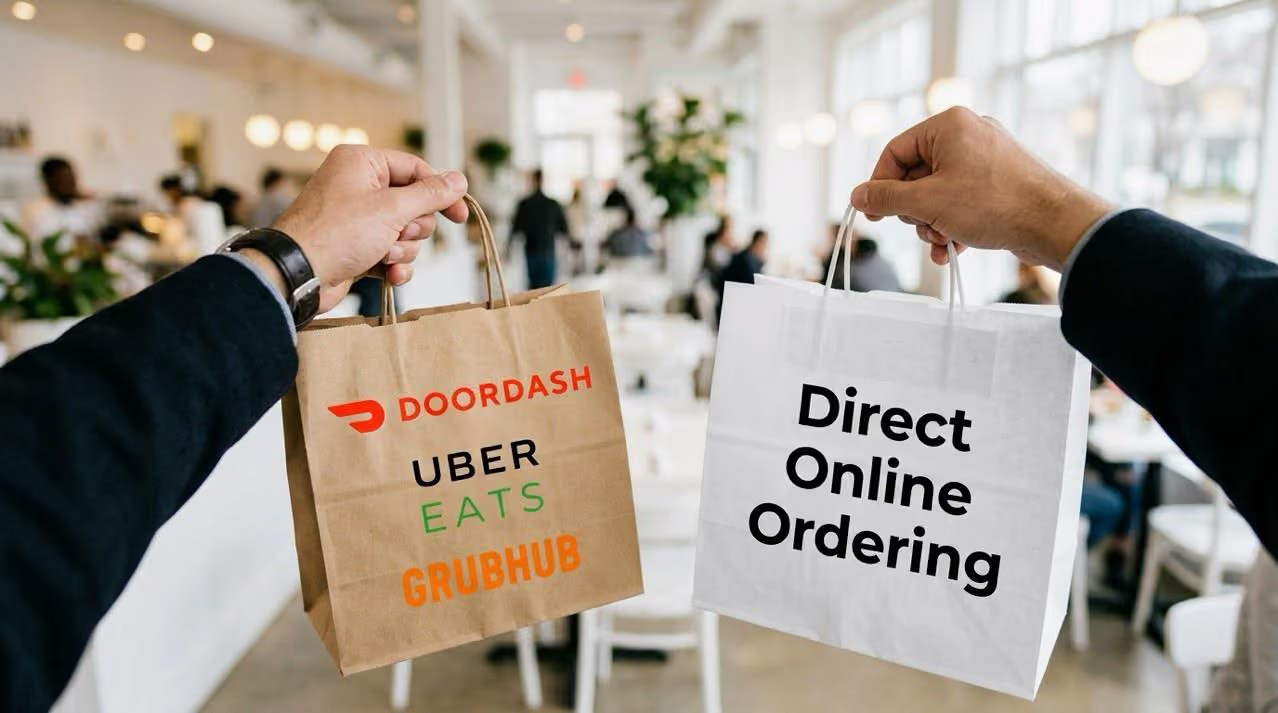
Third-party delivery platforms help restaurants acquire customers and simplify logistics, but their high commissions (15–30%), limited customer data access, and lack of control over branding make long-term profitability difficult. Direct online ordering, on the other hand, enables restaurants to retain margins, own customer relationships, and build repeat business through data-driven marketing. This guide compares both models across cost, control, and growth potential, helping restaurants decide when to rely on marketplaces and when to shift toward a more sustainable, direct ordering strategy.
Are you paying a large share of every delivery order in commissions – while you still cook food, pack orders, and manage customer service? Many restaurants rely on third-party delivery platforms to reach online customers.
The convenience is real, but so are the costs, typically charging you 15% to 30% commission per order. At first, it makes sense when your business is growing and you want to reach more customers. But as the delivery volume grows, the costs shrink your profit margins.
In this guide, you’ll learn how third-party delivery vs direct online ordering compares across cost, control, and customer relationships. We’ll also explore practical steps to implement a successful direct online ordering strategy for your restaurant.
Third-Party Delivery vs Direct Online Ordering: A Snapshot
Before we do deep dive into third-party delivery vs direct online ordering, here’s how the two models compare across key areas:
Now that you have some context, let’s learn about each model individually.
What Is a Third-Party Delivery Platform?
A third-party delivery platform is an external, multi-sided marketplace that aggregates restaurants into a single digital interface where customers can discover menus, place orders, and complete transactions.
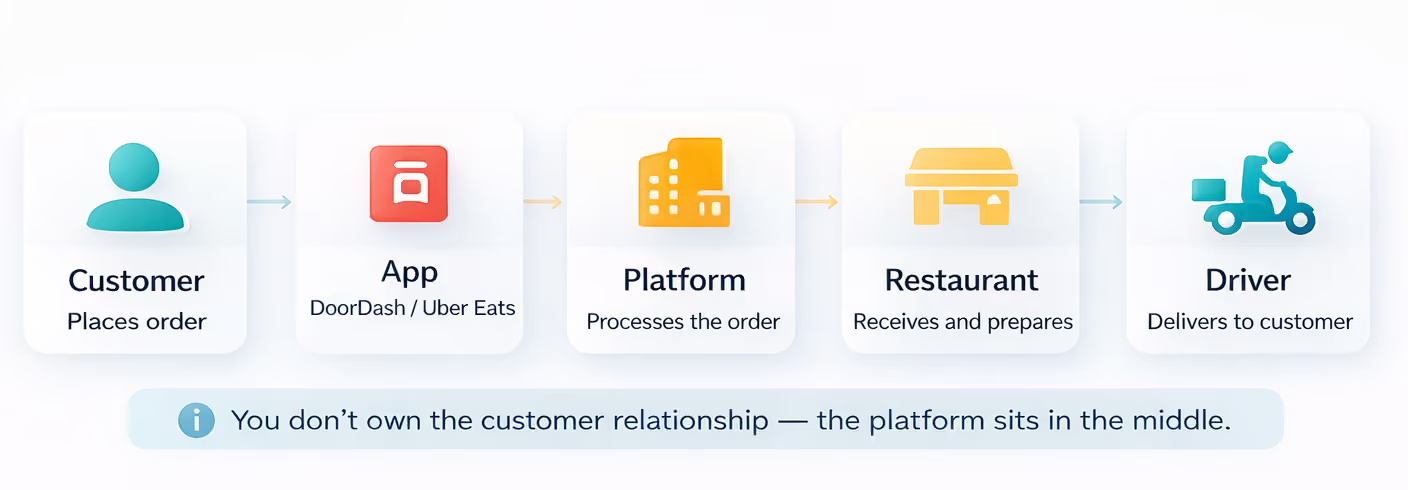
The platform may facilitate payment processing and logistics, either through its own courier network or through restaurant-managed delivery. Common examples of third-party delivery platforms include DoorDash, Uber Eats, and Grubhub.
Benefits of Third-Party Delivery Platforms
These platforms offer some genuine advantages, especially early in your delivery journey:
1. Acquire new customers without upfront marketing investment
When you list your restaurant on platforms like DoorDash, Uber Eats, or Grubhub, your menu becomes visible to users searching these apps for nearby restaurants, cuisines, or specific dishes. This exposure can help generate orders without requiring you to run paid ads, build a delivery website, or invest in SEO activities.
2. Reduce operational complexity by outsourcing delivery logistics
Managing delivery in-house requires coordination, from hiring and managing drivers to optimizing routes and maintaining order tracking systems. If you handle this yourself, it can quickly strain you operationally.
Third-party delivery platforms take this off your plate. When an order is placed, the platform assigns a driver, coordinates pickup, and provides real-time tracking updates to your customers.
3. Increase order volume during slow periods and off-peak hours
Customers often turn to third-party delivery apps during times when cooking or dining out is less convenient, such as mid-afternoon slowdowns (3–5 PM), post-dinner hours, and late-night ordering windows.
If your restaurant is already staffed and functioning, these additional orders can improve kitchen capacity utilization without significantly increasing fixed costs.
Limitations of Third-Party Delivery Platforms
Despite the positives, third-party delivery vs direct online ordering reveals a clear tradeoff – actually, four of them:
1. High commission fees reduce profit margins on every order
Third-party delivery platforms charge 15%-30% commission per order, depending on your service tier and discoverability options.
That means, on a $35 order with a 25% commission, you’ll pay $8.75 on the platform, leaving you with $26.25 before accounting for food, labor, and packaging.
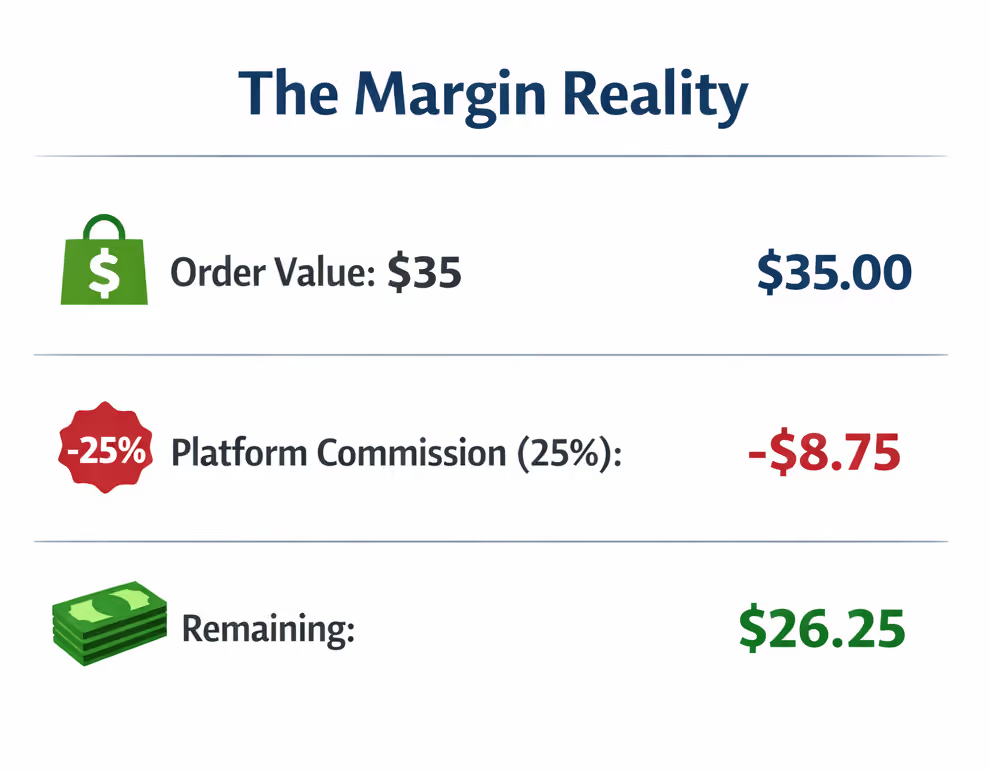
If your margins are already tight, this commission can reduce your profitability or even convert the order into a loss.
2. Increased dependency on external platforms for revenue growth
At the end of the day, you don’t have any jurisdiction over how your restaurant is ranked, how many competing businesses appear alongside you, or how commission fees evolve with time. In effect, you’re building your business on rented space.
While these platforms can drive exposure and incremental orders, they also make it harder to build a stable, predictable revenue stream on your own terms.
3. Limited access to customer data restricts retention and marketing
When orders are placed through platforms like DoorDash, Uber Eats, or Grubhub, you can view basic order details but you don’t get full access to customer contact information or the ability to market to them directly.
As a result, it’s harder to run targeted promotions, build loyalty programs, or encourage repeat orders outside the platform.
4. Reduced control over customer experience and brand presentation
Your restaurant appears inside the platform’s interface with dozens of competitors. Factors like ratings, delivery performance, and promotions influence your visibility.
However, the overall layout, search ranking, and featured placements are ultimately controlled by the platform’s algorithms, not by you. That means you have little authority over:
- How your menu appears in search results
- How your brand is presented within the app
- How customers interact with your restaurant during the ordering process
What Is a Direct Online Ordering Platform?
A direct online ordering platform is a software platform that enables restaurants to accept, process, and manage customer orders through their own digital channels, such as website, mobile app, and QR code interface, without relying on third-party marketplaces.
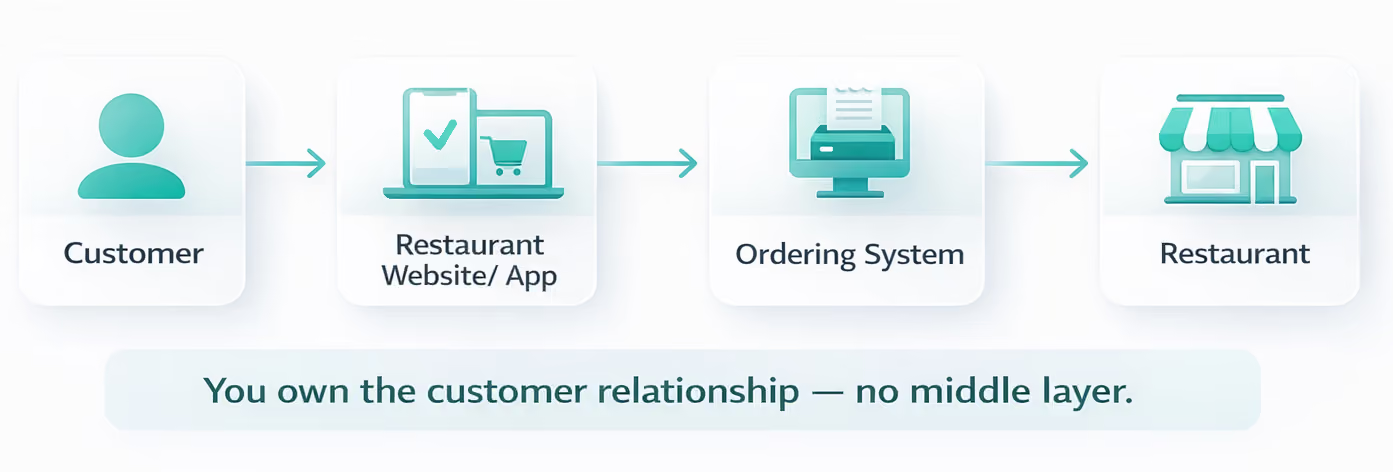
The system handles the entire ordering workflow, including menu display, order capture, payment processing, and routing orders directly to your POS or kitchen for fulfillment. It also provides restaurants with full control over pricing, customer data, and branding.
Benefits of Direct Online Ordering Platforms
When evaluating third-party delivery vs direct online ordering, these platforms fundamentally change how your restaurant operates, with advantages that go beyond simply generating orders:
1. Increase profit margins on every order
When customers order directly from you, there’s no external marketplace charging a commission every time you make a sale.
Instead, you retain most of the order value, with only standard payment processing or software fees to account for. This means each order contributes more meaningfully to your bottom line.
2. Convert customer data into a usable marketing channel
Every direct order captures what third-party delivery platforms keep to themselves: customer names, phone numbers, email addresses, and order history. That data is yours to use for retention marketing initiatives.
With that information on your fingertips, you can:
- Launch customer loyalty programs
- Send promotions or limited-time offers
- Encourage repeat orders through email or SMS campaigns
You’re not dependent on some other platform to bring your customers back. Direct online ordering fully equips you to do that on your own at little to no incremental cost.
3. Design an ordering experience that reflects your restaurant
With direct ordering, your digital presence doesn’t have to compete inside someone else’s interface. In fact, you get to decide:
- How your menu appears on your online ordering page or branded app
- How dishes are categorized within your digital menu
- Which items you promote through featured sections or upsell prompts
- How customers move through the checkout flow
You also have the freedom to configure pricing, bundles, and special offers without being restricted by marketplace rules.
4. Maintain accurate menus in real time
With direct online ordering, menu changes can go live instantly.
For example, if an item sells out during service, it can be automatically marked as “unavailable” online. That way, customers can’t place orders for dishes your kitchen no longer has, helping prevent cancellations and frustration.
Direct online ordering platforms are ideal when
- You’re looking to build a more predictable revenue stream that isn’t tied to external platform algorithms or rankings
- You’re able to support a reliable ordering and fulfillment experience through your own systems or partners
- Your restaurant has enough brand recognition that customers are willing to order from you directly
Limitations of Direct Online Ordering Platforms
As with third-party delivery vs direct online ordering overall, direct ordering has its downsides:
1. Driving customer adoption becomes your responsibility
Most customers already have a delivery app on their phone, and a habit to go with it.
If your restaurant is listed on platforms like DoorDash or Uber Eats, that’s where they’ll order by default. That means switching them to your own ordering channel isn’t automatic. You have to actively intercept that habit and give them a reason to choose differently.
Restaurants often do this by using marketplace orders as conversion opportunities – adding a coupon for the next direct order, including flyers in delivery bags, or promoting their website on packaging.
These tactics can work, but they need to be applied consistently, making customer adoption an ongoing effort rather than a one-time fix.
2. Poor technology or setup can hurt conversions
Direct ordering only works if the experience is fast, reliable, and easy to use. If your system is slow to load, confusing to navigate, and prone to errors in payments or order routing, customers will drop off – or worse, switch back to third-party apps where the experience feels smoother.
When a Hybrid Strategy Makes More Sense Than Picking One Channel
For many restaurants, third-party delivery vs direct online ordering is not a clean either-or decision. One channel is often better at discovery, while the other is better at turning a first purchase into a repeat habit. The mistake is treating both channels the same. When they play different roles, operators can scale delivery without handing every order to a middleman.
A practical model is simple: use marketplaces to capture demand from people who are still browsing, then give repeat guests a faster path back to the restaurant’s own ordering channel. That shift changes the economics over time. The first order may arrive through a third party, but the second and third orders should feel easier, more familiar, and more brand-connected when they happen directly.
That is where execution matters. If the direct experience feels clunky, customers drift back to the marketplace they already know. Restolabs helps restaurants build a commission-free ordering channel that is easier to promote, manage, and scale alongside third-party delivery. Operators who want that balance can book a demo and see how the direct side of delivery can carry more weight.
How to Implement Direct Online Ordering With Restolabs
If you’ve read this far, the next step is now to launch a setup that works reliably across how customers find you, place orders, and receive them.
And platforms like Restolabs bring together your ordering system, menu setup, and fulfillment workflows into one place, helping you deliver a smooth, consistent experience across channels without operational complexity.
For that, you need to put a few things in place:
1. Set up a direct ordering system that can handle demand
Start by deciding how orders will be routed to your kitchen or POS system, how your menu will be structured, and how different fulfillment options – delivery, pickup, or curbside – will be handled in real time.
With Restolabs, this setup is handled within a single system, so you don’t have to juggle multiple tools or worry about technical issues.
Getting started is designed to be quick and low-effort.
- You begin by sharing a few basic details about your restaurant, such as your menu, delivery zones, and store information. This gives the Restolabs team everything they need to initiate your setup and configure your ordering workflows.
- From there, Restolabs sets up your online ordering system and provides you with a dedicated ordering link. This link acts as your central ordering hub, where customers can place orders directly with your restaurant.
- Once the foundation is in place, Restolabs supports you with menu uploads, payment setup, and frontend customization to match your brand. If you prefer a DIY approach, you can configure everything yourself with 24/7 support available.
For a deep dive, check out how Restolabs works.
2. Make your ordering channel visible across every customer touchpoint
Next, embed the ordering link you created in step #1 anywhere your customers already interact with your restaurant – your website, Google profile, and social media pages. This ensures they can easily access your platform without friction.
Then bring the link into your offline touchpoints. Add a QR code or link on takeaway packaging, printed receipts handed to customers, and in-store signage near your billing counter.
If you’re using third-party delivery platforms, include a small printed flyer or card inside each order that encourages direct orders next time.
3. Create a seamless ordering experience that matches customer expectations
Before asking customers to switch, go through your own ordering flow as if you were placing an order for the first time.
Check both your website and mobile app, and pay attention to how quickly the page loads, how easy it is to find items, and how many steps it takes to complete checkout. If anything feels slow, confusing, or unnecessary, fix it.
In addition, remove extra form fields, simplify menu categories if they feel cluttered, and make sure unavailable items aren’t still showing up. The goal here is to make the experience feel as straightforward as possible because that’s what customers expect.
4. Set up delivery fulfillment you can rely on
Direct ordering doesn’t necessarily mean you need to build and manage your own delivery fleet. You can connect your platform to third-party delivery networks to handle driver dispatch, while keeping the order itself within your workflow.
Before promoting direct delivery, make sure this setup works reliably — orders should be assigned quickly, tracked accurately, and fulfilled without delays. If delivery isn’t consistent, customers are likely to return to third-party apps where the experience feels more predictable.
5. Choose an online ordering platform that supports your operational needs
Map out how orders currently move through your restaurant, from the moment a customer places an order to when it reaches your kitchen and gets delivered. This will help you identify what your system needs to support.
When evaluating your options, check whether they integrate with your POS system, allow real-time menu updates, and help you with delivery setup, whether that’s in-house or through third-party integrations.
Also look at how the platforms handle orders during peak hours, so your kitchen isn’t overwhelmed and you’re able to complete fulfillment smoothly.
How Restolabs Supports Commission-Free Direct Online Ordering
There's no doubt that third-party platforms help new restaurants get discovered, especially when customers are already searching for options nearby. But when you look at third-party delivery vs direct online ordering at scale, the cost difference becomes harder to justify.
Restolabs gives you a more sustainable path – a commission-free direct ordering platform built to help you retain revenue, own your customer relationships, and run a tighter ship.
Your brand. Your ordering experience.
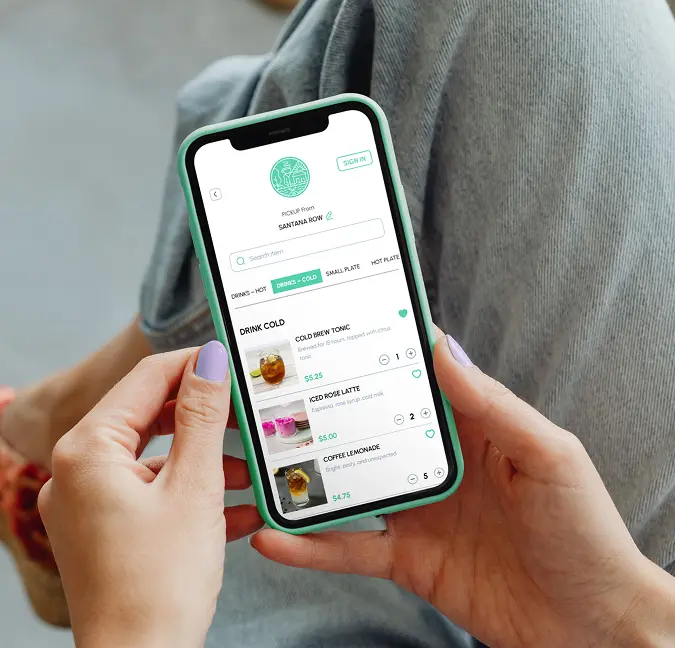
Launch a fully branded ordering experience through your own website or a custom ordering page, with complete control over how your menu, pricing, and modifiers are presented. Every order comes directly to your restaurant — no marketplace in the middle, no commission taken off the top.
Full visibility. Zero chaos.
Your staff manages everything from a centralized dashboard. They can track incoming orders, adjust preparation times, and coordinate delivery or pickup in real time.
During busy periods, features like order throttling, busy hour settings, and inventory-based menu availability help your kitchen stay aligned with what it can actually handle.
In addition, you can manage multiple locations from one dashboard, create branded mobile apps, integrate delivery partners, and track performance through detailed reporting with Restolabs.
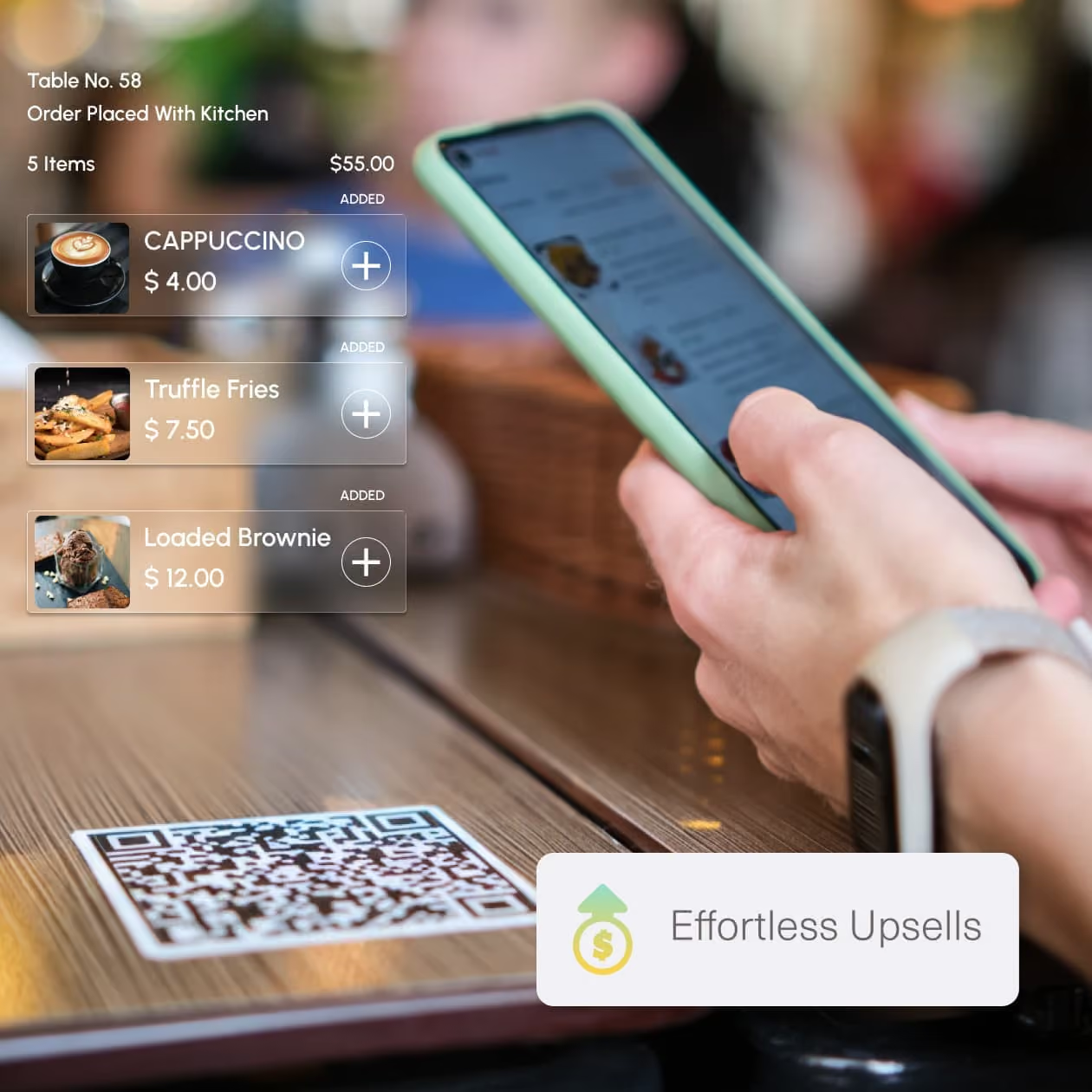
Your data, in your control.
With Restolabs, you can build your customer database automatically. Order history, contact details, repeat behavior — it’s all captured and actionable, with built-in tools like coupons and loyalty programs to put it to work.
If you’re ready to stop sharing your revenue with third-party platforms and start building something that’s truly yours, book a demo with Restolabs today. See exactly how it works for your restaurant, your menu, and your customers.

Sruthi Sekar specializes in brand strategy, growth, and user experience in the hospitality industry. As the driving force behind Restolabs, she helps restaurants harness technology to scale and thrive. With a background in design, branding, and entrepreneurship, she brings a sharp focus on crafting digital experiences that drive real business impact.
Frequently Asked Questions
Most restaurants see early traction within 2–4 weeks, but consistent results usually take 2–3 months. Unlike third-party apps that bring immediate visibility, direct online ordering builds gradually as customers become aware of your channel and start forming new habits. The timeline largely depends on how actively you promote it across your in-store and digital touchpoints.
Success comes down to whether your direct channel is driving more profitable and repeat business over time. Restaurants typically look at order volume growth, repeat purchase behavior, and average order value compared to third-party platforms. A strong direct channel should also lower your overall cost per order.
Restaurants should first ensure their direct channel is generating steady order volume and offering a smooth, reliable experience for customers. They also need to be confident in their ability to handle delivery, whether through in-house operations or external integrations. Instead of cutting off third-party platforms entirely, most restaurants benefit from gradually shifting the balance — using them for discovery while building a stronger direct ordering foundation for long-term growth.
Restolabs offers more features out of the box than most competitors, including advanced ordering, customization, and analytics in its base plan. It gives you greater control over branding and operations, especially with flexible integrations and delivery management. Compared to others, it is also more cost-effective with transparent, commission-free pricing. Restolabs offers a full-featured 30-day free trial, including customization, POS integrations, and 24/7 support. You can test the complete system without paying commissions or adding paid extensions.
Most restaurants can go live within a day using Restolabs. You get guided onboarding, help with menu setup, and support during launch. This keeps the setup process straightforward and reduces delays, so you can start accepting orders quickly.






.webp)

.svg)
.webp)