
Key Takeaways
- Convert repeat customers to direct ordering: Reduce commissions for online orders by shifting marketplace customers to your own ordering channel using QR prompts, incentives, and accessible ordering links.
- Adjust delivery menus to protect margins: Improve eCommerce cost optimization by repricing, bundling, or removing items that cannot sustain platform commission deductions.
- Promote pickup in your direct online ordering flow: Improve fulfillment efficiency and margin control by making pickup easy to choose and fast to collect.
- Compare platform performance using retained revenue: Identify which delivery platforms justify their cost by measuring commission percentage, order value, and revenue retained per channel.
- Improve delivery margin predictability: When direct demand becomes steady, reassess your fulfillment mix and route a portion of those orders through lower-cost delivery options where operationally viable.
- Review commission percentage on a fixed schedule: Maintain cost control by monitoring platform fees alongside food and labor and responding to changes early.
- Use Restolabs to establish commission-free ordering channels: Deploy commission-free solutions through branded ordering, delivery zone control, and customer ownership tools that reduce reliance on third-party platforms and avoid the need to negotiate delivery fees.
Have you ever wondered why online orders can sometimes feel like they barely move the needle in your month-end profit statement? You bring in deliveries night after night, but when the bills are paid and you look at your balance sheet, the impact feels smaller than expected.
The reason is straightforward. Every third-party delivery order includes a commission that removes a percentage of revenue before it reaches your business. That portion never contributes to wages, rent, ingredients, or retained profit.
So, how do you reduce commissions for your online restaurant orders? This blog post explores six actionable strategies.
Understanding the True Cost of High Commission Fees
Research shows that major platforms commonly charge restaurant commissions of around 30% of each order in areas without regulatory caps.
This means you don’t receive the full value of every delivery order. A percentage is deducted as commission before the payout reaches your business.
The amount you receive from each order follows a simple calculation:
Revenue you receive = Order Value – (Order value X %Commission rate)
For example, if a customer places a $40 delivery order and the platform charges a 30% commission, this is what the breakdown looks like:
Per-order breakdown
You begin with $28, not $40. All food, labor, packaging, and overhead costs are paid from this amount.
Monthly impact
Yearly commission paid
Use the Restolabs’ commission savings calculator
Also Read: Benefits of Commission-Free Ordering Systems
Warning Signs Commission Dependence Is Growing
Commission dependence rarely arrives with a warning. It usually shows up as a busy weekend that still feels thin at close, because high-volume orders are coming through channels the restaurant does not control. When familiar guests keep returning through the same third-party app instead of ordering direct, the business is paying to reacquire demand it already earned.
Another sign is menu confusion. If delivery sales lean on items that travel poorly, require too many modifiers, or trigger frequent remake calls, commission cost stops being the only drain. Margin erodes from both sides at once. The order looks profitable on the tablet, then falls apart in the kitchen, at the door, or in the guest's next decision.
Operators can also look at where repeat behavior is happening. If customers remember the restaurant's name but not its ordering link, the marketplace is owning the habit. That matters because habits compound. A small gap in direct-order adoption today can turn into a permanent commission lane tomorrow, especially when no one inside the store is responsible for correcting it.
Strategies to Reduce Commissions for Online Orders
Here’s what you can do to minimize commission exposure while maintaining online order volume:
1. Make direct ordering the default for repeat customers
Third-party platforms are good at one thing: helping customers find you the first time. So, once someone has tried your food, make it effortless for them to place the next order from you.
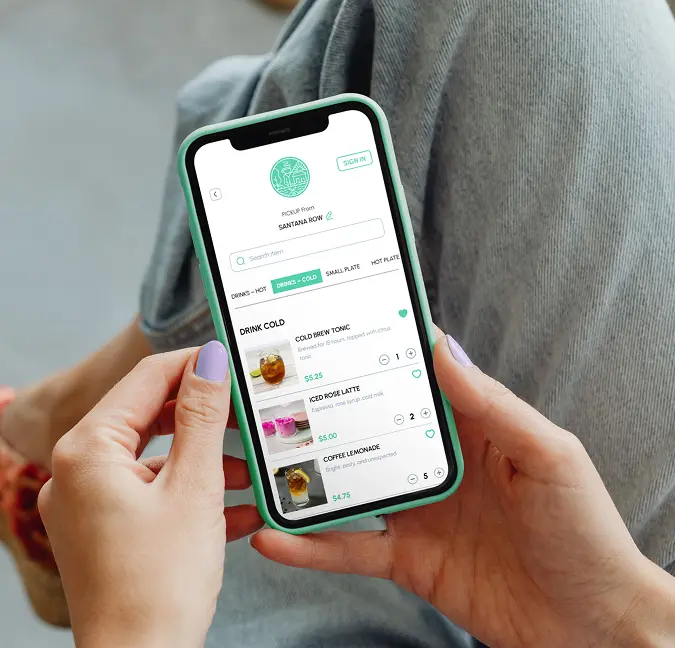
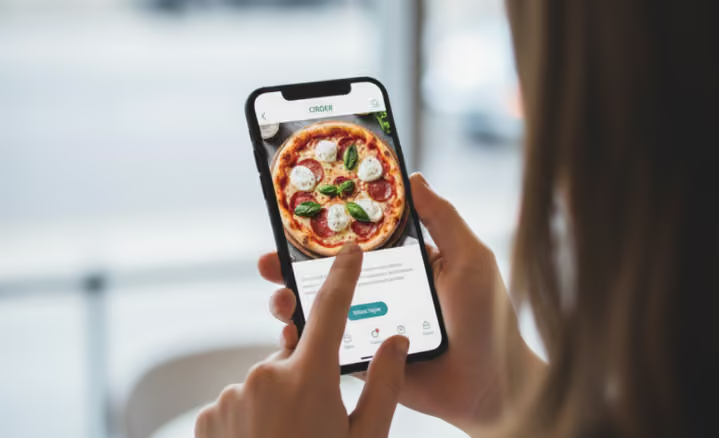
Set up a direct online ordering link that works on mobile, loads quickly, and mirrors your live menu accurately. This link should be easy to remember and access. If customers have to search for it, you have already lost them back to the marketplace.
Every third-party delivery order should include a prompt that directs the customer to your own ordering channel.
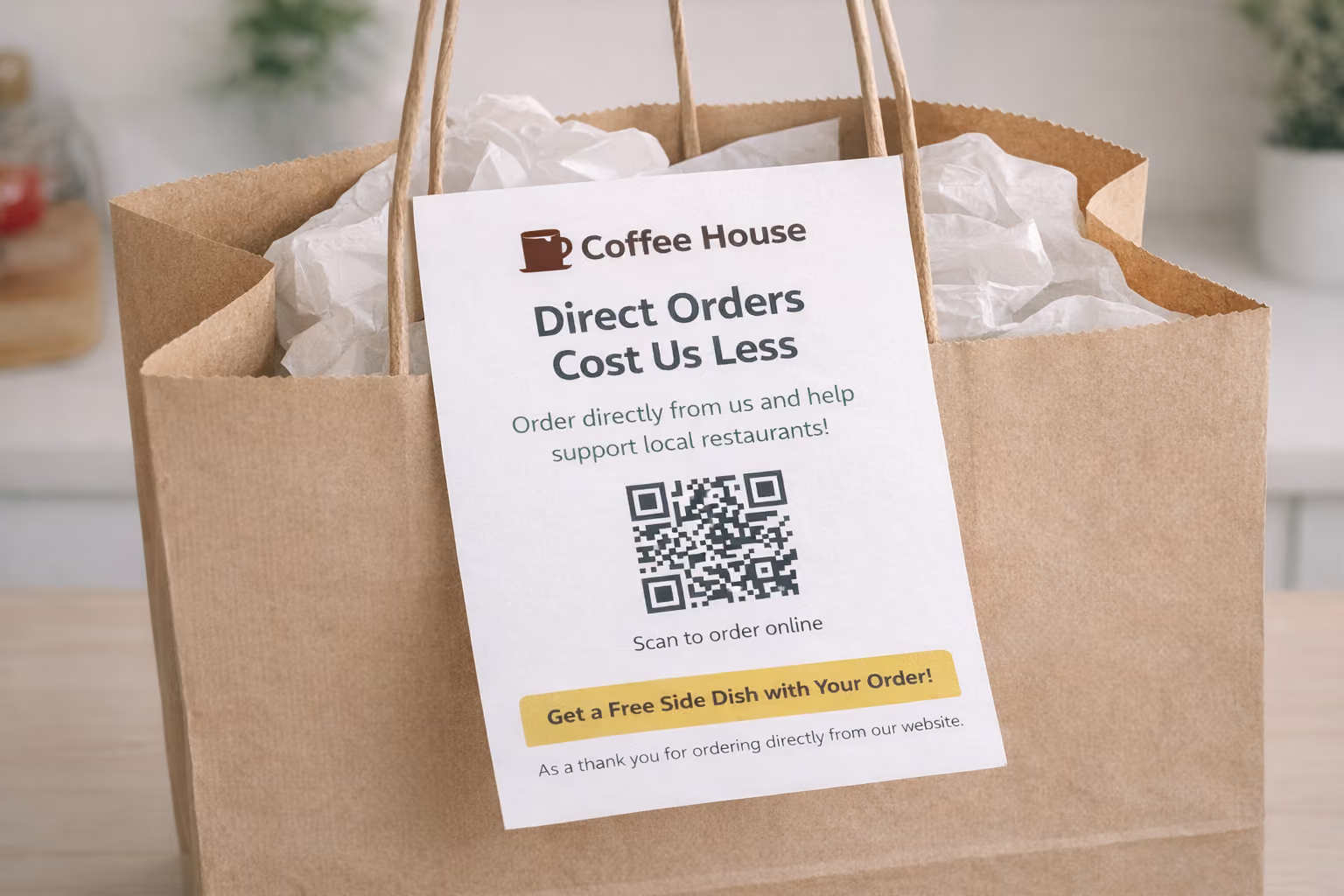
Put a printed leaflet in every delivery bag. Keep it plain and specific. Mention that direct orders cost less for the restaurant. Include a QR code that opens your ordering page immediately. Add a small incentive tied only to direct orders, such as a free side or a fixed percentage off.
3. Increase margin efficiency with pickup-first ordering
Offering delivery is convenient but it comes with its own share of driver coordination, timing variability, 25-30% commissions fees and service risks. On the other hand, pickup typically involves lower fulfillment complexity and more predictable operational costs.
Make pickup the default option on your direct online ordering page. List it before delivery. Use plain language and avoid burying pickup behind extra clicks or tabs. For example, you can say: “Pickup in 20 minutes. No delivery fee.” This adds a clear incentive.
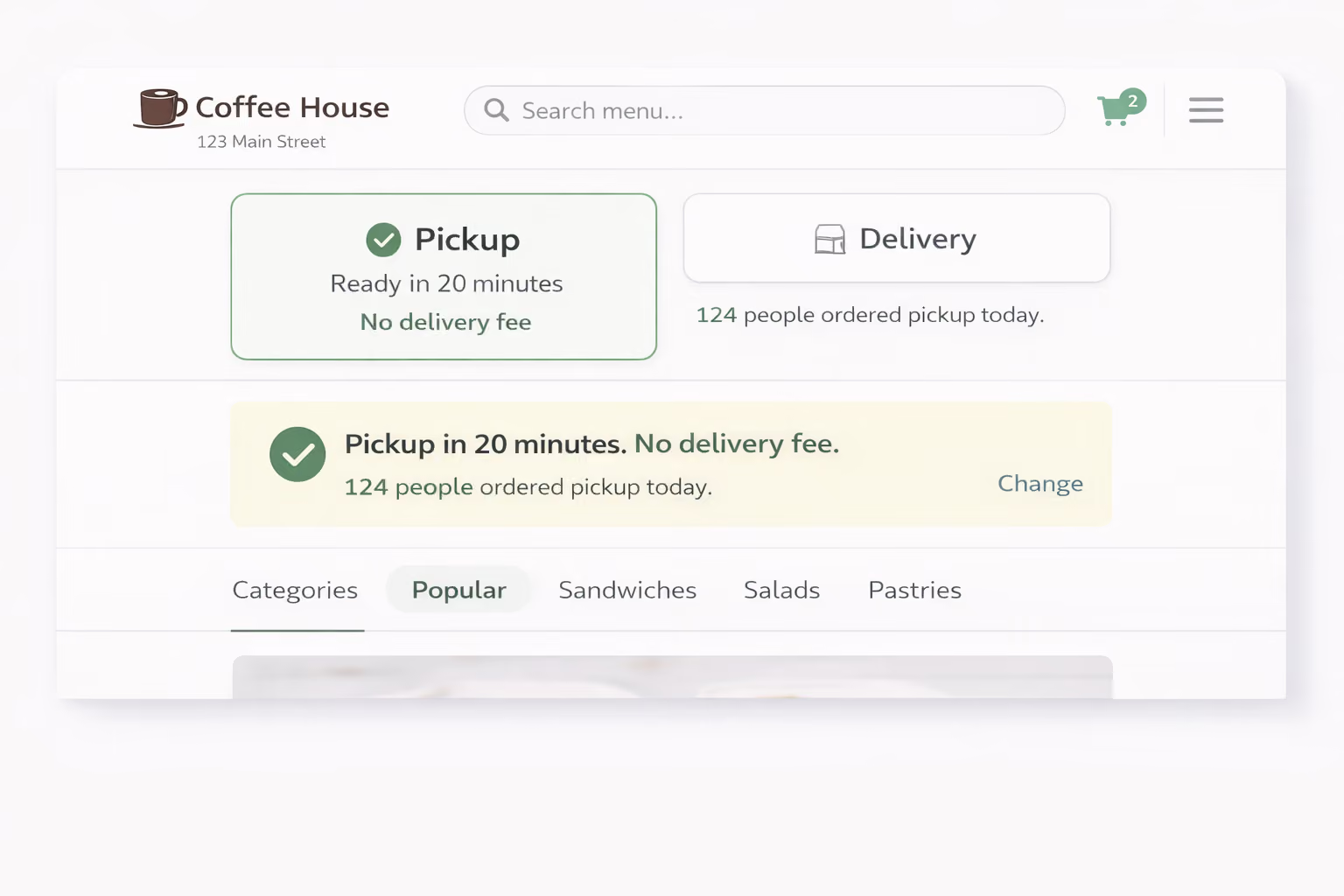
Next, give customers a reason to choose pickup. Keep the incentive small and consistent. A fixed $5 credit on that order, a free drink, or a loyalty point works well.
Now align pickup with your kitchen workflow. It performs best when timing is reliable. For example, if you provide clear preparation windows and maintain on-time readiness, customers learn they can arrive and collect their order without waiting.
4. Decide when third-party delivery is worth paying for
Not every delivery management platform contributes equally to your revenue. Some bring profitable orders. Others generate volume that carries high commission costs with limited return. You must know what works for you.
For that, extract three numbers from the last 30 to 60 days for each of the platforms you use:
- Total number of orders
- Average order value
- Total commission paid
Next, calculate how much revenue you retained from each platform.
Use this formula:
Revenue retained = Total order value − Total commission paid
For example: If Platform A generated $50,000 in order value and charged $15,000 in commissions, you retained $35,000.
Now calculate commission percentage:
Commission % = Commission paid ÷ Total order value
In this case:
$15,000 ÷ $50,000 = 30% is the commission paid for Platform A
Repeat this calculation for each platform to find out which ones retain more usable revenue and which ones take a larger share of each sale.
5. Replace percentage-based delivery where volume justifies it
Percentage commissions scale with order value. The higher your order volume grows, the more expensive this model becomes compared to fixed delivery costs. Therefore, you need to identify where the demand is consistent.
For that, review delivery addresses from the last 30 to 60 days. Highlight areas that appear frequently, especially those within 3 to 5 miles of your location. These zones represent predictable delivery demand.
Next, calculate your current commission cost per order.
Use this formula:
Commission per order = Average order value × Commission rate
For example:
$40 average order value × 30% commission = $12 commission per order
Now compare this with your projected in-house delivery cost in high-volume zones.
If you pay a driver $18 per hour and they complete 3 deliveries per hour, your estimated cost per delivery would be: $18 ÷ 3 = $6 per delivery
In areas with consistent order density, your per-order delivery expense becomes more predictable and often lower than percentage-based commissions.
6. Track commission spend the same way you track food cost
Commission fees become harder to control when they aren’t included in your regular cost reviews. Many restaurants notice them only when net revenue looks lower than expected. By then, the damage has already compounded.
You fix this by including that spend in the same cost reviews as food and labor. Review a monthly summary of commissions paid across all ordering channels. Break it down by platform and by order type.
Commission % is calculated as:
Commission % = Commission Paid ÷ Total Revenue
This percentage shows how much of your revenue each channel consumes in fees. Channels with higher percentages reduce retained revenue more aggressively.
Own the Customer Relationship After the First Order
The first online order is not the real test. The second and third orders reveal who controls the relationship. When a restaurant cannot easily reach a guest after the meal, every reorder starts from scratch, often inside a commission-based app. What looked like a single transaction becomes an ongoing tax on repeat demand.
First-party ordering changes that math because the restaurant keeps the connection. Order history, preferences, and contact details stay tied to the brand instead of disappearing into another platform's customer flow. That makes simple follow-up possible: a pickup reminder before Friday dinner, a seasonal menu announcement, or a reorder nudge when a regular has gone quiet.
Restolabs helps restaurants reduce commissions by giving them a branded ordering experience and control over customer data. Instead of renting access to guests order by order, operators can build a channel they actually own. Restaurants that want to see how that shift works can Book a Demo with Restolabs.
Embrace a Commission-Free Future with Restolabs
Restolabs is a direct online ordering platform built specifically for restaurants that want to own their revenue and operations.
It provides a branded online ordering system that facilitates pickup, delivery, dine-in QR ordering, and catering workflows — all managed from a centralized dashboard.
You can configure prep times, pause ordering during busy hours, throttle order volume, set day-based menu availability, and manage multiple locations from one interface.
On the delivery side, Restolabs supports both in-house fleet management and third-party dispatch integrations. You can define delivery zones using map-based controls, manage radius rules, and monitor driver workflows. This enables you to expand delivery coverage without surrendering control of the customer experience.
The platform integrates with key POS systems, payment gateways, gift card providers, and loyalty platforms. It includes built-in promotions such as coupon creation, time-based combos, and configurable checkout experiences.
You can retain access to full customer data, order history, and performance analytics — including product, user, and sales reports, making smarter operational and marketing decisions.
If you’re a multi-location brand, franchise, or a growing QSR chain, Restolabs comes with centralized management with store-level customization capabilities. Menus, pricing, taxes, branding elements, and user permissions can be configured at scale.
If you’re ready to move from commission-heavy third-party reliance to a system you control, book a demo and see how Restolabs can drive your restaurant growth.

Asavari drives content development at Restolabs. With over a decade of experience partnering with fast paced technology and marketing teams, she turns complex product and industry details into clear, meaningful communication for restaurant partners.
Frequently Asked Questions
Most third-party delivery platforms charge between 15% and 30% per order, depending on service level, visibility add-ons, and delivery coverage. This makes it important to reduce commissions for online orders by gradually shifting repeat customers to direct ordering channels where you retain the full order value.
While some platforms allow restaurants to negotiate delivery fees based on volume, negotiated reductions are usually limited and temporary. Long-term eCommerce cost optimization is more reliable when you build direct ordering channels that you control, where fees remain fixed or eliminated entirely.
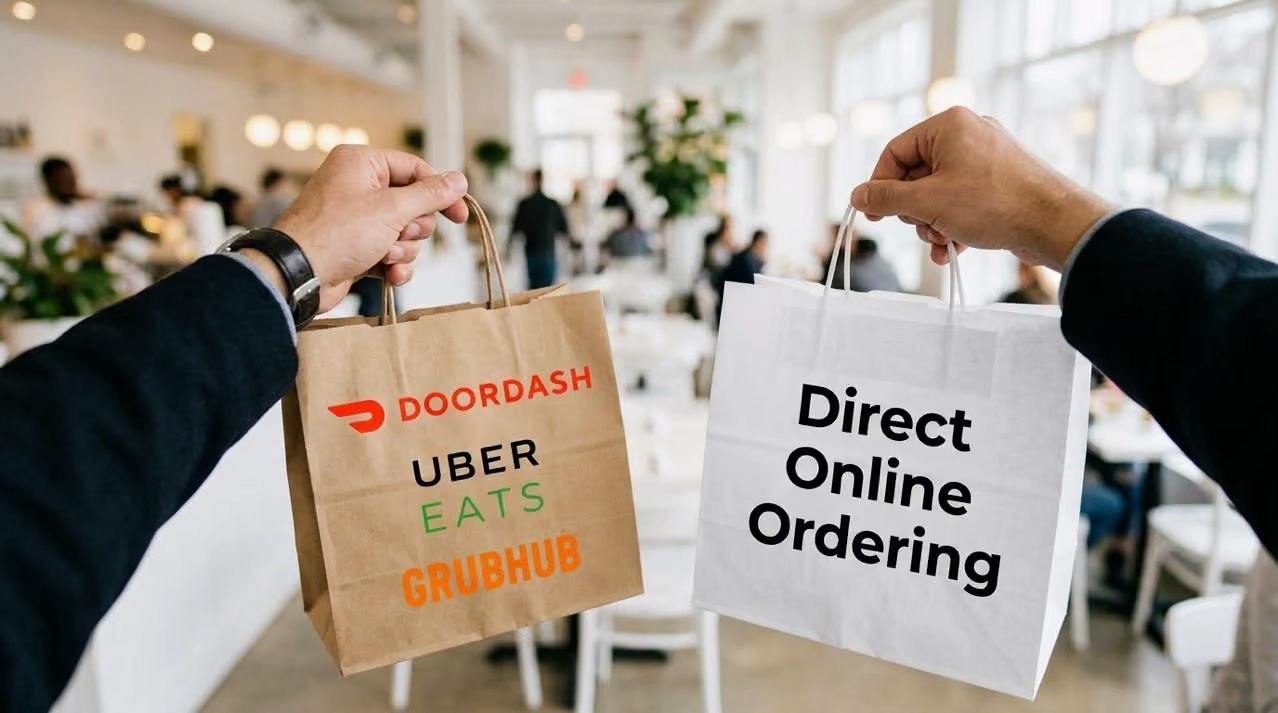
The fastest path is to introduce commission-free solutions such as branded online ordering, pickup incentives, and delivery zone control, which allow customers to order directly from you instead of through a marketplace. Over time, this shifts repeat demand away from commission-based platforms without reducing total order volume.






.webp)

.svg)
.webp)