
.avif)
Key Takeaways
- Pickup usually protects more margin than delivery because it skips last-mile cost and courier handoff, keeping more of every ticket inside the restaurant.
- Direct ordering skews pickup, with 60.1% pickup and dine-in versus 39.9% delivery, and roughly 65% of consumers preferring takeout when they control the choice.
- Cuisine mix drives the split: Cafe runs over 75% pickup and Bakery over 80%, while Grocery is 99.8% delivery and Pizza sits near 40% pickup.
- Lower pickup baskets are not weaker economics, since a small order that returns four times a week beats a larger one that appears monthly.
- Guest-facing fees are rarely the real cost, averaging $2.26 with 77% at zero; the bigger bite is 15% to 30% marketplace commission pressure.
- The right fulfillment mix follows cuisine, daypart, ticket size, and local demand, treating pickup and delivery as two tools rather than one universal rule.
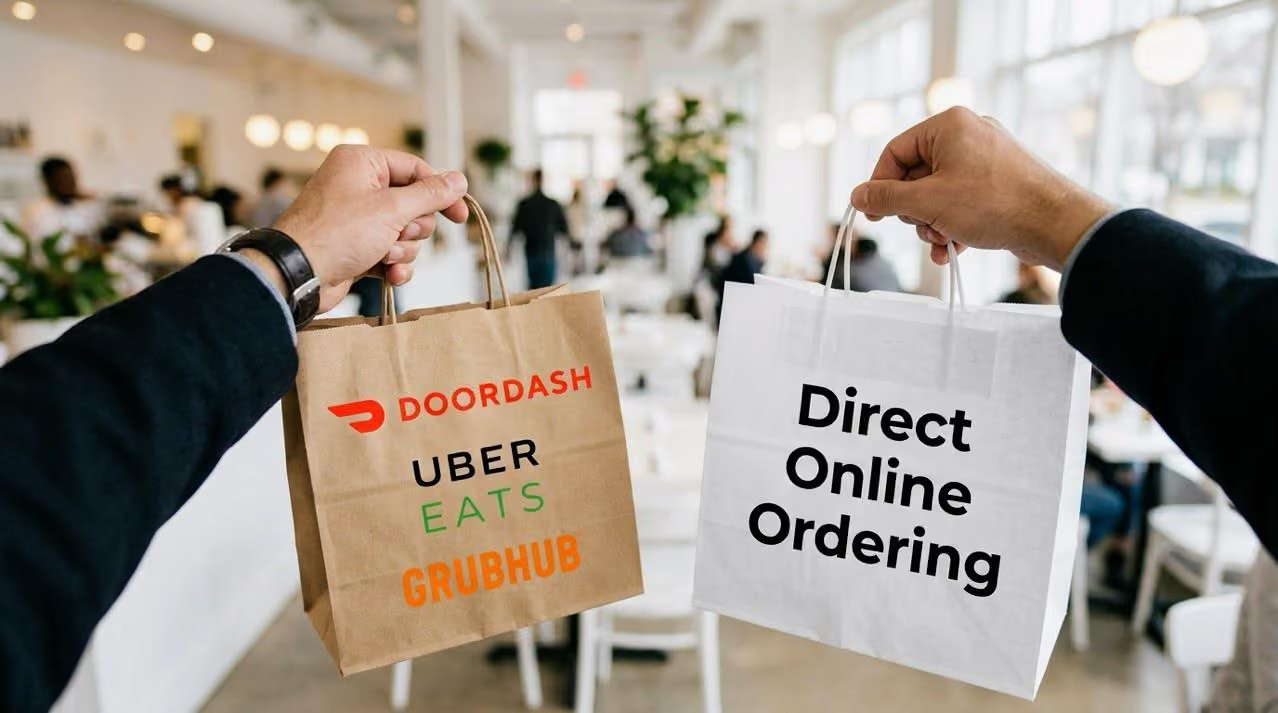
Pickup usually protects more margin than delivery because it skips last-mile cost and keeps more of every ticket inside the restaurant. Our data across direct orders on the Restolabs platform shows 60.1% pickup and dine-in versus 39.9% delivery. Delivery still matters, but it earns its place most clearly in delivery-native categories like grocery, not as the default for every concept. Cafe, bakery, and lunch-driven menus tilt heavily toward pickup. Pizza sits in the middle, where a blended model tends to outperform a single-channel approach.
What changes when pickup beats delivery?
Pickup is the lower-cost fulfillment mode. Delivery adds a courier handoff, last-mile fees, and more pressure on the margin of every ticket.
The definition matters in restaurant terms, not logistics terms. Pickup means the guest collects the order at the venue. Delivery means the food leaves by courier or driver. That single difference reshapes the unit economics entirely.
Follow the money and the gap is clear. A pickup order stays inside the four walls, so there is no driver to pay and no last-mile cost eating into the ticket. A delivery order has to earn its keep across every extra mile, especially when a restaurant leans on third-party commissions to move that food.
None of this makes delivery bad. It makes delivery a tool with a cost attached, and that cost only makes sense when the reach it buys is worth more than the margin it spends. Off-premises ordering now drives roughly three-quarters of restaurant traffic, but that headline hides an important split: the profitable part of off-premises is usually pickup, not delivery.
The real question is not whether to offer delivery. It is where delivery actually pays for itself, and where pickup is quietly the stronger engine.
Why is direct ordering pickup-led?
Direct ordering skews pickup because many guests want the convenience of ordering ahead without paying to have food delivered, and our order mix confirms it.
Most industry coverage treats delivery as the default growth lever. Our data tells a more practical story: when a restaurant owns the ordering channel, pickup is the larger share of demand, and that is not just a preference detail. It is a margin signal.
Pickup and dine-in together account for the clear majority of direct orders across the platform. Consumer research points the same way: roughly 65% of consumers say they prefer takeout pickup over delivery when they control the choice.
Owned ordering amplifies this naturally. When a guest orders directly from a restaurant they already know, pickup is often the first option they reach for. They are already nearby, they trust the kitchen, and they would rather grab the bag than pay a fee to wait at home.
That behavior compounds. A regular who picks up three times a week is worth more than a one-time delivery order at a higher ticket, and pickup makes that habit cheaper to serve.
Which cuisines skew pickup and which are delivery-native?
Cafe, bakery, and most lunch-driven concepts are pickup-heavy. Grocery is the clearest delivery-native category. Pizza sits in the middle.
This is where category mix makes the difference real for an operator. A cafe does not behave like a grocery store. A bakery does not behave like a pizzeria. When the menu and the daypart change, the fulfillment split changes with them.
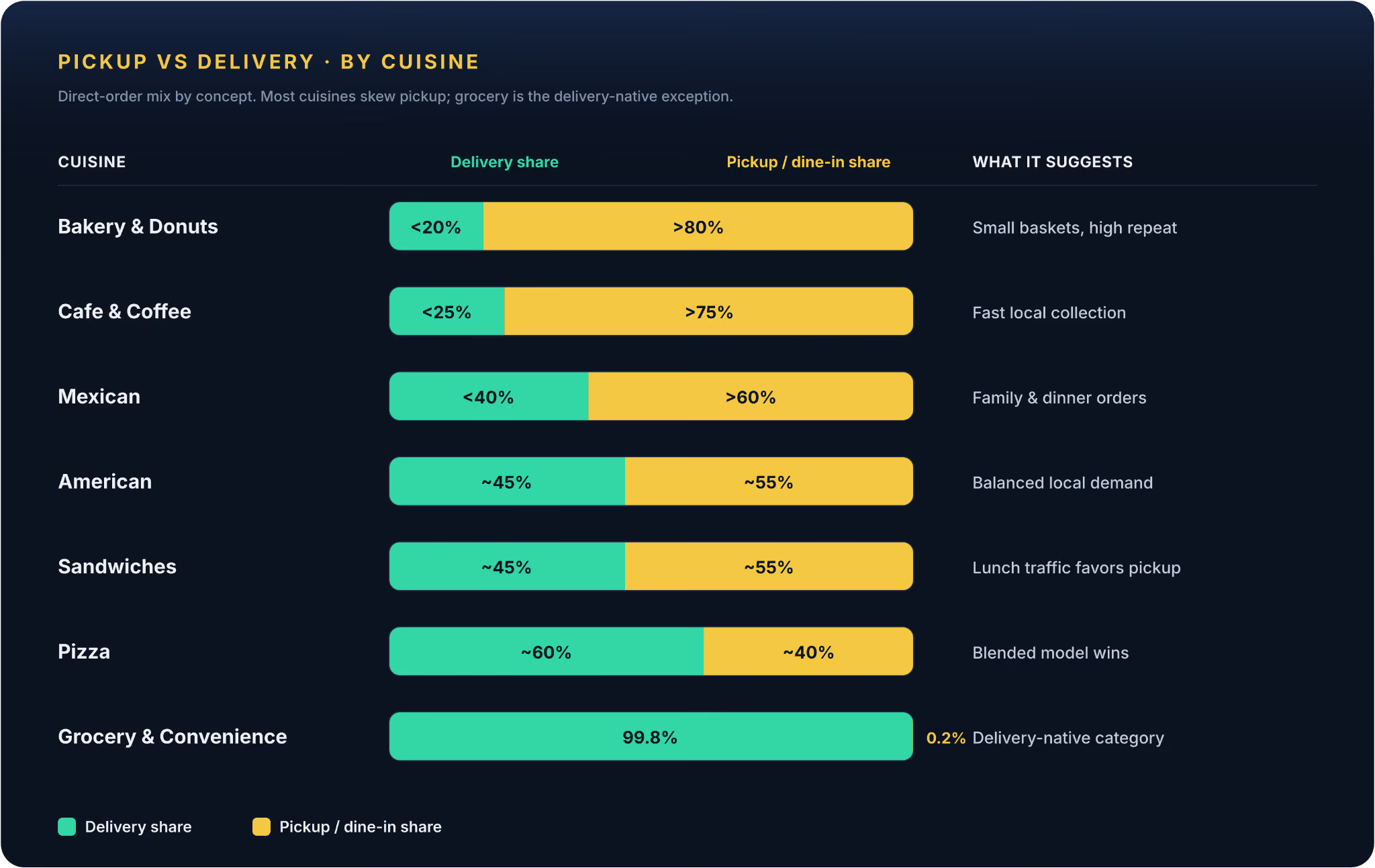
A morning coffee run or a box of donuts is a grab-and-go decision. Nobody wants to pay a delivery fee and wait 30 minutes for a latte that arrives lukewarm. Lunch sandwiches follow the same logic, which is why sandwiches and American concepts land near a balanced split with pickup slightly ahead.
Grocery is the opposite. When someone orders convenience items, the whole point is not having to leave home, so nearly all of that demand runs through delivery.
There is a subtler point many operators miss. Pickup-heavy categories often carry a lower average order value, and that can look like weaker performance on a spreadsheet. It usually is not. A smaller basket that comes back four times a week beats a bigger basket that appears once a month. Lower ticket does not mean weaker economics when the concept earns habitual, local ordering. For ideas on structuring menus that encourage repeat visits, the Restolabs restaurant menu examples guide walks through practical layouts.
How do pickup and delivery affect restaurant margin?
Pickup usually keeps more margin in-house because it avoids last-mile cost. Delivery can grow reach, but it takes a bigger bite through fees and commissions.
Compare the two modes on unit economics and the gap is clear.
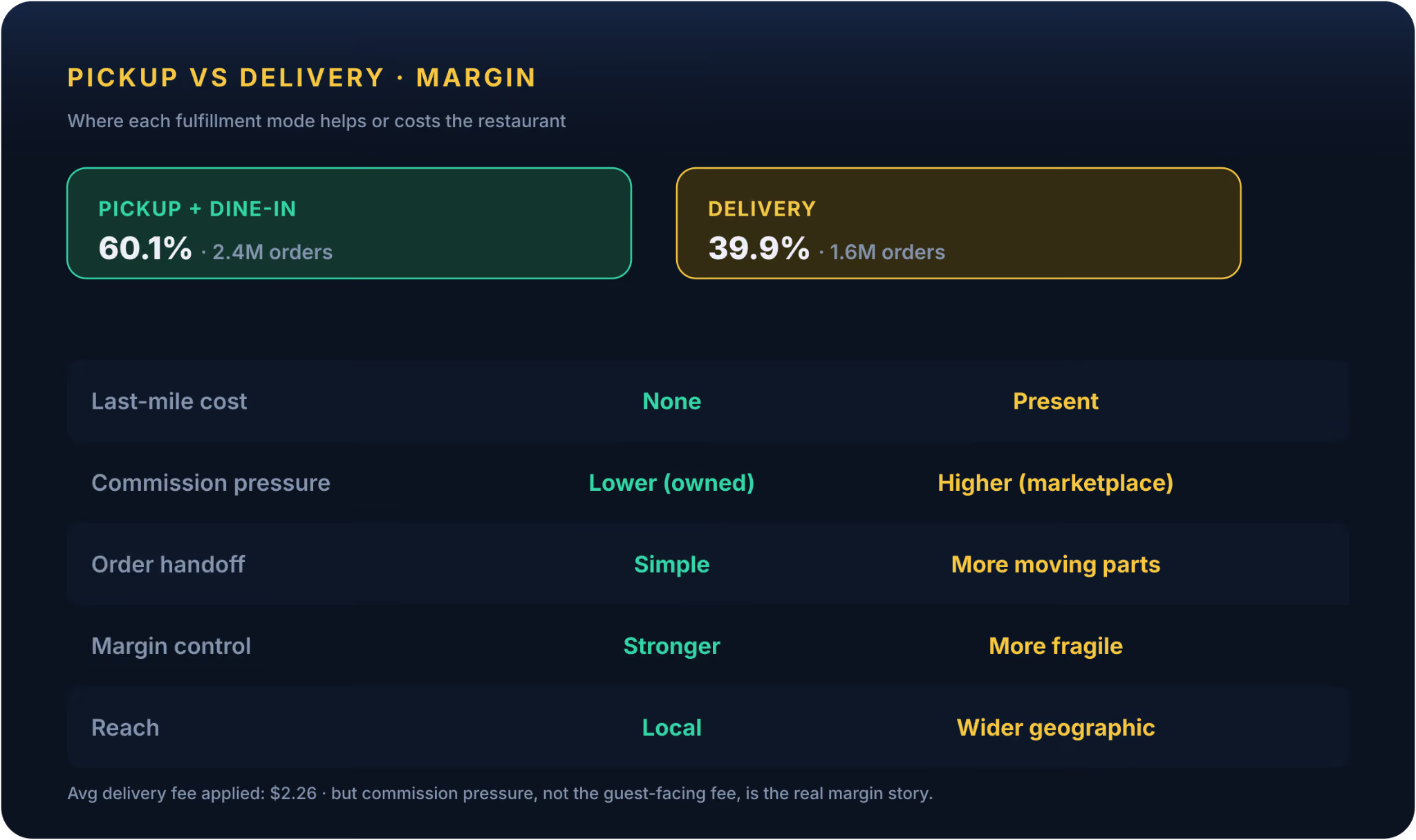
Pickup skips the courier handoff, trims the last-mile cost, and makes commission-free direct ordering far more attractive. Delivery can work well, but the restaurant has to be deliberate about where it spends that margin.
The point is not that fees are always high. Most orders in our data carry no fee at all. Fee orders cluster in a narrow band, with $1 to $15 covering 95% of fee orders. That tells operators the visible guest-facing fee is rarely the real problem. The bigger margin story is commission pressure on marketplace-heavy channels, where a 15% to 30% commission can quietly erase the profit on an order that looked healthy at checkout.
Read the table as a decision tool, not a verdict. Delivery buys reach, and reach has real value when a concept depends on it. But when a guest is already close enough to walk in, routing that order through a commissioned delivery channel spends margin to solve a problem the restaurant did not have. For a full comparison of the two channels, the Restolabs guide on third-party delivery vs direct online ordering covers the economics in depth.
When should restaurants lean pickup-first?
Pickup-first makes the most sense when demand is local, repeatable, and tied to short dayparts like breakfast and lunch.
Think about the orders that define a pickup-first business. The morning coffee run. The box of pastries on the way to the office. The lunch sandwich grabbed between meetings. In every case, speed and convenience matter more than a doorstep handoff, and the guest is usually already passing by.
That lower average order value detail changes how an operator should read performance. A smaller basket is not a warning sign if it comes back often. A cafe with a strong regular base is healthier than the ticket size alone suggests, because frequency does the heavy lifting.
In that setting, pickup is not a backup for guests who did not want delivery. It is the fulfillment model that matches how customers already behave. Building the ordering flow around fast, reliable collection and steering regulars toward ordering ahead tends to protect more margin than chasing delivery volume a concept does not naturally generate. Coffee shops and bakeries fit this profile especially well, which is why owned ordering pairs so cleanly with those formats.
When does delivery-first still matter?
Delivery-first still matters for categories where the guest expects the food at the door, especially grocery and convenience, plus certain pizza occasions.
Do not overcorrect. Pickup is not the answer for every concept, and forcing a pickup-first frame onto a delivery-native business ignores how those customers actually order.
Grocery and convenience are the clearest examples. When someone orders convenience items, the entire value proposition is not having to go get them, so nearly all of that demand runs through delivery. Pushing those guests toward pickup works against the reason they ordered in the first place.
Pizza sits between the two extremes. It carries meaningful delivery demand, especially for late-night and family orders where nobody wants to leave the couch, but it also holds enough pickup volume to make a blended model worthwhile. The global online food delivery market keeps expanding, and delivery-native categories are exactly where that growth lands. The right move is to let the menu, the occasion, and local demand determine how much delivery coverage a concept truly needs.
How should restaurants choose the right mix?
The best fulfillment mix follows cuisine, daypart, ticket size, and local demand rather than a universal rule that treats every concept the same.
If the concept is coffee-led, bakery-led, or lunch-driven, pickup should usually carry more weight because that is how the guests already order. If the business is grocery or another delivery-native format, delivery coverage is not optional; it is the core of the service. For pizza and similar mixed concepts, the honest answer is both.
Match the fulfillment mix to the economics of the category rather than assuming delivery growth is always the fastest path to better performance. A cafe that pours resources into delivery may spend margin chasing a channel its customers rarely want. A grocery concept that resists delivery is fighting its own demand.
Much of the industry frames this as pickup versus delivery, one against the other. The order data suggests a better framing: pickup and delivery are two tools, and the operators who win pick the ratio their category actually rewards. For a step-by-step approach to growing owned orders, the Restolabs guide on how to drive more direct online orders is a practical next read.
How Restolabs helps restaurants own pickup and delivery
Restolabs helps restaurants keep direct ordering on-brand, commission-free, and under their own control across both fulfillment modes.
The platform is built for operators who want a cleaner split between pickup and delivery without handing the economics to a marketplace-first model. That matters when margin, customer data, and repeat ordering all need to stay in the restaurant's hands rather than a third party's.
Pickup-heavy concepts can lean into fast local collection, and delivery-aware concepts can still serve guests who genuinely need doorstep service, all from one branded ordering flow.
Ready to take back your online ordering? Book a Demo

Sruthi Sekar specializes in brand strategy, growth, and user experience in the hospitality industry. As the driving force behind Restolabs, she helps restaurants harness technology to scale and thrive. With a background in design, branding, and entrepreneurship, she brings a sharp focus on crafting digital experiences that drive real business impact.
Frequently Asked Questions
Usually, yes, because pickup avoids last-mile costs and reduces fee pressure. But delivery can still be the right move when the category depends on broader reach.
They are daypart-driven and local by nature. Guests want speed, convenience, and repeatability, which makes pickup a natural fit.
Grocery orders are tied to convenience, planning, and basket size. That makes delivery a better match than pickup for almost all of the demand.
Not necessarily. Guest-facing fees can be low, but commission pressure and fulfillment costs still affect restaurant margin.
Pizza usually needs both. Pickup can protect margin, while delivery captures late-night and family orders that want doorstep service.
Our 2026 report shows 60.1% pickup and dine-in and 39.9% delivery across direct orders, with strong category differences by cuisine.





.webp)

.svg)
.webp)