

Key Takeaways
- Middle Eastern restaurants behave like delivery-led businesses, so the biggest wins come from zone coverage, evening timing, and checkout speed.
- A $45+ AOV changes the math, because higher baskets absorb delivery friction better than low-ticket concepts.
- Thursday through Saturday evening demand deserves the most attention, especially from 5:30-8:30 PM, with 9-11 PM skewing more toward delivery.
- Turkish/Kebab is a useful benchmark because it shows even stronger delivery orientation, with less than 30% pickup, per our data.
Middle Eastern restaurant online ordering: what the statistics say
Middle Eastern restaurants are delivery-weighted businesses, with less than 35% of orders going to pickup. Online ordering is a primary revenue channel here, not a backup for slow seats.
That number matters more once you see it against the platform-wide mix. According to our data from the Restolabs 2026 Online Ordering Behaviour Report, the overall fulfillment picture leans toward pickup and dine-in. Middle Eastern cuisine breaks from that pattern sharply, which is why generic restaurant advice tends to undersell the delivery case for this cuisine.
The wider market backs this up. MarketIntelo reports that online delivery represented 28.4% of global Middle Eastern restaurant revenues in 2025, while Cognitive Market Research puts Middle East food delivery on a 12.4% CAGR into 2026\.
The real question is not whether to sell online. It is how far a Middle Eastern operator can extend reach without hurting basket economics.
Why does Middle Eastern AOV change delivery economics?
A $45+ average order value makes delivery workable, because larger baskets absorb delivery friction, service costs, and fees far more easily than low-ticket concepts do.
Think about what a low-ticket order has to survive. A $12 basket carrying a delivery fee and prep time barely clears its own cost. A $45 basket carrying the same friction still leaves room to breathe. That difference decides whether wider radii, minimums, and fee structures actually make sense.
The regional numbers reinforce how much volume sits behind this. IndexBox pegs Middle East delivery and takeaway GMV at $28-32B in 2026, and Mordor Intelligence tracks GCC delivery services growing at 13.78% CAGR.
A higher AOV creates room to expand demand. That room only stays profitable if delivery pricing and zone design stay disciplined.
Should delivery-zone expansion be a growth priority?
Yes. Delivery-zone expansion is one of the clearest ways for a Middle Eastern restaurant to grow orders, because the cuisine already carries the delivery behavior needed for broader coverage.
Most concepts have to change something to grow. They add menu items, chase walk-in traffic, or lean on discounts. A delivery-heavy cuisine has a simpler path: extend reach into nearby neighborhoods where customers already value large, shared meals and the convenience of ordering from home.
Middle Eastern's sub-35% pickup share against that platform-wide mix shows the appetite for delivery is not theoretical. The mechanics matter too. Syrve MENA reports mobile accounting for 70% of delivery transactions in MENA, which means reach only converts if the menu is fast on a phone. And UAE delivery orders rose 18% to 1.9M in Q1 2026 even as fewer restaurants offered delivery, which tells you demand is outrunning supply in places.
Wider reach lifts revenue only when the restaurant protects ticket size. The trap is turning a profitable order into a long, costly trip. Set minimums and prep timing before you widen the map, and pair zone planning with proper delivery management so service times hold as coverage grows.
When do Middle Eastern customers order most?
Friday is the highest ordering day, with Thursday and Saturday close behind. Dinner from 5:30-8:30 PM is the main peak, while 9-11 PM skews delivery-heavy for late-night planning.
That schedule should drive real decisions. If Thursday through Saturday evenings carry the demand, that is where marketing spend, kitchen staffing, and rider availability belong.
The regional trend gives this weight. Cognitive Market Research shows regional online delivery still climbing into 2026, and MarketIntelo tracks digital ordering growth across the Middle Eastern restaurant market. Rising demand only helps if you catch it in the right hours.
Here is where generic marketing advice falls short. Weekly promotional blasts spray offers across days that do not convert. The order data points to something more specific: aim your best offer at Thursday and Friday evenings, and prep your late-night delivery flow for the 9-11 PM window.
None of this works if the kitchen cannot keep up. The best marketing window only pays off when prep speed, staffing, and menu availability are matched to the hours that actually move orders. For more on this rhythm, see our guide on when to promote a Middle Eastern restaurant online.
How does Turkish/Kebab compare with Middle Eastern delivery behavior?
Turkish/Kebab is even more delivery-oriented than Middle Eastern, with less than 30% pickup. That makes it a strong nearby benchmark for judging whether your own pickup mix is normal.
This comparison is more useful than measuring against all restaurants. A generic average blends dine-in-heavy concepts that behave nothing like a kebab shop. Lining up two delivery-led cuisines side by side tells a Middle Eastern operator whether their numbers are on track or running low.
The pattern holds across both cuisines, which confirms high delivery propensity is not a one-off. These are foods that travel well and fit online ordering behavior naturally. If your Middle Eastern pickup share sits well above 35%, the peer set suggests there is delivery demand you are not yet capturing.
What does UAE demand tell operators about late-night delivery?
The UAE is a key geography for Middle Eastern and fast-food late-night delivery, where 9-11 PM demand skews strongly toward delivery. That makes late-night availability a commercial decision, not just a question of operating hours.
Geography and daypart come together here. It is not only where the demand lives, it is when it peaks and which channel wins it.
The market signal is hard to ignore. UAE delivery orders surged 18% to 1.9M in Q1 2026 even as the number of restaurants offering delivery fell. Mordor Intelligence tracks continued GCC delivery expansion at 13.78% CAGR. Fewer competitors serving a growing late window is exactly the kind of gap an operator wants to fill.
For a restaurant that can keep the kitchen open, staying available from 9-11 PM turns idle hours into a profitable channel. Closing early may mean leaving that window entirely to whoever else stays on.
How should fees and repeat ordering fit into the strategy?
Keep delivery fees inside a familiar band and make checkout smooth. A delivery-heavy cuisine depends on returning buyers, and fee friction is where repeat orders quietly leak away.
Most fee orders sit in a practical range, which is why pricing discipline matters. If the fee at checkout feels normal, the order goes through. If it feels like a surprise, the basket gets abandoned.
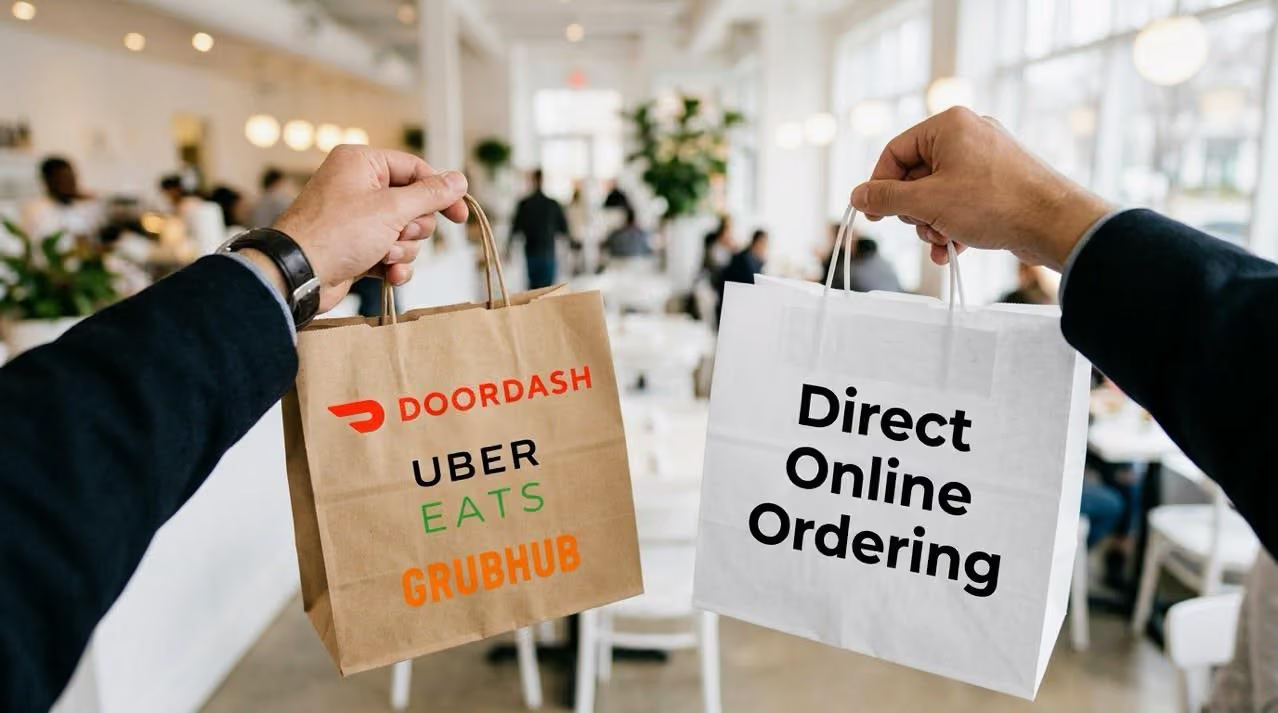
With an average applied fee of $2.26, most orders sit near the low end of that band, which is where they belong. The bigger idea sits underneath the pricing. Every order that runs through a marketplace resets the relationship, because the customer belongs to the platform, not the restaurant. Direct ordering builds repeat behavior around your own customer base instead.
That is what makes fee strategy and loyalty the same conversation. When checkout feels smooth and pricing feels familiar, customers come back on their own schedule, and a loyalty program turns that return into a habit you actually own.
How does Restolabs help restaurants own Middle Eastern online ordering?
Restolabs gives delivery-heavy restaurants a direct channel to capture demand, keep customer data, and manage fees without handing every order and relationship to a third-party marketplace.
For a cuisine that already skews delivery with a $45+ basket, ownership is the point. Restolabs provides commission-free online ordering built for mobile, so the 9-11 PM late-night window and the Thursday-to-Friday evening peak convert on the customer's phone. Zone logic, fee settings, and repeat-buyer data all stay under the restaurant's control, which is exactly what delivery-led numbers reward.
That keeps growth on the operator's terms: wider reach, disciplined pricing, and a customer base the restaurant actually owns.
Ready to take back your online ordering? Book a Demo

Sruthi Sekar specializes in brand strategy, growth, and user experience in the hospitality industry. As the driving force behind Restolabs, she helps restaurants harness technology to scale and thrive. With a background in design, branding, and entrepreneurship, she brings a sharp focus on crafting digital experiences that drive real business impact.
Frequently Asked Questions
Middle Eastern cuisine skews delivery-heavy, with less than 35% pickup in our data. That means delivery is the dominant fulfillment mode, well below the platform-wide mix of 60.1% pickup and dine-in.
Middle Eastern AOV is $45+ in our data. A higher basket supports stronger delivery economics, because larger orders absorb delivery friction and fees more easily than low-ticket concepts.
High delivery propensity and a $45+ AOV make broader service areas viable, especially when nearby demand is strong. The key is protecting ticket size and prep timing so wider reach stays profitable.
Friday is the top ordering day, with Thursday and Saturday close behind. Dinner from 5:30-8:30 PM is the main peak, while 9-11 PM skews delivery-heavy for late-night planning.
Turkish/Kebab is even more delivery-oriented, with less than 30% pickup in our data. That makes it a strong benchmark for judging whether a Middle Eastern restaurant's pickup share is normal or unusually low.
The UAE is a key geography for Middle Eastern and fast-food late-night delivery, with 9-11 PM demand skewing strongly toward delivery. Restaurants that stay open later can capture a profitable window with limited competition.
The most useful benchmarks are fulfillment mix by cuisine, AOV, daypart and day-of-week timing, fee ranges, and UAE late-night demand patterns.







.webp)

.svg)
.webp)