
Key Takeaways
- According to the Restolabs 2026 Order Analytics Dataset, which covers more than 4 million orders processed across the Restolabs platform spanning 2,126 locations and 479 brands from March 2025 to March 2026, Friday is the highest-volume ordering day platform-wide.
- Middle Eastern cuisine averages $45+ per order in our 2026 dataset, roughly 15% above the platform average - meaning timing mistakes cost you more per missed order.
- The dinner peak window of 5:30 PM to 8:30 PM local time drives the bulk of daily order volume; this is where dinner promotions belong.
- Monday is consistently the lowest-volume ordering day in our 2026 dataset, making it the right window for win-back and loyalty offers - not discount blasts during peak hours.
- The U.S. Mediterranean restaurant industry hit $33.4 billion in revenue across 16,434 businesses in 2025, according to IBISWorld - meaning competition for the same dinner window is rising.
- Ramadan, Eid, and Nowruz reshape the order calendar; timing emails and push notifications to local iftar is the single biggest unlock.
Most operators promote when they're free, not when customers are hungry.
That gap is what's eating your return on every email, post, and ad. We see it constantly in our order data: a Friday dinner promotion fired off at 11 a.m. lands in inboxes hours before anyone is thinking about food, then gets buried by the 5 p.m. wave of competing offers. The fix isn't bigger campaigns. It's better timing.
This guide is built from the actual ordering behavior of Middle Eastern, Lebanese, Mediterranean, Persian, and Arabic restaurants on our platform. We'll walk through the days, hours, channels, and cultural windows that move the needle - and the ones that quietly waste budget. If you've been burned by weak email opens or flat social posts, the problem usually isn't the message. It's the clock.
Why timing matters more than volume for Middle Eastern restaurants
Posting more isn't the answer. Posting at the right hour is.
The U.S. Mediterranean restaurant category - which includes most Middle Eastern, Lebanese, and Persian concepts - generated $33.4 billion across 16,434 businesses in 2025, with a 3.0% CAGR from 2020 to 2025, per IBISWorld. That's a lot of operators competing for the same dinner inbox. If your promotion shows up early, it gets read and forgotten. If it shows up late, the customer already ordered from someone else.
Cuisine matters here too. In our 2026 dataset, Middle Eastern cuisine averages $45+ per order, roughly 15% above the platform average - which means a poorly timed promotion costs you more per missed conversion than it would for a $20-AOV cafe. Every hour you misfire is a higher-margin order walking next door.
Our restaurant analytics that surface order patterns make this visible at the restaurant level. The pattern repeats across operators: promotions sent inside the live ordering window convert materially better than those sent outside it. The math compounds - higher click-through, higher cart completion, higher repeat rate.
The best days of the week to promote online
There's a clear weekly rhythm, and Friday owns it.
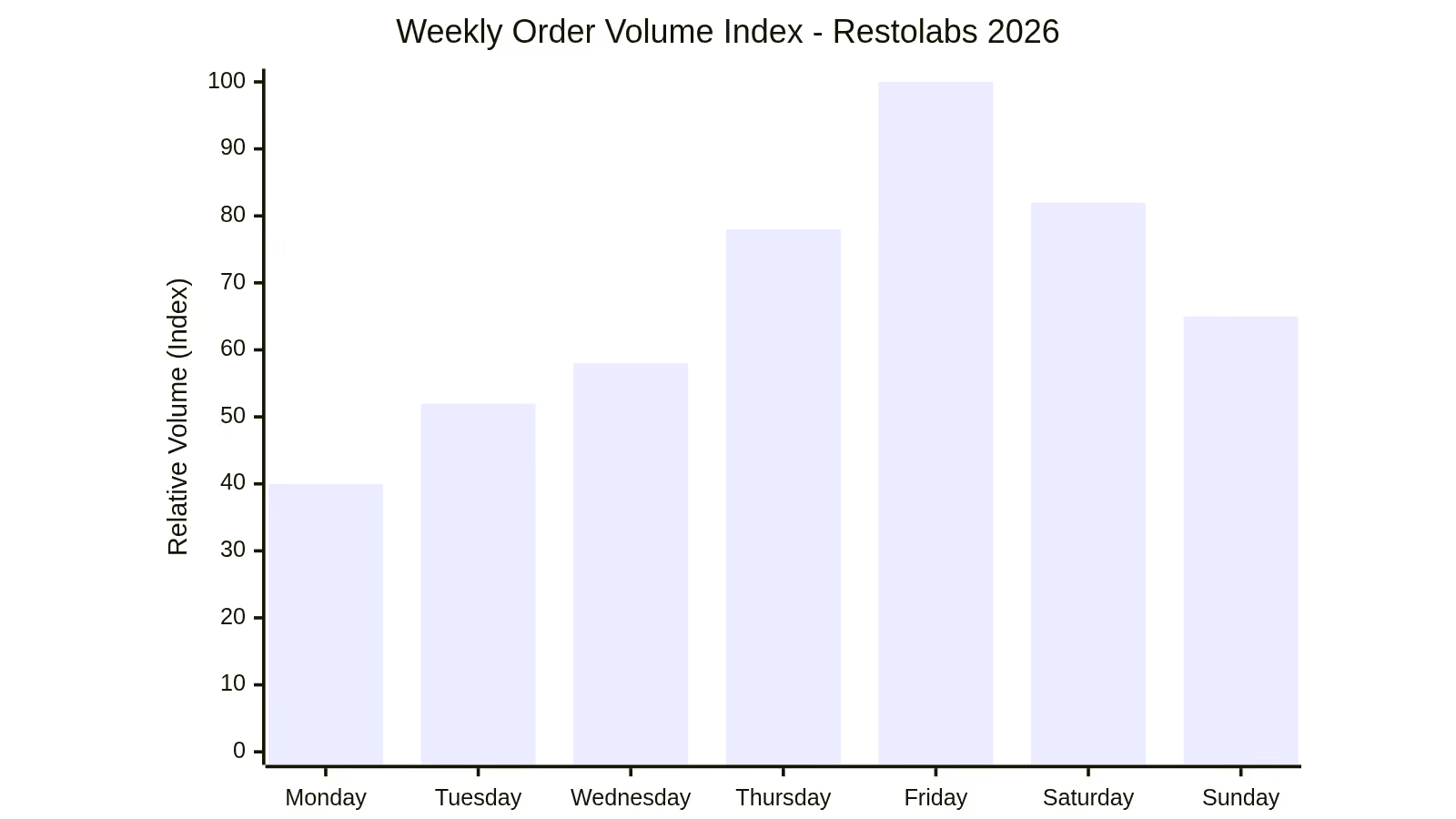
According to the Restolabs 2026 Order Analytics Dataset, Friday is the highest-volume ordering day platform-wide, followed by Thursday and Saturday. For Middle Eastern operators, that means Thursday and Friday should carry the heaviest dinner-promotion weight. Thursday is when families start planning the weekend meal. Friday is when they pull the trigger.
Sunday is the family-platter day most operators underplay. Group orders, mezze spreads, and shared plates surge as households eat together before the week resets. If you sell family-size bundles, Sunday afternoon is a strong push window.
Monday is consistently the lowest-volume ordering day across our platform, making it ideal for win-back campaigns and loyalty incentives. Don't fight the curve. Use Monday and Tuesday to re-engage dormant customers with double-points offers, not to flog full-price dinner promos.
The best hours to promote (and when to stay quiet)
Within each day, three windows do almost all the work.
Lunch window strategy (11 AM-1 PM)
The lunch rush of 11 AM to 1 PM local time is short and intent-heavy. People are deciding fast. This is the window for single-serve wraps, shawarma platters, mezze lunch combos - items priced under $20 with a clear bundle. Push these via Instagram Stories and Google Ads dayparting, not email.
Pre-dinner decision window (4 PM-6 PM)
This is where the money is.
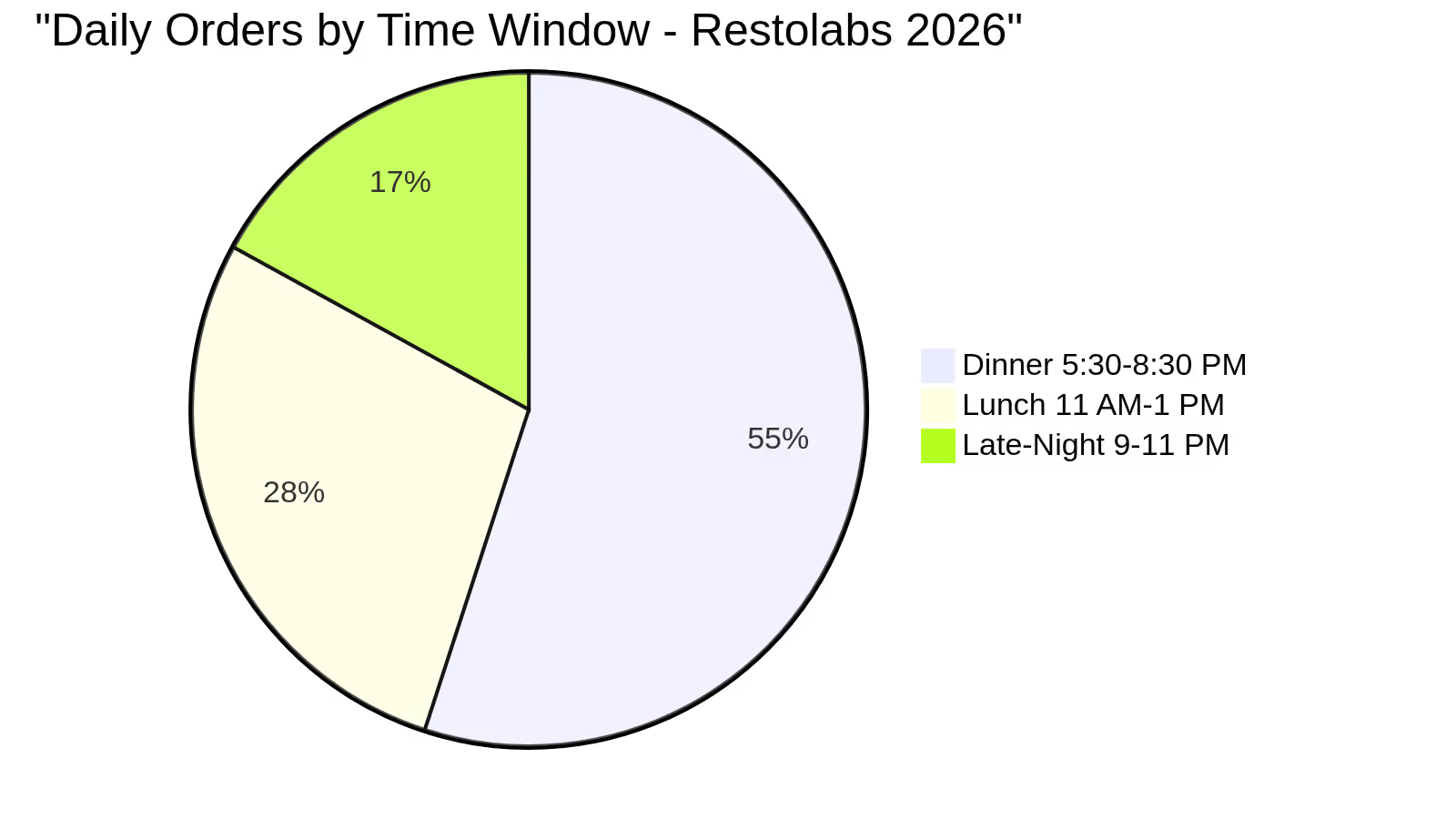
The dinner peak window of 5:30 PM to 8:30 PM local time drives the bulk of daily order volume in our 2026 dataset. The decision happens 60 to 90 minutes before - which is why 4 PM to 6 PM is the highest-leverage promotional moment of the day. Family platters, group meals, catering reminders, and high-AOV bundles all belong here.
Late-night and post-9 PM window
The late-night window of 9 PM to 11 PM is delivery-heavy and pizza-dominant across the platform, but Middle Eastern operators with shisha, dessert, or grill menus can carve out share. Push baklava, knafeh, kunafa, mint tea bundles, or late-grill specials. Keep portions individual, not family-size.
Outside these three windows, stay quiet. Sending a dinner promo at 2 PM doesn't get more reach - it gets ignored, then competes with itself when the dinner window opens.
Promoting around the Middle Eastern cultural calendar
The cultural calendar is where Middle Eastern restaurants have a structural edge over generic competitors. None of the bigger chains are timing campaigns to iftar. You can.
Ramadan - the single biggest promotional window
During Ramadan, the entire daily order pattern shifts. Lunch goes quiet. Pre-iftar promotion windows light up. Suhoor adds a second daily peak in the pre-dawn hours that doesn't exist any other month.
Time your emails and push notifications to land 60 to 90 minutes before local iftar - not at a fixed clock time. Iftar moves by city and date. Our 2026 dataset shows 97.4% of orders were timezone-matched for time-of-day analysis, so segmenting by city's iftar schedule is operationally simple if your ordering platform supports it.
Open catering pre-orders four to seven days ahead. Family iftar bundles, group platters, and dessert add-ons should be front and center on your ordering page banner for the full month.
Eid al-Fitr and Eid al-Adha
Both Eids are catering-heavy. Pre-orders open five to seven days out, and the highest-converting send is a 72-hour reminder via email and SMS. Gift card promotions also surge in the week before each Eid as families send food to relatives.
Nowruz (Persian New Year)
For Persian grills and Iranian cafes, Nowruz is the equivalent of Ramadan in commercial intensity. Sabzi polo bundles, sweet boxes, and traditional plates pre-order in the two weeks before. Push email and social hard in that window.
Weekend mezze nights and cultural events
If you host shisha nights, cooking classes, or live music, tie online ordering promotions to those events. A "reserve your table, pre-order your mezze" flow converts more than either offer alone.
Channel-by-channel promotion timing
Different channels serve different windows. Stop treating them interchangeably.
Email - when to hit send
Tuesday 10 AM and Friday 3 PM are reliable baselines. During Ramadan, replace those with iftar-minus-90-minutes sends. Avoid Monday mornings - that's where unsubscribes cluster.
SMS - reserved for high-intent windows
SMS is the most aggressive channel. Use it only inside the 4-6 PM dinner decision window and for catering reminders 24-72 hours before an event. Never before noon. Never for casual content.
Instagram and Facebook posts
Visual platforms work pre-meal. Stories during the 11 AM lunch lead-in. Feed posts at 3:30-4:30 PM to seed the dinner decision. Reels of grill flame, fresh hummus pulls, and mezze spreads outperform static product shots.
Google Ads and Google Business Profile
Use dayparting. Bid up between 11 AM-1 PM and 4 PM-8 PM. Pause overnight unless you're targeting late-night dessert or shisha audiences. Refresh your GBP photos monthly - fresh visual content correlates with higher direct discovery in our online ordering statistics reporting.
Online ordering page banners and push notifications
This is the channel most operators underuse. If a customer is already on your ordering page, a banner offering free baklava on orders over $40 converts at a rate email can't touch. Push notifications via a branded restaurant mobile app reach customers who already chose you once - and our 2026 dataset shows a median reorder interval of 8.9 days between repeat orders. That's your push-notification cadence, not a guess.
Seasonal promotion windows beyond the cultural calendar
Cultural calendar aside, four seasonal windows reward Middle Eastern operators specifically.
Summer grill season. May through August lifts grill, kebab, and mezze orders. Promote outdoor catering, picnic platters, and party bundles.
Holiday corporate catering. Late November through mid-December is dense with office orders. Mediterranean and Middle Eastern menus travel well and accommodate mixed dietary needs - a real advantage over single-protein cuisines.
January health-conscious push. Mediterranean diet positioning lands hardest in the first three weeks of January. Reframe existing menu items around fresh ingredients, olive oil, and plant-forward bowls.
Back-to-school family meal kits. Mid-August through early September, working families look for assembled dinners. Bundle a family-size shawarma platter with sides and dessert at a fixed price point.
Promo types that match each timing window
The promotion has to match the moment.
- Lunch combos - weekday 11 AM-1 PM, single-serve, sub-$20.
- Family platters - Thursday through Sunday evenings, $45+ AOV target, family-size positioning.
- Catering and event packages - five to seven days advance, weekend events, corporate weekdays.
- Loyalty point boosters - Monday through Wednesday, slow-day volume lift.
- First-order discounts - any window, but highest conversion inside the dinner decision window.
This is also where online ordering built for fast-casual restaurants pays back. The right ordering platform lets you schedule banners, push notifications, and loyalty triggers to fire automatically inside these windows - not require a manager to remember at 4 PM on Friday.
Adding a built-in restaurant loyalty program gives you the cleanest Monday-Wednesday lever. Double-points days on slow weekdays move volume without discounting your peak hours - which is where margin actually lives.
Common timing mistakes Middle Eastern restaurant owners make
A short list of what we see repeatedly:
- Posting only when staff has downtime. Mid-afternoon promos go to empty inboxes.
- Monday-morning email blasts. Highest unsubscribe rate of the week.
- Ignoring iftar variation by city. A 6:45 PM blanket send misses iftar by 40 minutes in some markets.
- Discounting peak hours. You're cutting margin on orders you'd get anyway. Discount slow times, not busy ones.
- Treating Friday and Saturday identically. Friday skews family-platter and group orders; Saturday skews date-night and pickup. Different promos.
A weekly promotion calendar template for Middle Eastern restaurants
Copy it, adjust to your local iftar schedule during Ramadan, and run it for four weeks before changing variables.
Where to go from here
Timing is the highest-leverage lever you have, and it costs nothing to fix. The operators winning the Friday dinner window aren't spending more - they're spending at the right hour. Pair the calendar above with a platform that automates the sends, and the math works on its own.

Sruthi Sekar specializes in brand strategy, growth, and user experience in the hospitality industry. As the driving force behind Restolabs, she helps restaurants harness technology to scale and thrive. With a background in design, branding, and entrepreneurship, she brings a sharp focus on crafting digital experiences that drive real business impact.
Frequently Asked Questions
Thursday and Friday for dinner-focused promotions, Sunday for family-platter pushes, and Tuesday for email sends with discount offers. Friday is the highest-volume order day platform-wide in our 2026 dataset, so weight your strongest creative there.
Send emails and push notifications 60 to 90 minutes before local iftar time, segmented by city so the timing actually lands. Promote catering bundles four to seven days in advance, with a 72-hour reminder via SMS.
The dinner peak window of 5:30 PM to 8:30 PM local time drives the bulk of daily orders in our 2026 dataset. The buying decision typically happens 60 to 90 minutes earlier, so promotions should land between 4 PM and 6 PM.
They serve different windows. Instagram works during the 11 AM lunch lead-in and the 3:30-5 PM pre-dinner moment, while email performs best Tuesday 10 AM and Friday 3 PM. You need both - timing decides which one carries each campaign.
Quality over frequency. Three to four well-timed promotions per week inside peak ordering windows outperform daily generic posts that ignore when customers actually buy.
Discount slow hours to lift volume - Monday and Tuesday are ideal in our 2026 dataset since they're consistently the lowest-volume days. Never discount peak hours; you erode margin on orders you'd already capture at full price.
Branded mobile app push notifications and online ordering page banners. Both reach customers already in buying mode, and given the median reorder interval of 8.9 days in our 2026 dataset, push notifications timed to that cadence routinely outperform broader channels.





.webp)

.svg)
.webp)