
.avif)
Key Takeaways
Choosing the right restaurant website builder is not just about design. The best platforms help restaurants improve discoverability, drive direct online orders, manage day to day operations, and build stronger customer relationships over time.
In this guide, we compare the best restaurant website builders based on search visibility, online ordering capabilities, operational features, customer ownership, pricing, and long term value so you can choose a platform that supports both restaurant growth and profitability.
Your restaurant website is no longer just a digital menu.
It influences how customers discover your business on Google, browse your menu, place direct orders, book reservations, and decide whether to order from you directly or through third-party marketplaces.
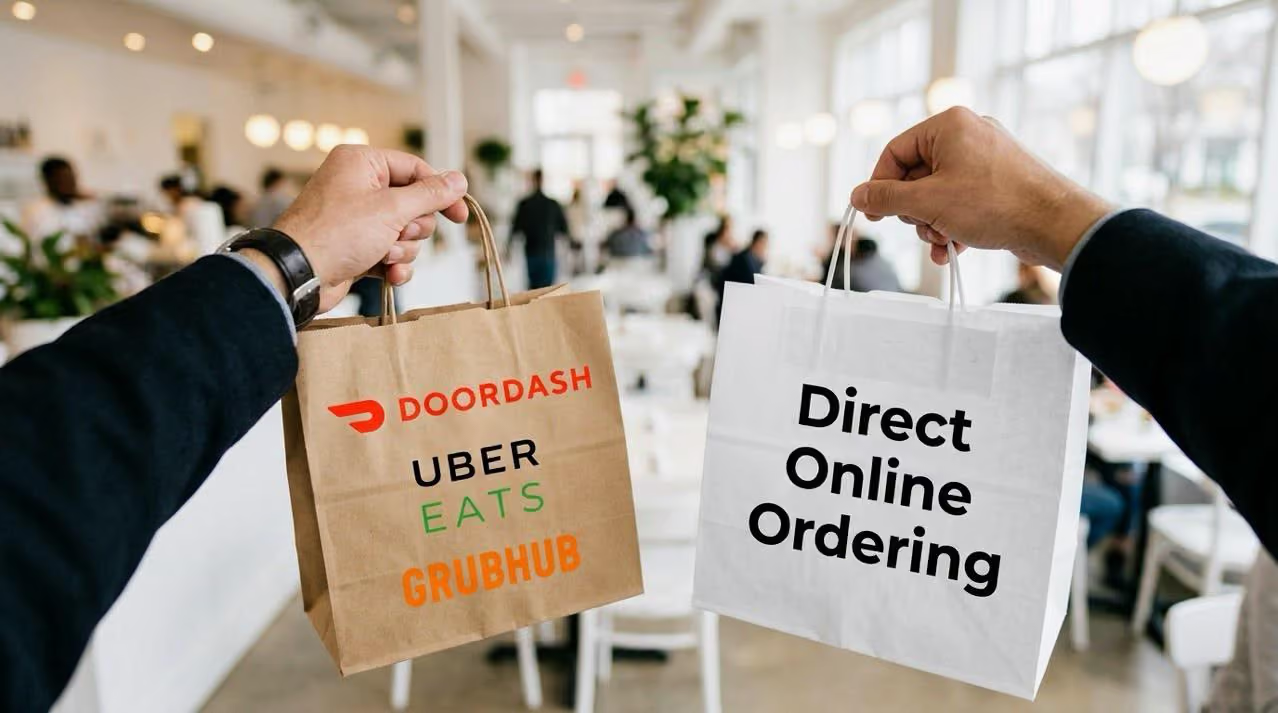
But restaurant website builders are no longer competing only on design templates. Today, the best platforms combine website management, online ordering, mobile performance, SEO, delivery workflows, and customer retention tools into a single experience. In fact, 58% of customers prefer ordering delivery directly through a restaurant’s website or app, which means the website you have is directly connected to the revenue you capture.
In this guide, we compare the best restaurant website builders based on online ordering capabilities, search visibility, ease of management, operational flexibility, and long-term business value so you can choose a platform that supports both customer acquisition and restaurant operations.
Restaurant Website Builder vs Restaurant Ordering Platform: What's the Difference?
Restaurant website builders help restaurants create and manage their online presence through website templates, page editors, menu pages, SEO tools, and branding controls.
Restaurant ordering platforms focus more heavily on transactions and operations — handling online ordering, fulfillment, delivery management, POS connectivity, loyalty programs, and customer retention.
Many modern platforms now combine both capabilities, but the balance differs significantly. Some prioritize design flexibility and content management, while others prioritize ordering workflows and operational control.
This guide evaluates platforms across both dimensions because restaurants increasingly need websites that drive orders, not just traffic.
What Features Matter Most in Restaurant Website Builders?
Not every restaurant website builder solves the same problem.
Some platforms prioritize website design and branding, while others focus more heavily on online ordering, restaurant operations, search visibility, and customer retention. To compare platforms fairly, we evaluated each restaurant website builder using a weighted framework based on the capabilities that most directly affect restaurant growth, operational efficiency, and long-term profitability.
Our evaluation focused on five areas: online ordering and operational capabilities, search visibility and mobile performance, ease of day-to-day management, branding and customer experience, and overall long-term value.
The framework below explains how each category was weighted and evaluated.
Which Restaurant Website Builders Are Best in 2026?: A Quick Comparison
Here’s a snapshot of the best restaurant website builders and what each offers:
What Are the Best Restaurant Website Builders?
Below, you’ll find the best restaurant website builders for different business models, operational needs, and online ordering priorities:
1. Restolabs (Best for restaurants that want SEO-friendly websites with built-in online ordering)
Restolabs is a restaurant website builder and online ordering platform that helps restaurants drive direct orders through branded, commission free websites.
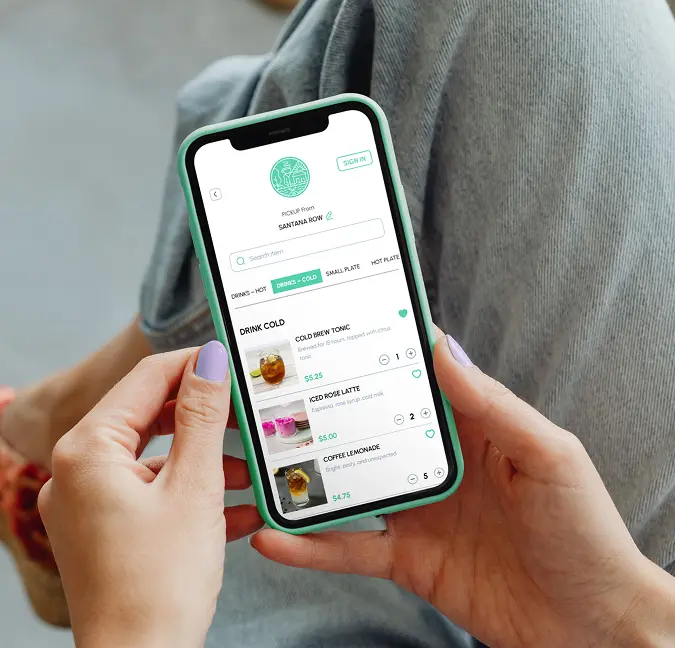
Restaurants can launch branded, mobile-optimized websites using customizable templates and manage menus, promotions, pricing, operational hours, and ordering workflows from a centralized system without relying heavily on developer support.
Unlike website builders that primarily focus on visual customization, Restolabs places greater emphasis on restaurant operations by combining website management, direct ordering, customer ownership, loyalty programs, delivery workflows, and POS connectivity within one platform.
The platform is particularly strong for restaurants prioritizing direct ordering growth, customer retention, and operational efficiency while maintaining ownership of customer relationships and ordering channels.
Restolabs Key Features & Capabilities
Website management and customization
- Launch branded restaurant websites using customizable templates with your own logos, colors, fonts, banners, and food imagery
- Publish SEO optimized pages for catering, reservations, promotions, seasonal campaigns, and location specific information
- Support multi location websites with location specific menus, taxes, delivery settings, and ordering controls
- Add custom sections to your web pages for reservations, FAQs, catering, or promotions based on how your business runs
Ordering and operations
- Manage delivery, pickup, curbside, dine-in QR ordering, and catering workflows directly from your site
- Support advanced ordering workflows with split modifiers, combo deals, multilingual ordering, and busy hour controls
- Control item availability, prep times, order throttling, and operational hours in real time
Payments and POS integrations
- Integrate with 50+ payment gateways, including Stripe and PayPal, to support secure online payments
- Connect your website with POS systems like Toast, Clover, Genius, Revel, PAR Pixel, and more for synchronized ordering, menu updates, and reporting
Customer growth and retention
- Capture customer profiles, order history, and purchasing behavior for long term customer ownership
- Run loyalty programs using rewards points, coupons, push notifications, and promotional campaigns
- Offer digital gift cards and promotional experiences directly through the platform
SEO and discoverability
- Build search friendly restaurant websites designed for local search visibility and menu discovery
- Support mobile optimized ordering experiences across devices
Restolabs pricing
Restolabs ratings and reviews
- G2: 4/5
- Capterra: 4.7/5
Restolabs evaluation snapshot (Total Weighted Score: 4.32)
2. Bentobox (Best for managed restaurant websites in a Clover-first ecosystem)
Bentobox, now part of Clover Hospitality by BentoBox, is a restaurant website and commerce platform that brings your website, online ordering, reservations, events, marketing, and diner data into one connected system.
It’s now positioned strongly around the Clover ecosystem, especially for restaurants that want websites, ordering, payments, and front-of-house tools to work together.
You also get full-service support from build to launch, so BentoBox is less DIY than builders like Wix or Squarespace.
The tradeoff is speed and time required before launch. Setup is not instant or fully self-serve, and implementation can take weeks or months depending on your website scope, ordering setup, POS connection, reservations, and other operational workflows.
After launch, you can manage diner data, marketing activity, and day-to-day operations from a single dashboard. The platform also connects with POS systems like Clover and Square, to keep payments and reporting aligned across your business.
Bentobox key features
- Embed SEO fields within website pages and sitemaps to improve local search visibility
- Display upsell prompts at checkout to promote high-performing or custom menu items
- Update menus, modifiers, and availability from a centralized menu database across your website
- Track sales performance with built-in website analytics for traffic, orders, and customer behavior
- Sync menus, hours, and business information across Google Business Profile (GBP) and Facebook
Bentobox pricing
Bentobox ratings and reviews
- G2: Not enough reviews
- Capterra: 4.5/5
BentoBox evaluation snapshot (Total Weighted Score : 3.85)
3. Wix (Best for design-forward restaurants that want hands-on control)
Wix is a self-serve website builder for restaurant owners who want strong control over their site design, structure, and day-to-day updates.
You can shape the website around your brand, content, and customer journey without depending on a developer for every change. This makes Wix useful for restaurants that want a polished, flexible website and are comfortable managing the setup themselves.
However, Wix is not the deepest restaurant-specific integration platform. It works best when your needs fit its built-in restaurant tools and supported App Market connections.
If your restaurant depends on complex delivery, POS, loyalty, or back-office integrations, you may need to check whether those tools are directly supported before building your site around Wix.
Wix key features
- Connect supported restaurant tools such as DoorDash Drive for delivery and Square for Restaurants for menu and order syncing, with additional business apps available through the Wix App Market where supported
- Use a drag-and-drop editor with customizable layouts and elements to design your restaurant website
- Select and customize restaurant-specific templates for menus, ordering pages, and brand visuals
- Configure SEO settings, automated email campaigns, and SMS notifications for running promotions
- Create points-based programs or offer digital gift cards and coupons directly through your site with Wix’s built-in restaurant promotion tools and Wix-made apps
Wix pricing
Wix ratings and reviews
- G2: 4.2/5
- Capterra: 4.4/5
Wix evaluation snapshot (Total Weighted Score : 3.70)
4. Squarespace (Best for design-led restaurants and reservation-driven dining)
Squarespace is a website builder with restaurant-focused templates and connected tools for menus, reservations, online ordering, events, and marketing.
You can use it to create menu pages, add reservation blocks, show location details, collect private event inquiries, and support ecommerce from one restaurant website.
For reservations and ordering, Squarespace connects with Tock for bookings and table management, and with ChowNow for commission-free pickup and delivery orders. This lets customers reserve, order, or book dining experiences from your site, while the connected tools handle the operational side at an additional cost.
If you’re a restaurant that hosts private events, tastings, themed nights, or ticketed dinners, Squarespace also supports event listings, attendee registration, simple ticketing, branded emails, automated outreach, invoices, and contracts for private buyouts or custom requests.
Squarespace supports restaurant ordering workflows primarily through third-party integrations rather than native restaurant-specific functionality. Restaurants can connect marketing tools like Mailchimp and EZ Texting, local SEO tools such as SEOSpace Local, POS systems including Clover and Lightspeed, and delivery providers like Shipday through middleware and external integrations.
Squarespace key features
- Edit web pages using a grid-based visual editor with drag-and-drop layout control
- Create visually rich menus and pages using images, video, and multimedia content blocks
- Add motion effects and visual enhancements to the pages for a more engaging browsing experience
- Personalize fonts, colors, layouts, and styling on the website using curated design systems and style presets
- Display your menu using a dedicated Menu Block that automatically formats text to match your site’s design, with HTML-based menus searchable by Google
Squarespace pricing
Squarespace ratings and reviews
- G2: 4.4/5
- Capterra: 4.5/5
Squarespace evaluation snapshot (Total Weighted Score : 3.57)
5. Lovable (Best for custom workflows and restaurants with unique operational needs)
Lovable is an AI-powered website and app builder that generates a working product based on plain-language prompts.
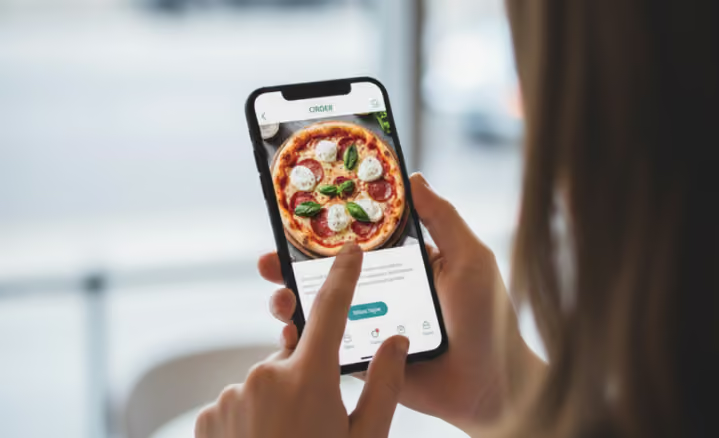
You describe what you want (e.g., "build a pizza shop website with an interactive menu and mobile-ready design"), and the platform creates the interface, logic, and supporting systems required to run it.
You can extend your website beyond standard pages by creating custom tools such as order tracking systems, internal dashboards, or operational workflows.
Lovable supports backend setup, data storage, and integrations with external tools, which makes it easier for you to adapt your website and related workflows based on how your business runs.
For backend and hosting, Lovable offers Lovable Cloud, its built-in full-stack hosting platform. Lovable Cloud includes hosting, database, authentication, storage, edge functions, and AI features, so you can support more complex website and app functionality from the same platform. Usage-based Cloud and AI costs may apply beyond the included allowance.
Lovable also supports external integrations with tools such as Stripe, Shopify, Google Maps Platform, Twilio, Resend, Mailgun, Brevo, HubSpot, Airtable, Slack, and Google Workspace, which can support restaurant workflows around payments, customer communication, location features, CRM, and internal operations.
Lovable key features
- Build custom restaurant pages, menus, and workflows using AI assisted generation and editable templates
- Use Visual Edits to click on page elements and tell the AI what to change, such as colors, fonts, spacing, or layouts, without touching code
- Automatically provision a Postgres database (via Supabase) and authentication for saving customer data and order history
- Connect external tools and APIs to build restaurant workflows with additional setup and configuration requirements
- Deploy your website or publish updates with one-click publishing
Lovable pricing
Lovable sites and apps can be hosted through Lovable Cloud, Lovable’s built-in full-stack hosting platform. Lovable Cloud includes hosting, database, authentication, storage, edge functions, and AI features.
Usage-based Cloud and AI costs apply beyond the included monthly allowance, and restaurants can also connect external services such as Supabase, Stripe, Shopify, Resend, or other APIs depending on their setup.
Lovable ratings and reviews
- G2: 4.6/5
- Capterra: Not enough reviews
Lovable evaluation snapshot (Total Weighted Score : 2.80)
Which Restaurant Website Builder Is Right for Your Restaurant?
Your choice depends on how your restaurant operates, how much setup support you need, and whether your priority is direct ordering, design control, reservations, or custom workflows:
- If you want an SEO-friendly restaurant website with direct ordering, POS/payment integrations, loyalty tools, and full ownership of diner data → Restolabs
- If you want a managed restaurant website and commerce platform, and you’re already using or moving toward the Clover ecosystem → BentoBox
- If you want strong design control and are comfortable managing setup, updates, and supported restaurant integrations yourself → Wix
- If visual presentation, reservations, private events, and dining experiences matter more than complex restaurant operations → Squarespace
- If you need custom workflows, internal tools, dashboards, or AI-generated functionality beyond standard restaurant website templates → Lovable
Choose the Restaurant Website Builder That Matches How You Grow
At this point, you likely already have a clearer picture of the features your restaurant needs, the platforms worth checking out, and which tools align best with your operational requirements, ordering setup, and business model.
The next step is to narrow your shortlist and explore how each platform works in practice.
Book demos, test the ordering flow on mobile devices, review the backend experience, and ask vendors about onboarding, menu management, SEO capabilities, and long-term support before making a decision.
If your restaurant depends heavily on direct online orders, repeat customers, delivery operations, and Google visibility, Restolabs gives you all of those capabilities in one platform instead of forcing you to manage multiple disconnected tools.
Schedule a demo with Restolabs to see the platform in action.

Sakthi Vignesh is a product and technology leader specializing in scalable solutions for the hospitality industry. As the force behind Restolabs, he focuses on building robust, user-centric platforms that help restaurants streamline operations and grow efficiently. With deep expertise in technology, product strategy, and system architecture, he drives innovation at the intersection of business and tech.
Frequently Asked Questions
Restaurants still need their own website because delivery marketplaces don’t give them full control over branding, customer relationships, or direct ordering. A restaurant website helps customers discover your business through Google searches, view updated menus, place direct online orders without marketplace commissions, and access details like operating hours, reservations, and contact information from one place.
An SEO-friendly restaurant website uses search-optimized page structures, indexed menus, fast-loading pages, mobile responsiveness, and location-based content to improve visibility in Google search results.
Yes. Having a restaurant website gives your customers a direct way to place orders without relying entirely on third-party delivery apps. You can promote offers, loyalty rewards, combo deals, and repeat-order incentives directly through your site to improve customer retention and order frequency. Fast-loading, mobile-optimized pages and a streamlined checkout reduce friction and keep customers from dropping off before they order.
Yes. Many restaurant website builders like Restolabs support multi-location management through centralized dashboards that let your restaurant manage menus, delivery zones, pricing, taxes, and operating hours for each outlet separately. This is especially useful for restaurant chains, cloud kitchens, franchise businesses, and brands operating across multiple cities.
Yes. Restolabs supports direct online ordering for pickup, delivery, curbside, dine-in QR ordering, and catering directly through your restaurant website. You can also connect delivery providers, payment gateways, POS systems, and loyalty programs from the same platform without depending solely on third-party marketplaces.








.webp)

.svg)
.webp)