
.avif)
Key Takeaways
- A white-label food ordering app is a branded ordering channel a restaurant owns, not a marketplace listing it rents.
- For multi-location groups and resellers, the real question is whether one system can run many brands and locations without splintering into a patchwork of disconnected tools.
- The strongest case for owned ordering is not just branding. It is the customer and timing data behind repeat behavior.
- According to our data from the Restolabs 2026 Online Ordering Behaviour Report, this model runs on 4,000,000+ orders across 2,126 active locations and 479 brands, which gives it operating proof rather than theory.
What a White-Label Food Ordering App Means for Restaurants
A white-label food ordering app gives a restaurant a branded ordering channel it owns, instead of a marketplace listing it leases from someone else.
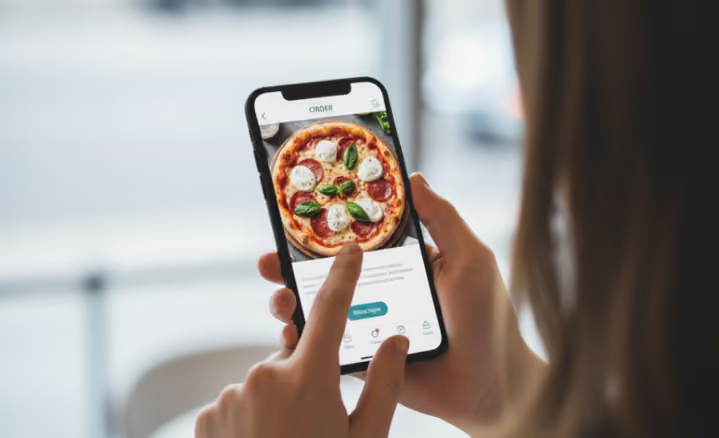
In plain restaurant terms, it is a customer-facing app or ordering website that carries your logo, your colors, your menu, and your domain. When a guest opens it, they should feel like they are ordering from you, not from a third party that happens to feature you in a crowded grid of competitors.
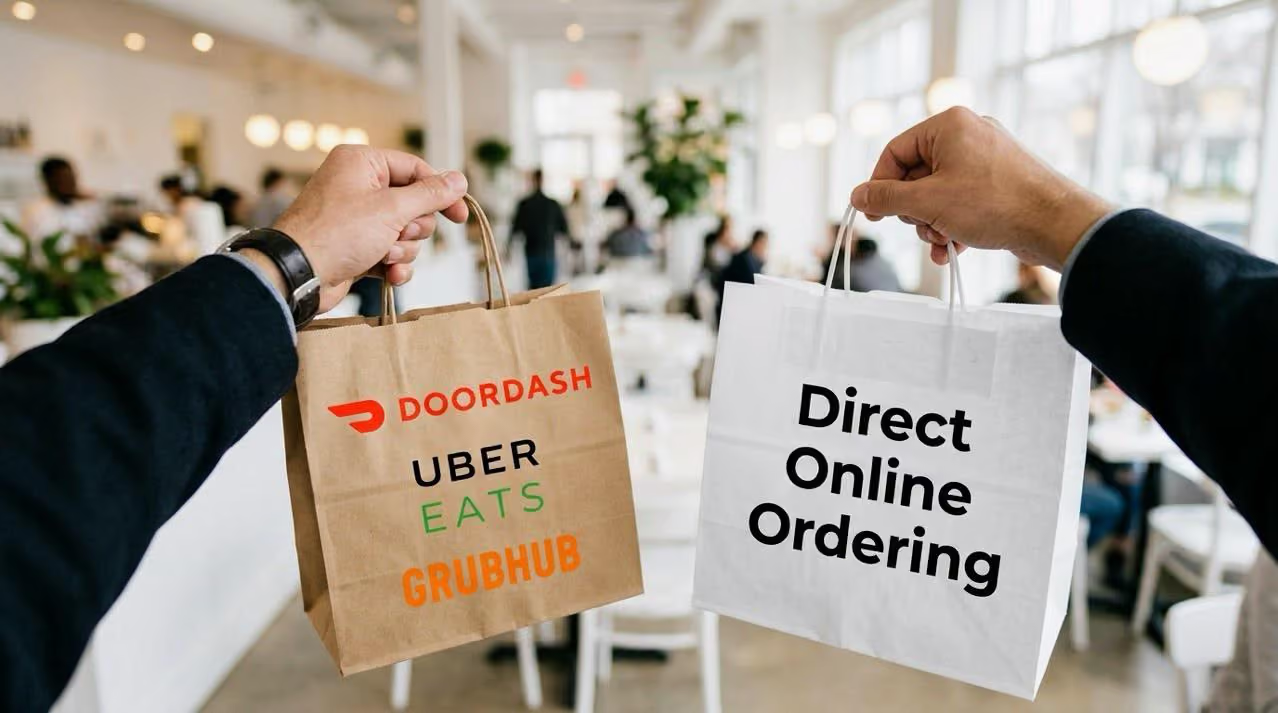
That distinction is the whole point. A marketplace brings you demand, but it keeps the relationship. You get the order, and the platform keeps the customer, the data, and a slice of the check. A white-label app flips that arrangement. You keep the branding, the customer contact details, and the record of what sold and when.
This matters most for operators who want three things at once: control of the guest experience, control of the menu, and a direct channel that does not bleed margin to commissions. Consumer behavior already leans this way. Roughly 67% of consumers prefer to order directly from restaurant websites and apps rather than from aggregators, which validates the shift toward branded channels.
One clarification worth keeping straight: a white-label app is not the same as a custom-built app. A custom build usually means long development cycles, ongoing engineering costs, and more moving parts to maintain. A white-label route is a faster, managed path to the same ownership without the drawn-out project.
Why Multi-Location Brands and Resellers Care About Scale
The real test of a white-label platform is whether one system can run many brands and locations cleanly, without turning daily operations into a stack of disconnected tools.
Scale means something slightly different depending on who is asking. A multi-location restaurant group needs consistency: every outlet should feel like the same brand, with the same standards, even as menus and hours shift by location. A reseller needs something else. They need a repeatable model they can deploy across dozens of client brands without rebuilding from scratch each time.
Both cases come down to the same tension: centralized control with local flexibility. Headquarters wants to protect the brand and set the rules. Each location still needs to reflect its own menu, its own pricing, and its own operating hours. A strong setup lets both be true at once, so a franchisee is not fighting the system to update a lunch special.
This is where platform scale stops being a vanity number and starts being a trust signal. If an app already runs hundreds of brands across thousands of locations, you have evidence it can carry your growth instead of buckling under it.
That timezone precision is not a footnote. When a system correctly places 97.4% of orders in the right local time, managers across a distributed network stop firefighting mismatched reports and start comparing locations on equal footing.
The macro trend supports the long view. The global restaurant online ordering system market is valued at $46.7B in 2026 and projected to grow at 14.2% CAGR through 2035, which makes owned, scalable infrastructure a safer bet than a fragmented set of one-off tools. When one system handles many locations cleanly, managers spend less time patching workflows and more time improving how orders actually perform.
What Owned Ordering Data Reveals About Repeat Business
Owned ordering earns its keep when it shows who returns, when they return, and how fast you can act before a customer drifts to a competitor.
Direct ordering data is not just a receipt trail. Handled well, it becomes a view into repeat behavior, visit timing, and the menu patterns that keep guests coming back. Most industry articles focus on the branded look of a white-label app, then stop short of the data that makes the channel worth owning in the first place.
Repeat orders are a margin story before they are a marketing story. A returning customer costs less to convert than a new one, and the path to the next sale is shorter. If you know the typical gap between orders, you can time a nudge instead of blasting a generic campaign weeks too late.
Our numbers make that window concrete. According to our data, returning customers drive the overwhelming majority of volume, which changes how you should think about acquisition spend.
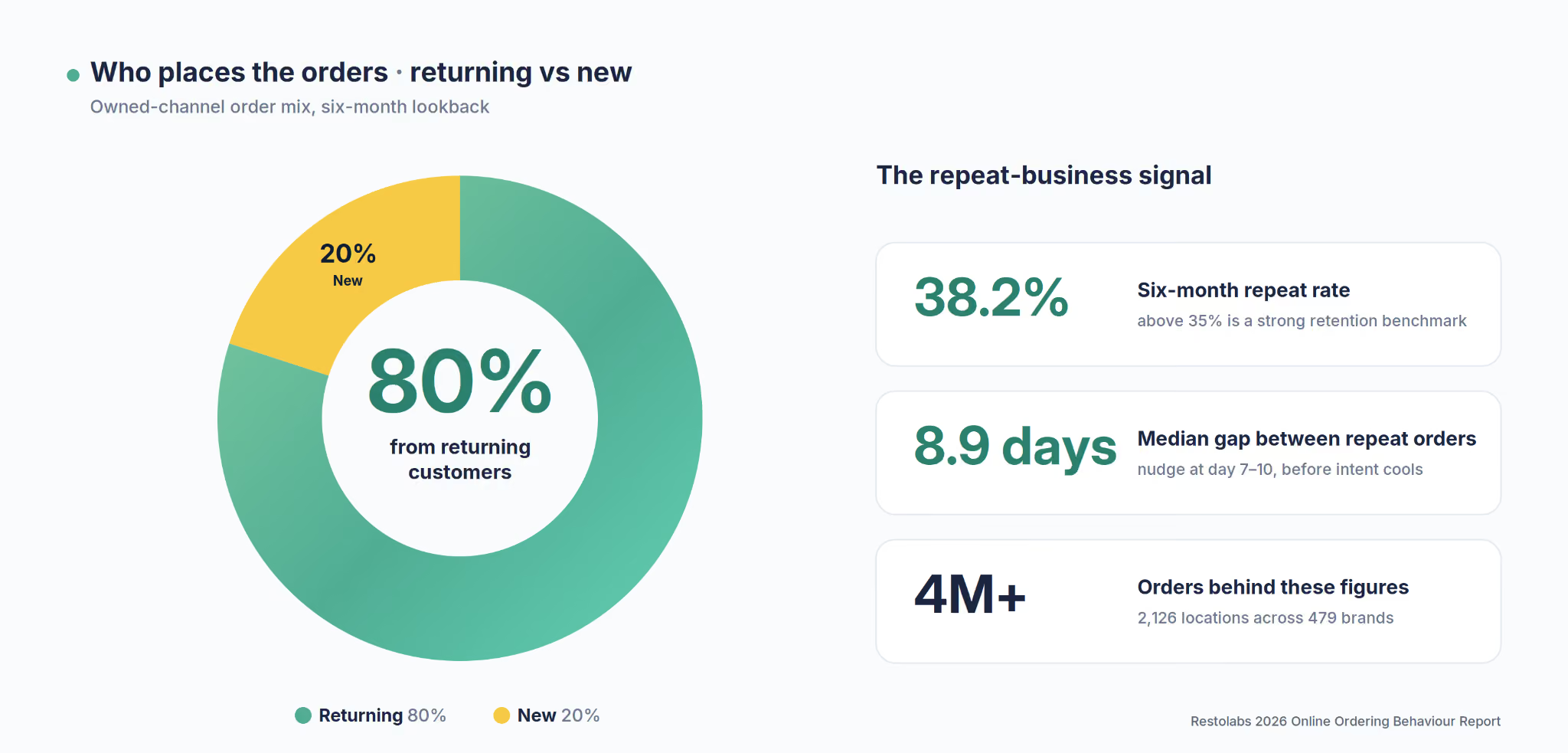
An 8.9-day median between repeat orders is a usable signal. It tells you the re-engagement window is short, so a reminder around day 7 to 10 lands while intent is still warm, and a win-back message after day 14 catches customers before they cool off. Wait past day 30 and you are looking at churn risk instead of a loyalty conversation.
This is also why direct channels compound over time. Online customers visit restaurants 67% more often, which strengthens the argument for a channel you actually control. When the data lives in your system, you can decide when to remind, when to win back, and when to stop guessing.
Should Pickup, Delivery, and Dine-In Follow the Same App Flow?
No. A white-label app should reflect how each concept actually sells, because a delivery-first flow does not fit a bakery, a coffee shop, or a grocery format the same way it fits a pizza operation.
Forcing one default across every location blurs the demand patterns you need to manage. Not every brand wants delivery front and center. Pushing it everywhere muddies the signal you would otherwise use to plan staffing and prep.
Cuisine behavior makes the point. In our data, coffee shops and bakeries skew heavily toward pickup and dine-in, while grocery and convenience formats run almost entirely on delivery. A flow that assumes delivery-first would misread all three.
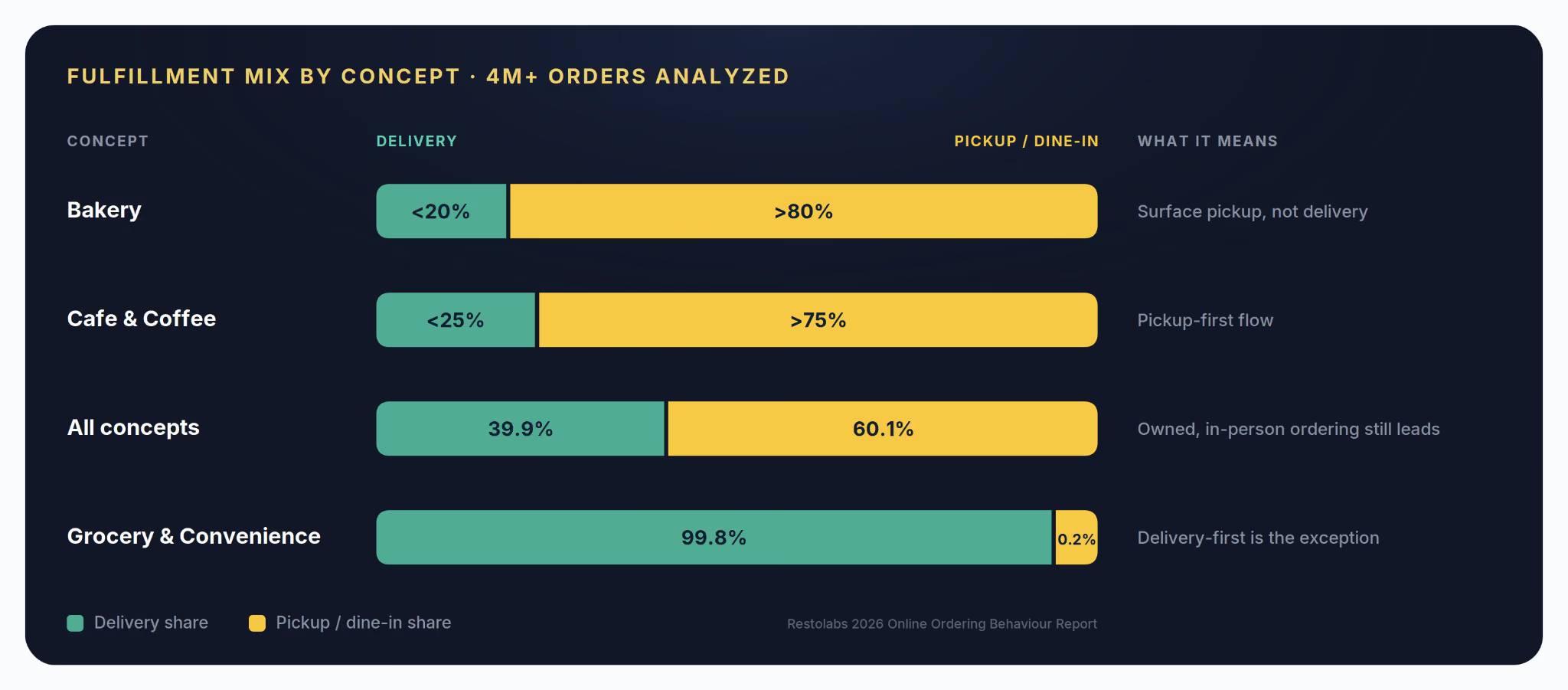
Timing shapes the rest of the operation. Lunch and dinner peaks decide how you staff, when you prep, and how quickly orders need to surface for the line. Online ordering already contributes 15 to 20% of total revenue for fast-casual restaurants, and 81% of restaurants report higher off-peak sales, which is exactly why channel mix and timing deserve deliberate setup. The app should mirror the guest journey you actually see, not the one a generic template assumes.
What Should a White-Label Ordering Platform Include?
The essentials are branding control, menu management, admin permissions, analytics, and a setup path that scales across locations without extra tools bolted on later.
Start with the visible layer. A branded ordering website needs your domain, logo, colors, and a clean menu presentation so it reads as part of the restaurant, not a separate system guests have to trust cold.
Underneath that sits the operational layer staff live in every day. Admin panel access, role-based controls, and order management that handles pickup and delivery in one place keep your team from hopping between screens during a rush. The fewer tools they juggle, the fewer orders slip.
Analytics matter as much as the features you can see. Owners do not just need an app; they need a clear read on what sells, when orders arrive, and which locations or dayparts are strongest. That is the difference between running the channel and reacting to it. A dedicated view into restaurant analytics turns raw order data into decisions about menu, staffing, and timing.
The economics reinforce the case for ownership. Restaurants using independent online ordering solutions see 10% higher sales and 35% lower per-order costs compared with third-party fees. A platform that launches quickly and preserves your data ownership is more useful than one that looks polished but leaves customer records scattered across systems you do not control.
What Performance Benchmarks Should You Compare Against?
Judge direct ordering against repeat rate, order volume, and timing patterns, not launch buzz or app-store ratings that say nothing about how the channel actually performs.
Average order volume is a useful reality check. If a brand sits well below a relevant benchmark, the problem is usually traffic, timing, or retention, not the ordering setup by itself. That framing keeps you from replacing a system that was never the real bottleneck.
Timing benchmarks earn their keep in planning. Friday and the dinner window give you a repeatable frame for staffing and campaign scheduling, so you are not guessing when to push a promotion. Seasonality matters too. A mid-year dip is a pattern, not a broken strategy, and knowing that prevents overreaction to a summer slowdown.
Adoption is only accelerating, which makes benchmarking more valuable over time. The installed base for these systems is expanding at 12 to 15% CAGR through 2035, driven by labor scarcity and contactless demand. Used well, benchmarks are a management tool: they help you spot a location drifting before performance slides too far to recover cleanly.
How Restolabs Helps Restaurants Own White-Label Ordering
Restolabs gives restaurants a branded ordering channel, ownership of customer data, and the operational control to grow without commission pressure eating into margin.
The gain for an operator is straightforward. Restolabs provides a branded ordering website, centralized menu control, and the ability to manage pickup and delivery without handing the customer relationship to a third party. The platform is built for restaurants and resellers that want a direct channel able to scale across locations, not a one-off storefront that stops helping after launch.
If you want to see how the model works across brands and locations, the platform is open to explore.
Ready to take back your online ordering? Book a Demo

Sruthi Sekar specializes in brand strategy, growth, and user experience in the hospitality industry. As the driving force behind Restolabs, she helps restaurants harness technology to scale and thrive. With a background in design, branding, and entrepreneurship, she brings a sharp focus on crafting digital experiences that drive real business impact.
Frequently Asked Questions
A branded ordering app or website that looks and feels like the restaurant, while the operator keeps full control of the channel, the customer data, and the ordering experience.
A marketplace app brings demand from a third party and keeps the customer relationship. A white-label app keeps the brand front and center and gives the restaurant direct control over customer data and repeat engagement.
Yes. That is one of the main reasons multi-location groups and resellers look at white-label systems. Our data covers 2,126 active locations across 479 brands, which illustrates what that scale looks like in practice.
At minimum: order history, repeat behavior, customer contact details, and timing patterns that help shape retention and menu decisions.
Our data shows a 38.2% repeat rate, an 8.9-day median gap between repeat orders, and approximately 80% of orders coming from returning customers.
It depends on setup needs, menu complexity, and integrations, but the strongest platforms reduce launch friction without sacrificing control over branding or data.
That depends on the concept. Pickup, dine-in, and delivery do not behave the same way across every cuisine or location. Coffee shops and bakeries skew heavily toward pickup and dine-in, while grocery and convenience concepts run almost entirely on delivery.






.webp)

.svg)
.webp)