


Key Takeaways
Searches like “burgers near me” signal instant buying intent, making visibility critical for capturing quick decisions.
Optimizing Google Business Profile, NAP consistency, and location-specific keywords helps fast food restaurants win nearby searches.
Most fast food searches happen on mobile, so fast-loading, easy-to-order websites directly impact rankings and conversions.
High ratings, fresh reviews, and active responses improve local rankings and increase click-through rates from search results.
Search visibility delivers maximum value when customers can quickly place orders through optimized, frictionless online journeys.
In today's digital-first world, your fast food restaurant's online presence can make or break your business. With 90% of consumers researching restaurants online before dining, mastering SEO for fast food restaurants isn't just a marketing tactic-it's essential for survival and growth in a competitive market. Whether you're struggling to increase online orders, stand out from competitors, or simply build a stronger local customer base, this comprehensive guide will equip you with the strategies needed to boost your visibility and drive more hungry customers to your doorstep.
Quick Takeaway: Effective SEO strategies tailored specifically for fast food establishments can significantly increase your online visibility, drive more local traffic to your restaurant, and boost online orders-all while reducing your dependence on third-party delivery platforms that eat into your profits.
Understanding SEO for Fast Food Chains
What is SEO and Why It Matters for Fast Food Restaurants
Search Engine Optimization (SEO) is the process of improving your online presence to increase visibility in search engine results. For fast food restaurants, this means appearing when hungry customers search phrases like "burgers near me" or "quick lunch options in [your city]."
The stakes are particularly high for fast food establishments because:
• Immediate purchase intent: Unlike fine dining, fast food searches often indicate immediate hunger and purchase intent-capturing these searches means capturing immediate business.
• Mobile-dominant searches: Over 60% of food-related searches come from mobile devices, often while people are already on the move and looking for quick options.
• Local competition: Fast food restaurants typically compete with numerous similar options within a small geographic radius.
When implemented correctly, restaurant SEO can transform your digital presence, driving both online orders and in-store visits without the hefty commissions charged by third-party delivery apps.
Key Differences Between SEO for Fast Food and Other Restaurants
While many restaurant SEO tips apply broadly, fast food establishments face unique challenges and opportunities:
• Speed emphasis: Fast food SEO must emphasize convenience and quick service in all content and metadata.
• Value proposition: Keywords and content should highlight affordability and value deals.
• Location density: Many fast food chains have multiple locations in a single city, requiring careful location-specific optimization.
• Menu simplicity: Fast food menus are typically simpler and more standardized, allowing for more focused keyword optimization.
• Delivery focus: Fast food SEO often needs to emphasize delivery options and online ordering more prominently than sit-down restaurants.
Essential SEO Strategies for Fast Food Restaurants
Keyword Optimization: Speak Your Diners' Language
Effective fast food SEO begins with understanding exactly what your potential customers are searching for. Beyond obvious terms like "fast food near me," consider:
• Specific menu items ("best cheeseburger in [city]")
• Value-focused terms ("cheap eats," "dollar menu")
• Convenience factors ("drive-thru restaurants," "late night food")
• Dietary preferences ("vegetarian fast food," "gluten-free options")
Focus on Local and Long-Tail Keywords
Local keywords are particularly valuable for fast food establishments. These include:
• Neighborhood-specific terms ("downtown burgers," "[neighborhood name] pizza delivery")
• Landmark-adjacent phrases ("fast food near [stadium/mall/airport]")
• Local event-related searches ("quick lunch before [local event]")
Long-tail keywords-longer, more specific phrases-often have less competition and higher conversion rates. Examples include "healthy fast food options with drive-thru in [city]" or "kid-friendly quick service restaurant with playground."
Local SEO: Attract Nearby Customers
Local SEO for fast food is perhaps the most critical component of your strategy. Since most fast food customers won't travel more than 10-15 minutes, appearing in local searches is essential.
Optimize Google Business Profile
Your Google Business Profile (formerly Google My Business) serves as your restaurant's digital storefront and significantly impacts your visibility in local searches and Google Maps.
Key optimization steps include:
• Claim and verify your listing for each location
• Choose accurate primary and secondary categories (e.g., "Fast Food Restaurant," "Burger Restaurant")
• Add complete business information including hours, special hours (holidays), and attributes (drive-thru, delivery, etc.)
• Upload high-quality photos of your restaurant exterior, interior, and especially your food
• Add your menu directly to your profile
• Use Google Posts to promote limited-time offers and specials
According to restaurant online ordering statistics, businesses with complete Google profiles receive 7x more clicks than those with incomplete information.
Ensure NAP Consistency (Name, Address, Phone)
NAP consistency-having your Name, Address, and Phone number identical across all online platforms-is crucial for local SEO for fast food restaurants. Search engines use this information to verify your business's legitimacy and location.
Audit and correct your information across:
• Your website
• Google Business Profile
• Yelp, TripAdvisor, and other review sites
• Social media profiles
• Online directories and aggregators
• Delivery platforms
On-Page SEO Techniques
Your website serves as the foundation of your online visibility for fast food business. Optimize these key elements:
Mobile-Friendly Design
With over 60% of food searches coming from mobile devices, mobile optimization isn't optional-it's essential. Restaurant technology trends show that mobile-friendly websites see 30% higher engagement from customers.
Key mobile optimization factors include:
• Responsive design that adapts to all screen sizes
• Large, touch-friendly buttons for ordering and calling
• Simplified navigation with prominent menu access
• Click-to-call functionality
• Location-based store finders
• Streamlined checkout process for online orders
Speed Optimization
Page speed is critical for fast food websites-if your site doesn't load quickly, hungry customers will simply move on to the next option. Studies show that 40% of users abandon websites that take more than 3 seconds to load.
Speed optimization techniques include:
• Image compression and proper sizing
• Minimizing HTTP requests
• Leveraging browser caching
• Using a content delivery network (CDN)
• Implementing AMP (Accelerated Mobile Pages) for key landing pages
The importance of a restaurant website that loads quickly cannot be overstated-it directly impacts both your search rankings and conversion rates.
Multi-Location SEO for Fast Food Chains
A fast food chain cannot expect one generic homepage to rank for every neighborhood search. Someone typing "burger combo near Elm Street" or "late night fries downtown" is looking for a nearby answer, not a brand overview. Each store needs its own location page with accurate contact details, service options, hours, and a direct path to the relevant menu or ordering experience.
The mistake is creating dozens of near-identical pages and calling it a strategy. Search engines need real signals that one location differs from another, so the page should reflect the store itself - pickup notes, nearby landmarks, neighborhood wording, and local menu highlights where appropriate. That extra specificity does more than help rankings. It reassures hungry customers that they have landed on the right place.
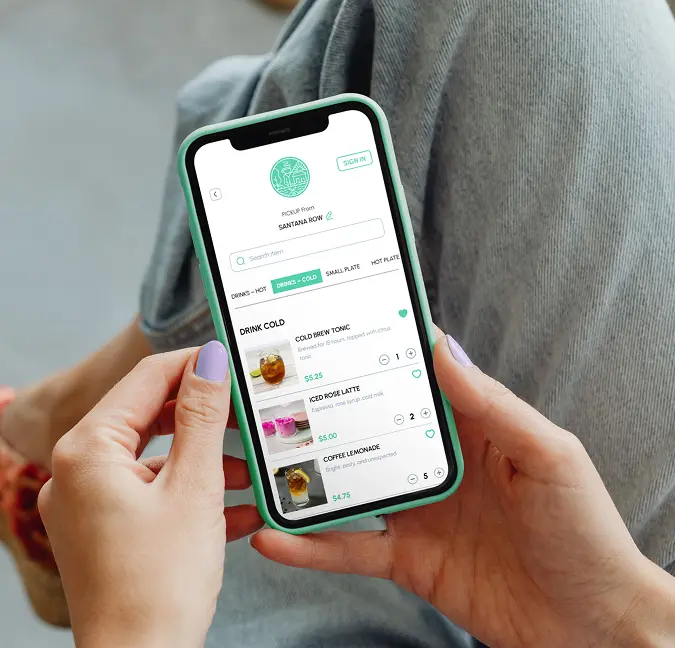
When location pages, menus, and online ordering live in separate systems, the search journey can break right before checkout. Restolabs gives restaurants a commission-free ordering platform built for cleaner menu sharing and stronger control over customer data, which helps operators keep discovery and ordering closer together. Fast food brands that want a simpler setup can Book a Demo.
Content Strategies for Fast Food Restaurant SEO
Creating Engaging and Relevant Content
Content marketing for fast food restaurants should focus on quick, engaging information that matches the fast-paced nature of your business. Effective content types include:
Use Blogs and Social Media
Blog content ideas for fast food restaurants:
• Behind-the-scenes looks at food preparation
• Employee spotlights and stories
• New menu item announcements
• Local community involvement
• Value meal and promotional highlights
• Quick lunch break ideas
Social media marketing for restaurants is particularly effective for fast food chains. Platforms like Instagram and TikTok are perfect for showcasing visually appealing food items and limited-time offers.
Leverage User-Generated Content
User-generated content (UGC) provides authentic social proof while reducing your content creation burden. Encourage customers to:
• Share photos of their meals with a branded hashtag
• Create "mukbang" or unboxing videos
• Participate in challenges related to your menu items
• Submit creative uses for your products
During holiday seasons, UGC campaigns can be particularly effective. Learn how restaurants can get 10x more customers during the holiday season through strategic content campaigns.
Encourage and Manage Online Reviews
Reviews are a critical component of SEO for fast food restaurants. They not only influence customer decisions but also impact your search rankings. Restaurants with 4+ star ratings receive up to 28% more clicks in search results.
Best practices for review management:
• Actively request reviews from satisfied customers
• Respond to all reviews-both positive and negative
• Address negative feedback constructively and take it offline when appropriate
• Implement operational changes based on review trends
• Feature positive reviews on your website and social media
Advanced SEO Tactics for Fast Food Chains
Building Quality Backlinks
Backlinks-links from other websites to yours-remain one of the strongest ranking factors. For fast food restaurants, effective backlink strategies include:
• Local sponsorships and community involvement
• Partnerships with local influencers and food bloggers
• Press releases for new locations or menu items
• Creating linkable assets like "best fast food in [city]" guides
• Guest posts on food and lifestyle blogs
Learn more about how to build a compelling online presence through strategic partnerships and content distribution.
Schema Markup for Improved Visibility
Schema markup is specialized code that helps search engines understand your content better. For fast food restaurants, important schema types include:
• Restaurant schema: Communicates basic business information
• Menu schema: Helps search engines understand and display your menu items
• Review schema: Displays star ratings in search results
• LocalBusiness schema: Enhances local search visibility
• OpeningHours schema: Clearly communicates when you're open
• Order schema: Facilitates online ordering directly from search results
Implementing schema markup can increase click-through rates by up to 30% by enabling rich snippets in search results.
Technical SEO for Fast Food Restaurant Websites
Fast food searches happen in motion. A customer standing on a sidewalk or sitting in a car is not settling in for a slow site, and Google reads that impatience through weak engagement signals. If the menu drags, images stall, or the nearest location takes too many taps to find, rankings can slip for the same reason orders do: friction.
That usually means cleaning up the basics that fast food sites often overlook. Menu text should be crawlable, not trapped inside images or PDFs. Location pages need clear internal links, consistent metadata, and no broken paths between store details, menu categories, and ordering pages. Even duplicate item descriptions deserve attention; when every page says the same thing, search engines have less reason to surface the right one.
Ordering flow matters here too. When the jump from a search result to a menu to checkout sends users across disconnected pages, authority gets diluted and trust can drop. A tighter structure keeps important pages indexable while guiding people toward the order they already intended to place. For fast food brands, technical SEO is not separate from conversion. It is the road between discovery and dinner.
Measuring and Improving SEO Performance
Tracking Key Metrics and Adjusting Strategies
Effective SEO for fast food restaurants requires ongoing measurement and refinement. Key metrics to track include:
• Organic search traffic (overall and by location)
• Keyword rankings for target terms
• Google Business Profile insights (views, actions, direction requests)
• Online order conversion rates
• Click-to-call rates
• Local pack appearances
• Review volume and sentiment
Set up Google Analytics and Google Search Console to monitor these metrics regularly. For multi-location chains, consider location-specific tracking to identify underperforming stores.
Tools and Techniques for Continuous Improvement
The SEO landscape constantly evolves, requiring ongoing optimization. Useful tools and techniques include:
• Google Analytics and Search Console for performance tracking
• SEMrush or Ahrefs for keyword research and competitor analysis
• BrightLocal or Moz Local for citation management
• GatherUp or Podium for review management
• Google Optimize for A/B testing landing pages
Consider implementing the 80/20 rule-focus 80% of your efforts on the 20% of SEO tactics that drive the most results for your specific restaurant.
Common SEO Mistakes Fast Food Restaurants Should Avoid
Ignoring Local SEO Opportunities
Many fast food restaurants fail to fully optimize their local presence by:
• Not claiming all location listings
• Neglecting to respond to reviews
• Missing local citation opportunities
• Failing to create location-specific pages
• Not participating in local events or community activities
Given that 46% of all Google searches have local intent, these oversights can significantly impact your visibility to nearby customers.
Overlooking Mobile Optimization
Despite the dominance of mobile searches in the food industry, common mobile optimization mistakes include:
• Difficult-to-read menus on small screens
• Complicated checkout processes for mobile orders
• Slow-loading pages and large image files
• Non-clickable phone numbers and addresses
• Pop-ups that are difficult to close on mobile
With Google's mobile-first indexing, these issues directly impact your search rankings and user experience.
For more insights on creating an effective digital presence, explore our guide on why restaurant websites are a prerequisite for successful business.
Take Control of Your Online Presence with Restolabs
Implementing effective SEO for fast food restaurants requires a strategic approach tailored to the unique needs of quick-service establishments. By focusing on local optimization, mobile-friendly design, targeted keywords, and quality content, you can significantly boost your visibility to hungry customers searching online.
Remember that SEO is not a one-time effort but an ongoing process of optimization and refinement. Regularly monitor your performance metrics, adapt to changing search trends, and continue to build your online presence over time.
For fast food restaurants looking to maximize their digital potential, Restolabs offers comprehensive online ordering solutions that complement your SEO efforts. Our platform integrates seamlessly with your website, providing a mobile-optimized ordering experience that converts more visitors into customers while capturing valuable data for ongoing marketing efforts.
Ready to take your fast food restaurant's online presence to the next level? Book a Demo with Restolabs today and discover how our solutions can help you drive more orders, reduce third-party commissions, and build a stronger digital presence.
Looking to boost your social media presence alongside your SEO efforts? Learn how restaurants can skyrocket conversions with Facebook ads for a comprehensive digital marketing approach.

Sruthi Sekar specializes in brand strategy, growth, and user experience in the hospitality industry. As the driving force behind Restolabs, she helps restaurants harness technology to scale and thrive. With a background in design, branding, and entrepreneurship, she brings a sharp focus on crafting digital experiences that drive real business impact.
Frequently Asked Questions
Fast food restaurants can leverage local SEO by fully optimizing their Google Business Profile with accurate business information, high-quality photos, and regular posts about promotions. Ensure NAP (Name, Address, Phone) consistency across all online directories and create location-specific pages for each restaurant with unique content. Actively solicit and respond to customer reviews, incorporate local keywords in your content, and build relationships with other local businesses for backlink opportunities. Local SEO is particularly important for fast food establishments since most customers won't travel more than 10-15 minutes for quick service food.
Common SEO mistakes fast food chains should avoid include: neglecting to create unique location pages for each restaurant (instead using duplicate content), failing to optimize for mobile users despite the high percentage of on-the-go searches, ignoring review management, using PDF menus instead of HTML-based menus that search engines can read, inconsistent NAP information across directories, neglecting schema markup implementation, slow website loading times, and focusing only on broad keywords instead of location-specific terms. Multi-location chains should also avoid competing with themselves by properly structuring their website architecture and local landing pages.
Mobile optimization critically impacts fast food restaurant SEO because over 60% of food-related searches occur on mobile devices, often while customers are already on the move. Google uses mobile-first indexing, meaning it primarily uses the mobile version of your site for ranking and indexing. Fast food restaurants with poor mobile experiences see higher bounce rates, lower time-on-site, and ultimately lower search rankings. Key mobile optimization factors include responsive design, large tap-friendly buttons, simplified navigation, quick-loading pages, easy-to-read menus, streamlined checkout processes for online orders, and click-to-call functionality. Google's PageSpeed Insights tool can help identify specific mobile optimization opportunities.
Online reviews significantly impact SEO for fast food restaurants in multiple ways. First, review signals (quantity, velocity, diversity) are a top local ranking factor in Google's algorithm. Second, positive reviews improve click-through rates from search results, as star ratings appear in rich snippets. Third, reviews generate fresh, keyword-rich content as customers naturally mention menu items and location details. Fourth, responding to reviews demonstrates to Google that your business is active and engaged. Fast food restaurants should actively encourage reviews after positive experiences, respond promptly to all feedback (especially negative reviews), and incorporate review management into their operational workflow.
Fast food restaurants can apply the 80/20 rule (Pareto Principle) to SEO by identifying and focusing on the 20% of optimization efforts that will drive 80% of results. For most fast food establishments, this means prioritizing: Google Business Profile optimization, mobile user experience, local keyword targeting, review management, and schema markup implementation. Rather than trying to implement every possible SEO tactic, conduct analytics reviews to determine which channels and strategies drive the most traffic and conversions for your specific locations. This focused approach allows for more efficient resource allocation and faster results, particularly important in the competitive fast food sector where margins are often tight.





.webp)

.svg)
.webp)