
.jpg)
Key Takeaways
- Sandwich shops win online by leaning into larger baskets, pickup speed, and lunch urgency, not dinner-only demand.
- Deli and catering operators should treat trays, bundles, and repeat orders as their fastest path to a bigger ticket.
- Pickup still matters as much as delivery in this category, so a fast handoff should shape the ordering flow.
- Our data shows Sandwiches & Deli posts the highest average order value on the platform at $57.77, which is 48% above the $38.96 average.
What online ordering statistics matter most for sandwich shops?
Sandwich shop online ordering statistics are the metrics that show how deli customers buy online, how much they spend, and how often they return.
The four numbers worth tracking first are average order value, pickup share, lunch demand, and repeat rate. Together they explain where the money comes from. A sandwich counter does not survive on dinner-only demand. It runs on speed, midday peaks, pickup orders, and the chance to turn a single meal into a tray or bundle.
According to our data from the Restolabs 2026 Online Ordering Behaviour Report, this category behaves differently from the platform norm in ways that reward operators who plan for it. The ticket runs high, the fulfillment leans toward pickup, and the customer base returns often enough to build a real revenue base.
That last point reshapes priorities. If most orders come from people who already know you, chasing brand-new traffic is less valuable than making the next order effortless. Digital baskets also tend to run larger than in-person ones. Research from the food delivery industry consistently shows online orders averaging significantly higher ticket values than dine-in, which reinforces why digital ticket size deserves attention. For a category that already leads on AOV, that gap compounds. A useful starting point is thinking about how menu structure surfaces trays and bundle language early.
Why do deli and sandwich concepts see higher order values?
Deli and sandwich baskets run larger because the category naturally lends itself to trays, bundles, and group lunches rather than single-item orders.
Think about how a workplace lunch order actually forms. When someone is buying for five people, the menu stops being judged like one sandwich. It becomes a small planning problem, and that is where sides, drinks, add-ons, and trays start doing the heavy lifting on ticket size.
Most broad restaurant articles describe online ordering growth in general terms and stop there. What matters for a deli is the mechanism behind the number. Sandwich shops have a built-in path to bigger carts because the occasion so often begins with a group, a meeting, or a scheduled midday order.
Here is the premium at a glance.
The category punches above its volume. A slice representing only about 3% of orders still leads on ticket value, which tells you the demand is concentrated and high-intent rather than casual. The broader market backs this up: the global sandwich shop market was valued at $27.4 billion in 2025 and is projected to reach $38.8 billion by 2034. Steady expansion means the occasion is not going anywhere. The operating move is to make trays and bundles easy to find and even easier to reorder.
Is pickup or delivery more important for sandwich shops?
Pickup usually matters more for sandwich shops because many customers want a fast handoff, a short wait, and a lunch order they can grab on the way.
It is tempting to assume delivery is always the main growth lever. For a lot of deli customers, that assumption is wrong. They are not looking for transport convenience. They want speed, predictability, and a pickup flow that fits inside a short lunch break.
That is where the fulfillment split becomes useful. When most orders are already pickup or dine-in, a fast pickup experience is not a bonus feature. It is the core of how the category buys.
Delivery still carries roughly 45% of category orders, so it is not something to ignore. But protecting margin usually starts with the pickup path, since that is where a large share of high-ticket lunch business lands. Online ordering also lifts business outside the obvious rush windows. 81% of restaurants report higher off-peak sales from online ordering, which gives lunch-heavy concepts room to grow beyond the midday spike. A clean pickup flow is what turns that potential into repeat behavior.
When do sandwich orders peak?
Lunch is the key demand window for sandwich shops, and the ordering flow should reflect that urgency instead of treating every hour the same.
Sandwich ordering is not spread evenly across the day. The center of gravity is midday, especially between 11 AM and 1 PM. That has direct consequences for how you place menu items, surface reordered favorites, and shorten the path from browsing to checkout.
The weekly rhythm matters too. Friday is the strongest ordering day in our data, followed by Thursday and Saturday. Operators often plan promotions around weekends by habit, but a lunch-driven deli may get more from thinking in terms of midweek workday patterns.
The practical read is straightforward. During that two-hour window, customers have almost no patience for a slow flow. Advance ordering removes that pressure entirely. 62% of consumers want the ability to order in advance via mobile or web, which fits a lunch crowd that plans around a tight break. Make the lunch bundles obvious, let people schedule ahead, and the peak becomes an asset instead of a bottleneck.
How should sandwich shops think about repeat orders?
Repeat orders matter more than one-time acquisition here because sandwich customers return quickly and within a tight, predictable window.
The real insight is not that customers reorder. It is how fast they do it. A lunch-driven deli customer who ordered last Tuesday is already close to deciding where to eat next. If the next order is easy, you stay in the running. If it is not, they drift to whatever is simpler that day.
The retention conversation should be about timing, not loyalty programs in the abstract. Our data shows a median of 8.9 days between repeat orders, which is a much tighter cycle than a generic weekly promo calendar assumes.
This is also where lifetime value comes in. When the average customer spends $123.79 across 3.2 orders, the math clearly rewards shops that shorten the gap between visits. A well-timed nudge on day 8 or 9 catches people right when they are naturally deciding. A menu strategy built around repeat lunch buyers does more for revenue than a wide net cast at strangers. It also helps that 66% of consumers say an online menu influences their purchase decisions, so keeping favorites easy to find pays off on every return visit.
How do catering and group orders change basket size?
Catering and group orders are the biggest reason sandwich shops can outpace average ticket size, because the order is built around several people rather than one meal.
A deli tray, an office lunch, or a group order turns a routine transaction into a larger and more profitable cart. The point is not simply that catering exists. It is that the menu should make that occasion easy to find and even easier to repeat next month.
Picture how an office manager thinks. If they need lunch for 12 people, they want confidence more than an overwhelming list of choices. That is exactly why trays, set bundles, and clear add-on paths work so well for this category. Reduce the decisions and the larger order gets easier to place.
The category performance supports tray and bundle upsells far more than low-ticket impulse buying. The broader shift toward digital ordering only reinforces the opportunity. The global online food delivery market reached $319.99 billion in 2025 and is projected to hit $350.63 billion in 2026, which means more group buyers are comfortable placing large orders online. For a deli, clear catering and bundle layout is the difference between capturing that order and losing it to a competitor with a simpler group flow.
How can sandwich shops turn online ordering stats into better direct orders?
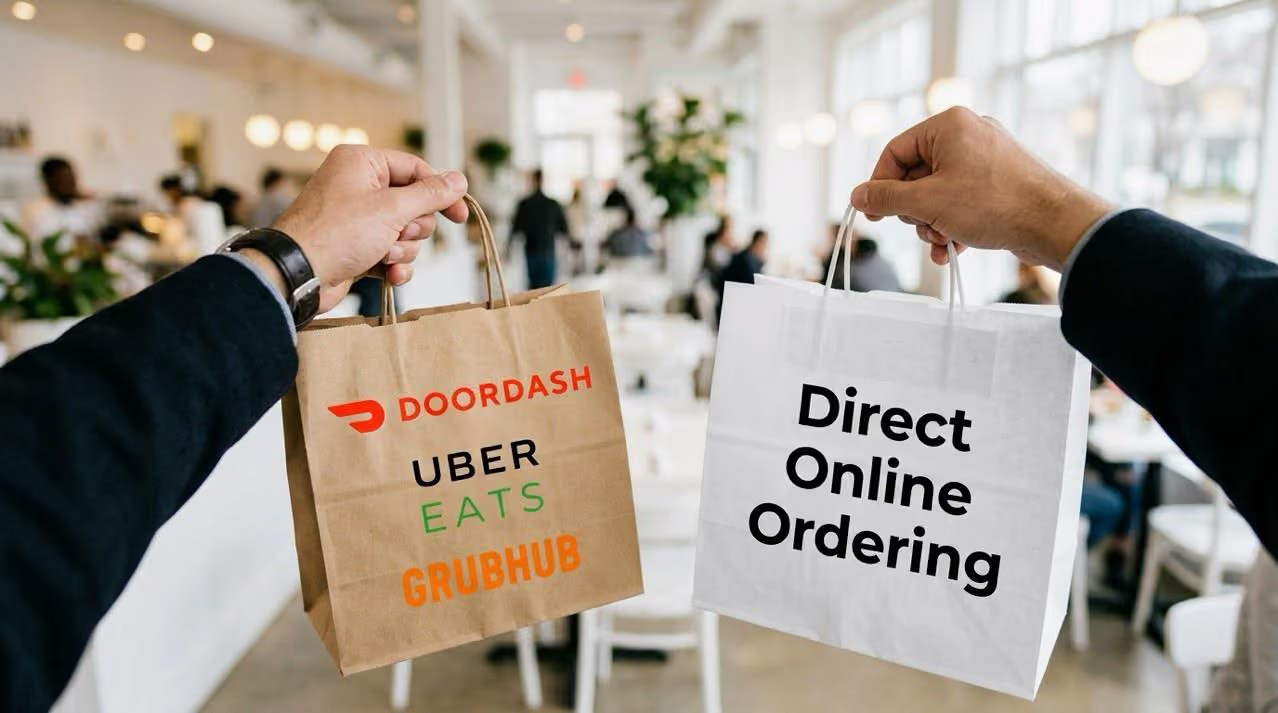
The numbers point toward one clear move: make direct ordering faster for lunch, pickup, and repeat customers so more revenue stays on the operator's side.
Start with what the data already tells you. Make pickup simple. Surface lunch bundles early. Make trays easy to add. Time re-engagement around the 8.9-day reorder cycle instead of a generic weekly blast. None of this requires more traffic. It requires a flow that fits the customers you already attract.
The economics matter too. If your shop leans on high-ticket lunch and catering orders, paying away a commission on every one of those baskets gets expensive fast. A $57.77 average ticket loses a meaningful chunk to fees when the channel is not yours. Owning the channel keeps that margin and, just as importantly, keeps the customer list, the reorder history, and the basket data as usable business assets rather than someone else's.
That data advantage compounds. With roughly 80% of orders coming from returning customers and digital baskets consistently running higher than dine-in, a direct channel lets you act on reorder timing and group behavior directly. You know who ordered a tray last month and when they are likely to need one again.
Pull it together and the picture is clear. Sandwich and deli operators do not need more generic clicks. They need the right ordering flow for lunch, pickup, and repeat buyers, with trays and bundles that make the larger cart the easy choice.
How Restolabs Helps Sandwich and Deli Operators Own Direct Ordering
Restolabs helps sandwich and deli operators keep control of their customer data, ease commission pressure, and make direct ordering simpler to own over time. The platform is built for restaurants that want to sell online quickly without handing away margin on every high-ticket order.
For a deli, the fit comes down to the category's own behavior. If lunch, pickup, and repeat orders drive the business, the ordering channel should support fast handoffs, recurring visits, and larger group carts without adding friction. That is the practical case for a direct channel: it matches how sandwich customers actually buy, and it keeps the value of those high-AOV trays and bundles with the operator.
Ready to take back your online ordering? Book a Demo

Sruthi Sekar specializes in brand strategy, growth, and user experience in the hospitality industry. As the driving force behind Restolabs, she helps restaurants harness technology to scale and thrive. With a background in design, branding, and entrepreneurship, she brings a sharp focus on crafting digital experiences that drive real business impact.
Frequently Asked Questions
The most useful metrics are average order value, pickup share, lunch demand, repeat order rate, and reorder timing. Together, they show where sandwich and deli revenue actually comes from.
Pickup is often more important because many sandwich customers want a fast handoff for lunch. Delivery still matters, but pickup-first ordering usually matches category behavior better.
Sandwich shops often sell trays, bundles, add-ons, and group lunches, which naturally raise ticket size. Catering and office orders are a major reason the category can outperform the platform average.
Lunch is the strongest ordering window, especially between 11 AM and 1 PM. Friday is also the strongest day in our data, followed by Thursday and Saturday.
Promotions should be timed around the median 8.9-day reorder window. Day 8 to 10 is the best re-engagement period, while day 14 and beyond is more of a win-back stage.
Yes. Group and catering orders build the cart around several people at once, which is a major reason the category leads on ticket value.
Our data shows Sandwiches & Deli has the highest AOV on the platform at $57.77, about 48% above the $38.96 average, with roughly 55% pickup or dine-in orders and strong repeat buying.





.webp)

.svg)
.webp)