
.avif)
Key Takeaways
Fast casual is still a speed-and-quality category, but ordering behavior now looks much closer to QSR on convenience, pickup speed, and late-day demand. The biggest demand spikes cluster around Friday, the 5:30 to 8:30 PM dinner window, and weekend mornings for coffee and bakery concepts. Pickup remains the dominant fulfillment mode, which makes local pickup flow, ready-time accuracy, and order handoff speed more important than broad delivery-first thinking. Reorder timing matters more than generic loyalty messaging, because the best re-engagement window arrives in the first 7 to 10 days after a purchase.
What fast casual ordering looks like across the week
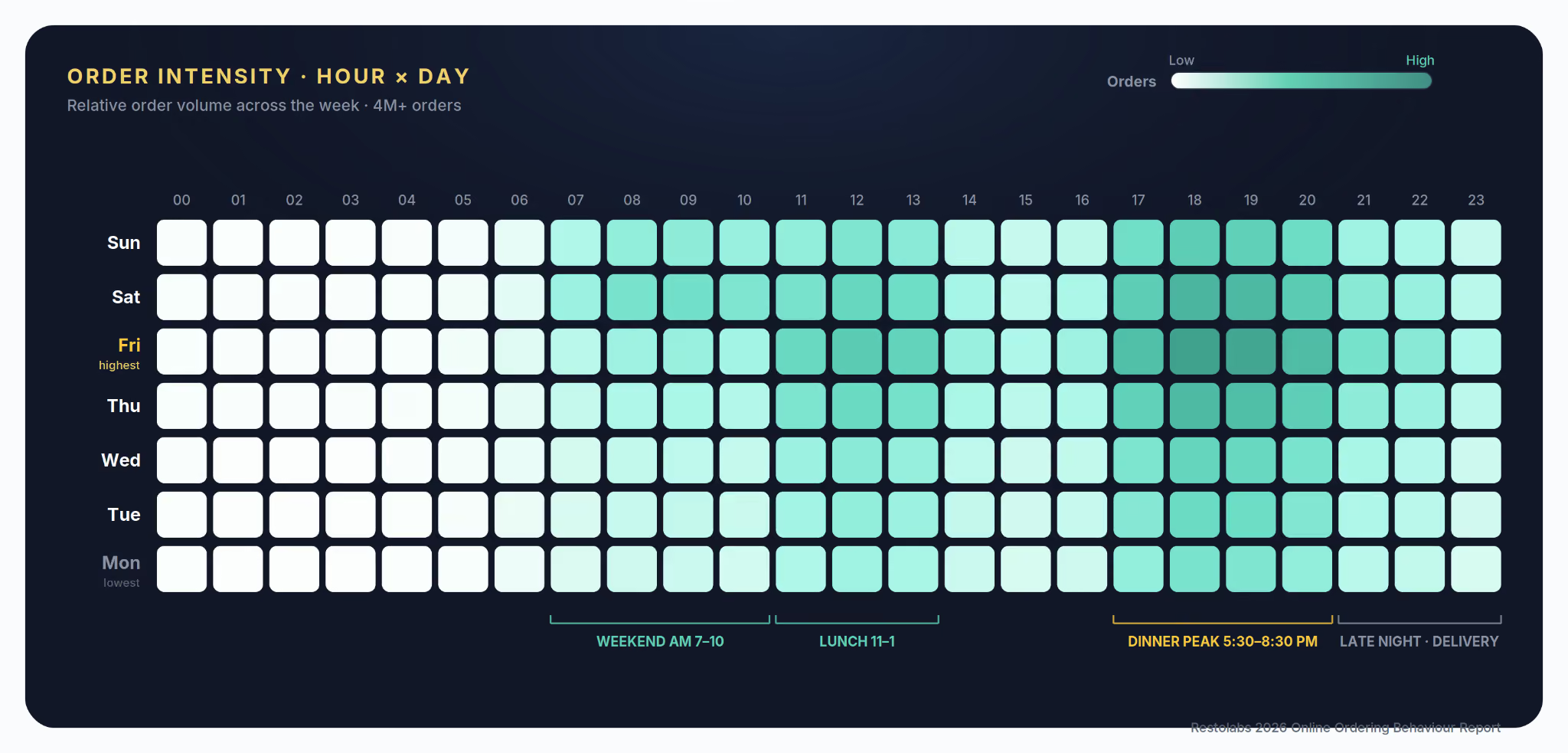
Fast casual is no longer a tidy lunch-and-dinner story. The week has a clear rhythm, and Friday sits firmly at the top of it. That tells operators demand is uneven enough to reshape staffing, prep, and promotional timing.
According to our data from the Restolabs 2026 Online Ordering Behaviour Report, Thursday and Saturday follow close behind Friday, while Monday lags well back. That spread is not trivia. It is the difference between a Friday evening that runs smooth and one where tickets stack up faster than the line can clear.
The category is also under real pressure. Fast casual competes with QSR-style convenience, growing off-premise demand, and guests who feel every price increase. In late 2025 fast-casual same-store sales briefly turned negative, one of only two segments to do so. That is exactly why order timing has become an operating lever rather than an afterthought.
Where the market is strongest
North America is the dominant base for this behavior, but the same pickup bias and reorder timing appear across other markets as digital ordering adoption climbs. Europe and APAC are the regions to watch as convenience-led habits spread.
The point is not geography. It is that the same weekly rhythm travels across markets, even when adoption speed differs. An operator in a newer digital market can plan against these same patterns, just with a longer runway.
Which dayparts drive the most demand?
The rush is real and concentrated. Dinner from 5:30 to 8:30 PM is the main daypart peak, with lunch and weekend mornings as the secondary lifts that shape how you prep and staff each shift.
According to our data from the Restolabs 2026 Online Ordering Behaviour Report, lunch holds steady between 11 AM and 1 PM, and weekend mornings from 7 to 10 AM lift noticeably for coffee and bakery concepts. Late-night from 9 to 11 PM leans delivery-heavy and skews toward pizza.
A generic daypart list misses the concept-level detail that actually matters. A coffee shop lives and dies on the 7 to 10 AM handoff, while a pizza concept is still shipping orders when the coffee shop has been closed for hours. Treating every peak the same is how prep gets misallocated and accuracy slips.
Because our data is 97.4% timezone-matched, the daypart signal holds up for groups running locations across multiple time zones, not just a single store watching one clock.
Order accuracy is the pressure point underneath all of this. Roughly 70% of brands name improved accuracy as their top kitchen-efficiency goal, and accuracy is hardest to protect during the exact windows where volume spikes.
Why pickup still dominates more than many operators expect
Pickup and dine-in pickup still carry most of the volume, so the fastest wins come from tightening handoff and ready-time accuracy rather than chasing delivery depth.
Most industry conversation leans hard into delivery growth, but the order mix tells a quieter story. According to our data from the Restolabs 2026 Online Ordering Behaviour Report, 60.1% of orders are pickup plus dine-in, against 39.9% delivery. That majority changes what good performance looks like: a short, clear path from checkout to collection matters as much as an appealing menu.
Think about the guest who picks up. They chose speed. If the ready time is vague, status updates are missing, or the counter is a scrum, the entire experience feels slow even when the food is excellent. Ready-time communication and a frictionless local pickup flow matter as much as the recipe.
This pickup bias lines up with the broader shift toward off-premise dining. Around 75% of restaurant traffic now happens outside the traditional dining room, which reinforces why the ordering experience has become part of the product. If pickup is the primary path, the checkout has to make it feel effortless.
Which concepts show the strongest ordering volume?
Volume clusters by concept, and each concept builds its own fulfillment habit. That is why one ordering setup rarely fits every brand inside the same restaurant group.
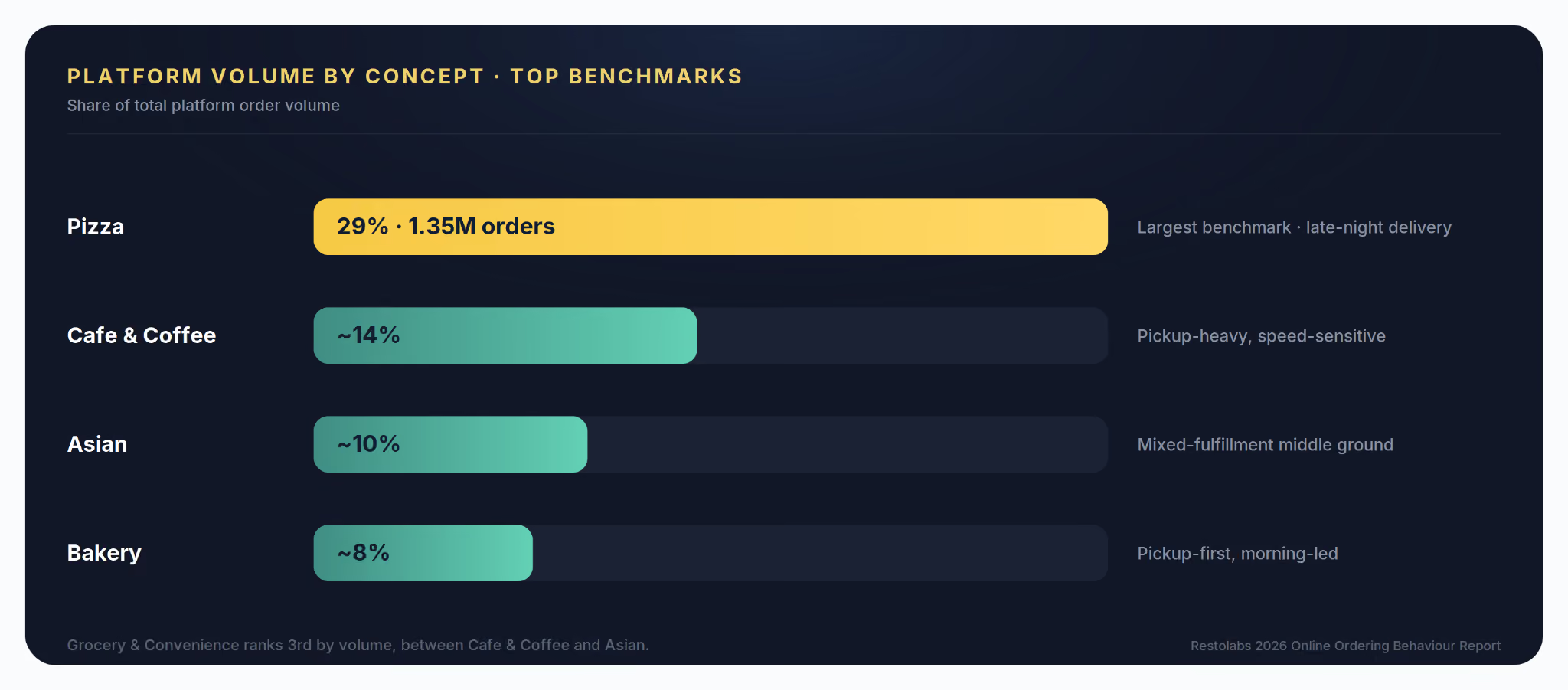
According to our data from the Restolabs 2026 Online Ordering Behaviour Report, pizza leads platform volume, followed by cafe and coffee, grocery and convenience, Asian, and bakery. The lesson is not that one cuisine wins everywhere. It is that these concepts create different ordering rhythms, and those rhythms should shape how the system is designed.
Pizza deserves its own attention because it pairs scale with a late-night delivery pattern. Cafe and bakery pull the other way, reinforcing the pickup bias with morning and daytime handoff spikes. That contrast is the whole point: a pizza brand extending hours to 11 PM needs different guardrails than a bakery that clears most of its volume before lunch.
Menu and handoff planning should follow the concept, not a group-wide default. A pickup-first concept needs tight ready-time logic. A delivery-leaning concept needs its evening menu fully available when the late orders land.
When is the best time to bring guests back?
The strongest re-engagement window is the 7 to 10 day stretch right after a purchase, while reorder intent is still fresh enough to convert.
According to our data from the Restolabs 2026 Online Ordering Behaviour Report, the repeat rate over six months is 38.2%, the average reorder window is 8.9 days, and roughly 80% of orders come from returning customers. Put those together and retention stops being a background strategy. It becomes a daily operating lever.
The math behind this is straightforward. A guest who already ordered once is far cheaper to bring back than a new visitor is to acquire. Wait too long and the habit cools. Nudge at the right moment and you are riding intent that already exists.
This is also where Monday earns its keep. Since it is the weakest ordering day, it becomes the natural slot for loyalty, SMS, email, or push messages aimed at pulling guests back before they drift out of habit. That timing matters more now that more than 55% of U.S. consumers put affordability first when deciding where to eat. A well-timed, relevant offer lands far better than a broad one.
Why fast casual and QSR are converging around digital ordering
The line between fast casual and QSR is blurring because guests now expect QSR-style speed and clarity even when they are paying fast-casual prices for quality and customization.
Fast casual still sells higher-quality cues and build-your-own flexibility. What has changed is the surrounding expectation. When someone can order from a QSR app in three taps and pick up in five minutes, a clunky fast-casual checkout or a confusing pickup flow suddenly feels like a downgrade, no matter how good the bowl is.
That is why digital ordering has moved from nice-to-have to shared operating priority. Look at the pattern in this report: Friday dinner peaks, a firm lunch rush, and pickup-heavy coffee and bakery volume. In every one of those windows, the ordering experience is part of what the guest is buying. A slow checkout can quietly undo an otherwise strong menu.
Value and convenience sit underneath all of it. With guests feeling price pressure, 40% of brands now point to first-party digital ordering as their top revenue opportunity. Restaurants that keep ordering simple, accurate, and fast have the better shot at keeping those repeat visits in motion.
How Restolabs helps restaurants own direct ordering
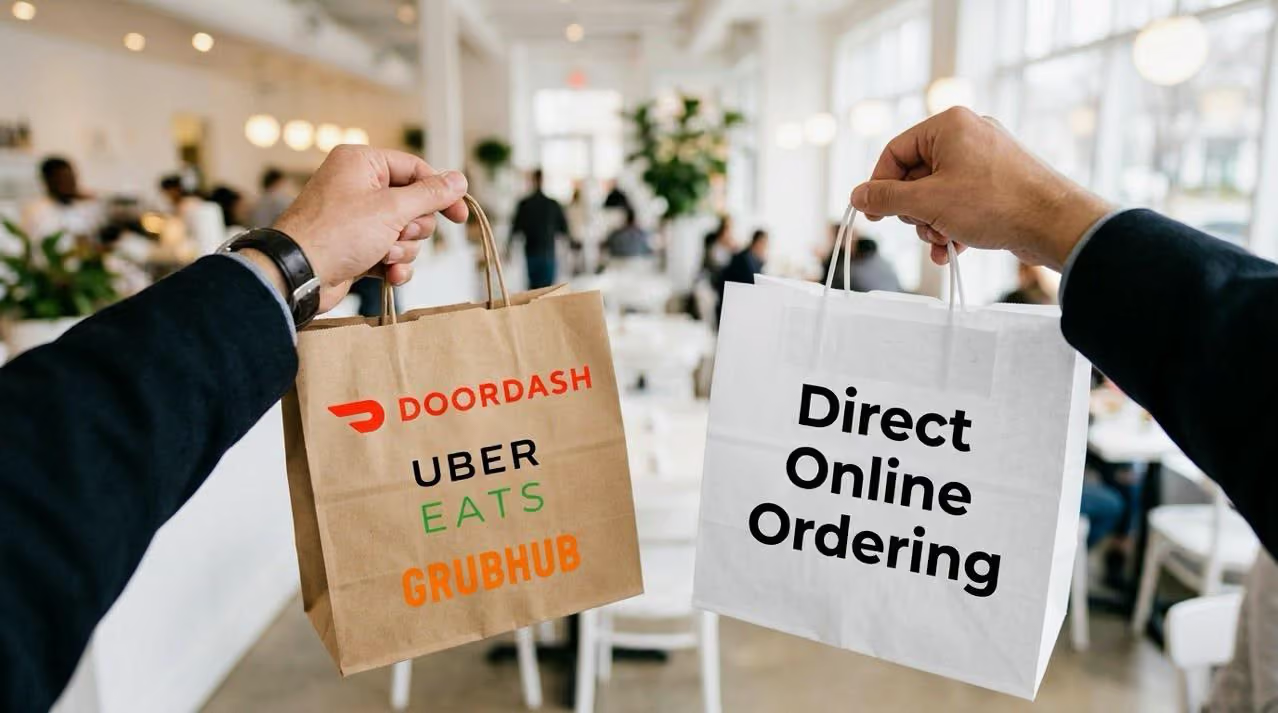
Restolabs gives restaurants a way to run direct ordering cleanly across pickup, dine-in pickup, and delivery without handing the guest relationship to a third party.
The patterns in this report point toward a clear practical need: a direct ordering setup built for high-volume dayparts and pickup-heavy behavior. That means fast handoff, accurate ready times, and a checkout that keeps up with a Friday dinner rush. For fast casual and QSR operators, that is what the Restolabs fast casual online ordering platform is designed to support, with commission-free ordering and full ownership of customer data.
Ready to take back your online ordering? Book a Demo

Sruthi Sekar specializes in brand strategy, growth, and user experience in the hospitality industry. As the driving force behind Restolabs, she helps restaurants harness technology to scale and thrive. With a background in design, branding, and entrepreneurship, she brings a sharp focus on crafting digital experiences that drive real business impact.
Frequently Asked Questions
Fast casual blends speed with higher perceived quality and more customization, while QSR leans more heavily into convenience and standardized service. The ordering behavior between the two is converging fast on speed and pickup.
The strongest demand clusters around Friday, then Thursday and Saturday, with dinner from 5:30 to 8:30 PM as the main daypart peak. Monday is the weakest day, which makes it a natural slot for win-back messaging.
Our data shows 60.1% of orders are pickup plus dine-in. Fast handoff, clear ready times, and easy local pickup flow directly shape the guest experience. Delivery matters, but it is not the majority of volume.
Cafe and coffee concepts exceed 75% pickup plus dine-in, and bakery exceeds 80%, the strongest pickup bias in the report. Pizza, by contrast, carries a much larger delivery presence.
The best re-engagement window is Day 7 to 10 after purchase, aligned with the 8.9-day reorder window in our data. After Day 14 the guest moves into win-back territory, and past Day 30 into churn risk.
Our data shows a clear weekly pattern, strong dinner concentration, a pickup-heavy fulfillment mix, and a reorder window that supports timely retention messaging across 2,126 active locations.
Use the weekday and daypart peaks from this report to staff more effectively during the 5:30 to 8:30 PM dinner rush, then use the Day 7 to 10 reorder window to time loyalty and re-engagement messages.






.webp)

.svg)
.webp)