
.avif)
Key Takeaways
- Coffee shops win when ordering is fast, repeatable, and built around pickup, not when the app tries to behave like a full-service restaurant tool.
- Low tickets do not have to mean weak growth. In coffee, frequency and retention do more work than basket expansion.
- Monday is the softest ordering day, which makes early-week reactivation especially valuable.
- Our data shows cafe and coffee ordering skews heavily toward pickup and dine-in, with a $15-20 average order value and a strong repeat cadence.
What should a coffee shop ordering app do?
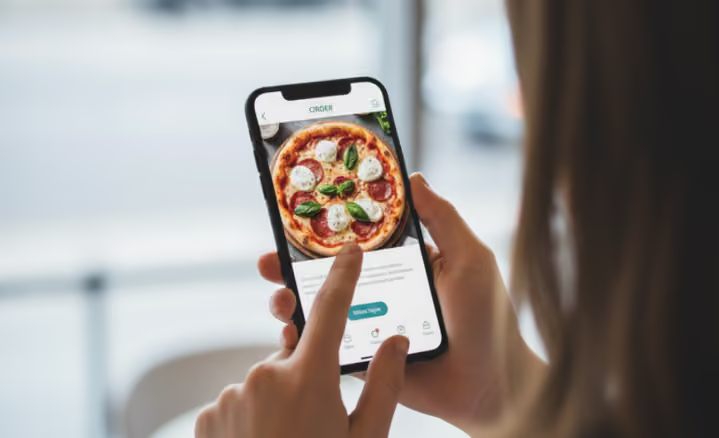
A coffee shop ordering app should make preorder, pickup, and repeat buying fast enough to keep pace with the morning rush and the way regulars actually buy.
Think of it as more than a checkout screen. The real job is to let a guest browse, order ahead, pay in a couple of taps, and return tomorrow without rebuilding the same latte from scratch. That last part matters more than most operators expect, because coffee is a habit, not an occasion.
Here is where coffee-shop needs split from broader restaurant behavior. A guest ordering dinner is comparing dishes and reading descriptions. A guest ordering their usual flat white is trying to skip the line. If the app does not shorten the path from craving to collection, it has missed the point entirely.
The core jobs are narrow and specific: order-ahead, a clean pickup flow, one-tap reorder, drink customization, and loyalty tied to how often someone comes back. The goal is not a longer feature list. It is a tool that fits a routine.
That habitual pattern is not a hunch. Roughly 45% of U.S. adults consumed specialty coffee the previous day, an 80% increase since 2011. Daily consumption at that scale is exactly the behavior an ordering app should be built to serve.
Why does pickup-first ordering fit coffee shops?
Pickup fits coffee because guests care about speed and certainty far more than delivery-style browsing, and most of the category already orders that way.
Picture the weekday morning crowd. Nobody is scrolling a menu for inspiration. They are trying to grab a drink and get to work, or they are already standing in line watching the queue crawl. The best ordering flow is the one that gets them in and out with the fewest steps, which is precisely what pickup and order-ahead deliver.
A lot of ordering-app advice treats these tools as a delivery solution first. For coffee shops, that framing misreads the rhythm of the business. Weekend mornings, weekday commutes, and lunch spikes all run on convenience and readiness, not broad delivery demand. According to our data from the Restolabs 2026 Online Ordering Behaviour Report, cafe and coffee ordering is dominated by pickup and dine-in, so the experience should put pickup timing, order readiness, and clear collection instructions front and center.
Industry patterns point the same direction. Drive-through coffee shops held roughly 18.9% of the global coffee shop market in 2025 and rank as the fastest-growing format, which confirms that convenience formats, not delivery, drive this category.
Busy lifestyles and hybrid work are pushing more behavior toward speedy, convenient coffee and mobile ordering. If the ordering experience assumes delivery is the main event, it is optimizing for the wrong moment.
Why do repeat orders matter more than bigger tickets?
In coffee, growth comes from frequent small purchases, so retention does more work than any attempt to inflate the basket.
A $15-20 ticket looks modest next to other restaurant categories, but that number only tells half the story. Coffee buys happen often, and repetition compounds fast. A guest who returns every week or so is worth far more over a year than a one-time larger order, and no upsell bundle changes that math.
Most ordering-app advice fixates on discounts and bigger carts. For coffee shops, the sharper question is whether the app makes the next visit easier than the last one. A saved favorite drink, a one-tap reorder, or a payment path that remembers the card usually beats a promotional bundle nobody asked for.
The wider market backs the frequency story. Specialty coffee is projected to grow at a 9.5% CAGR from 2025 to 2030, far outpacing the overall coffee shop market. Demand is repeat-driven at its core, and the ordering tool should match that.
When should cafes re-engage customers?
The best re-engagement window opens early in the week, with Monday as the weakest ordering day and days 7 to 10 as the strongest reactivation window.
Coffee shops do not need generic loyalty blasts. They need reminders that line up with habit. If a guest usually buys every week or so, the timing of the message matters as much as the message itself. Fire it too early and it is noise. Fire it too late and the habit has already lapsed.
Start with Monday. It is the softest ordering day in our data, which makes it a natural moment to bring regulars back before the week fills up. A simple nudge about a favorite drink or a Monday pickup shortcut can reopen the routine without leaning on a discount. From there, the day 7 to 10 window is the reorder sweet spot, followed by day 14 and beyond for stronger win-back messaging, and day 30 and beyond for churn recovery.
Timing alone can lift repeat behavior. You do not have to buy the visit back with a coupon every time. Sometimes showing up at the right moment is enough.
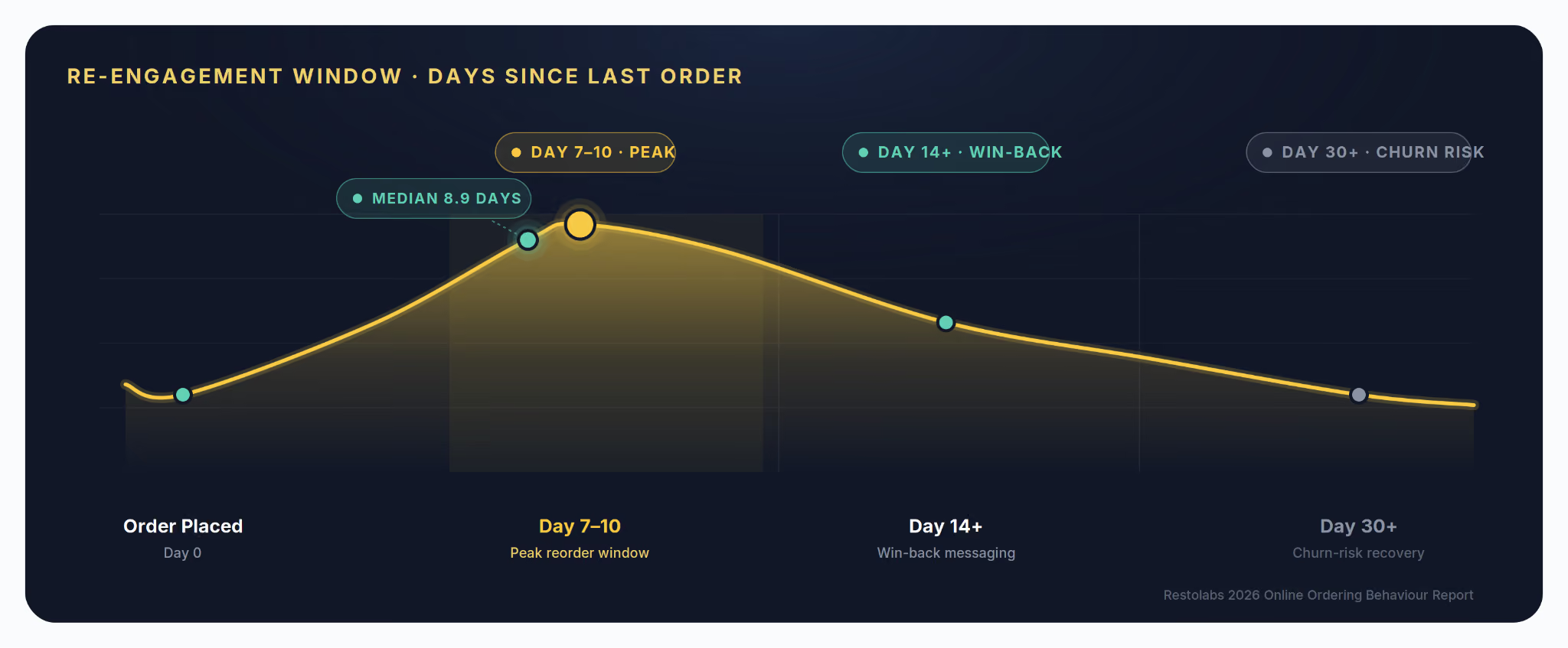
This aligns with how the category behaves more broadly. Coffee demand stays tied to routine and convenience, and busy lifestyles combined with hybrid work keep buyers in mobile-first, habit-driven patterns. Early-week reactivation captures that habit before the week gets away from them.
What features matter most for coffee and cafe operators?
The best coffee app features reduce morning friction, speed up repeat orders, and make pickup feel dependable every single time.
Start with reorder speed. If a regular can rebuild yesterday's order in one tap, you have removed the single biggest point of friction in the flow. Next comes clear pickup timing, so a guest knows exactly when the drink will be ready and where to collect it. Third is payment simplicity, because a saved card is the difference between a two-tap order and an abandoned one.
Drink customization, loyalty, and live order status round out the set. But none of these matter if the phone experience is clumsy. Coffee customers order while commuting, walking in, or standing in line. If the small screen fights them, the speed advantage disappears entirely.
This is where coffee needs diverge from broader restaurant ordering. Tools built for longer menus and delivery-heavy volumes optimize for browsing and basket size. Coffee operators care about quick reorders, collection clarity, and predictable readiness. Same category of software, very different priorities.
Feature priorities worth considering
- One-tap reorder for regular drinks
- Fast checkout with saved payments
- Pickup timing and order status clarity
- Drink customization and add-ons
- Loyalty that rewards repeat visits
- Multi-device access for phone and desktop
- Location visibility for multi-unit cafes
The efficiency case is well documented. In 2026, tech-enabled ordering is central to cafe convenience and operational excellence, streamlining workflows and cutting wait times without replacing the human side of the shop. For a fast-paced coffee counter, that operational lift is the whole point.
How Restolabs supports coffee shop ordering
Restolabs supports direct coffee ordering with pickup-ready flows, repeat-order convenience, and full control over the customer relationship.
Coffee shops need more than a generic ordering link buried in a marketplace. They need a system built for repeat behavior, pickup speed, and retention, since the whole business runs on routine. When the ordering experience matches that routine, operators get a better shot at the next visit without handing over margin or customer data to a third party.
Restolabs keeps the focus on outcomes that fit a coffee counter: faster reorder paths, easy menu sharing for drinks and add-ons, clean setup, and integrations that fit real operations. For operators building out a dedicated storefront, the coffee shop online ordering option is designed around this pickup-first, repeat-driven pattern.
Ready to take back your online ordering? Book a Demo

Sruthi Sekar specializes in brand strategy, growth, and user experience in the hospitality industry. As the driving force behind Restolabs, she helps restaurants harness technology to scale and thrive. With a background in design, branding, and entrepreneurship, she brings a sharp focus on crafting digital experiences that drive real business impact.
Frequently Asked Questions
A coffee shop ordering app is a digital ordering system that lets guests browse, order ahead, pay, and pick up with less friction than walking in cold.
Most coffee orders are built around speed and routine. Pickup fits the way guests actually buy coffee, and our data shows more than 75% of cafe and coffee orders flow through pickup or dine-in.
Our data shows coffee buying is repeat-heavy, with a median gap of 8.9 days between orders and an average of 3.2 orders per customer.
Monday is the weakest ordering day in our data, which makes it the best early-week window for win-back messages and reorder nudges.
The most useful features are fast reorder, smooth checkout with saved payments, pickup timing and status, customization options, and loyalty tied to repeat visits.
A $15-20 AOV means the business depends on frequency and retention rather than inflating individual carts. Getting guests back on a regular cadence matters more than any single upsell.
Our data shows coffee and cafe ordering is pickup-dominant, lower-AOV, and strongly shaped by weekday timing and repeat cadence, with Monday as the weakest day and days 7 to 10 as the strongest reactivation window.





.webp)

.svg)
.webp)