
Key Takeaways
- Lunch dominates: our 2026 dataset shows the 11 AM to 1 PM local time band is the platform-wide lunch rush, and sandwich delis cluster harder around it than most other cuisines.
- Sandwich and deli orders carry an average order value of $57.77, nearly 50% above the platform average - so timing each promo correctly is worth more per send.
- Friday is the highest-volume ordering day platform-wide; Monday is the lowest, which is why Monday is your best win-back day, not your best promo-blast day.
- The 11 AM to 1 PM lunch rush is too late to start promoting - the decision happens earlier.
- Repeat sandwich customers reorder on a median 8.9-day cycle, which puts the reactivation sweet spot at Day 14+ post-purchase.
- Roughly 60.1% of orders on our platform are fulfilled via pickup or dine-in, so your promo strategy should index toward pickup-first messaging, not delivery.
Most deli promos die at the wrong time.
You obsess over the offer - a half-off Italian sub, a buy-one-get-one, a free cookie with any sandwich. Then you blast it at 11:45 AM Tuesday and wonder why open rates were soft and orders barely moved. The discount didn't fail. The clock did.
We've watched this pattern play out across thousands of sandwich and deli shops on our platform. According to the Restolabs 2026 Order Analytics Dataset, which covers more than 4 million orders processed across the Restolabs platform spanning 2,126 locations and 479 brands from March 2025 to March 2026, sandwich and deli buying behavior is rhythmic, predictable, and tightly clustered around very specific windows. Hit them and conversion spikes. Miss them and you're paying to interrupt people who already grabbed lunch.
This guide walks through the seven highest-ROI promo windows for sandwich delis - what to send, where, and exactly when.
Why timing matters more than the promo itself
A 20% discount sent at 2 PM Tuesday converts very differently than the same offer sent at 10:45 AM Tuesday. Same offer. Same audience. Different result.
Deli purchase windows are shorter and more rhythmic than dinner restaurants. People decide on lunch in a narrow band - usually before hunger sets in, often while they're still answering emails. Once it's 12:15 PM and someone's already ordering, your promo isn't competing for their attention. It's competing with their sandwich.
In our 2026 Order Analytics Dataset, the lunch rush of 11 AM to 1 PM local time is the single densest order window we track, and 97.4% of orders are timezone-matched for accurate time-of-day analysis. For the sandwich and deli segment specifically, that lunch band concentrates a disproportionate share of all weekly volume.
External data backs this up. Per Technomic's Away-From-Home Food & Beverage Consumption Study (2023), lunch and dinner together account for roughly 68% of all restaurant traffic - which makes pre-meal windows the most valuable real estate on the promotional calendar.
The point isn't that you should run more promos. It's that the ones you already run need to land before the decision is made, not after.
1. The pre-lunch window (10:30 AM - 11:15 AM weekdays)
This is the highest-ROI window we see for sandwich delis, and almost everyone gets it slightly wrong.
The lunch rush starts at 11 AM in our data. That means the buying decision is happening at 10:30 AM, not 11:45 AM. By the time most operators send their "lunch is calling" email, half the office has already ordered from somewhere else.
Tactical setup for the 10:30 AM - 11:15 AM window:
- Email blast at 10:30 AM with a single-tap order link
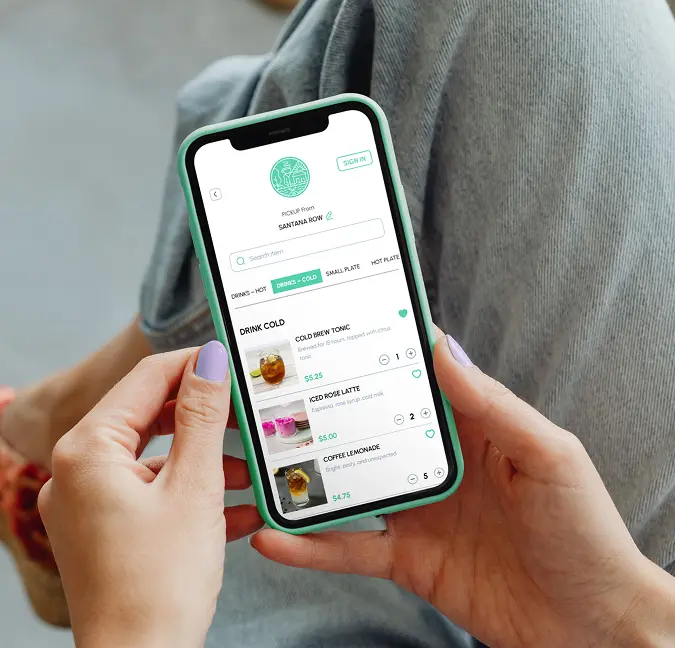
- Push notification at 10:45 AM from your branded ordering app
- Instagram story at 10:55 AM showing the sandwich being made
- Paid social ad refresh at 10:30 AM targeting your 5-mile radius
If you've built online ordering built for fast-casual sandwich and deli shops, the goal is to compress decision-to-cart into under 60 seconds during this window.
National Restaurant Association data shows 56% of consumers ordered directly from a restaurant website or app in the past month, up from 44% in 2020. Your pre-lunch window is the moment to be that direct order - before a third-party app gets the click.
2. Sunday evening for the Monday catering rush
Sunday between 6 PM and 9 PM is when office managers and team admins plan the week's catering. They're not hungry. They're looking at a Monday meeting on the calendar and trying to make sure lunch is solved.
This is where deli AOV does the heavy lifting. In our 2026 Order Analytics Dataset, sandwich and deli orders average $57.77 - nearly 50% above the platform average and driven by catering and group orders. A single Sunday-evening catering capture is worth several solo lunch orders combined.

Sandwich and Deli orders average $57.77 - nearly 50% above the platform average - underscoring why hitting the right promotional window matters more for delis than almost any other cuisine, per the Restolabs 2026 Order Analytics Dataset.
The tactic: a dedicated Sunday-evening catering email separate from your daily promo list. Subject line should reference Monday, not the weekend. Include a one-click reorder link for past catering customers. Restolabs analytics surfaces which contacts have ordered catering before, so you can segment them out of your generic promo list.
3. Tuesday and Wednesday - the underrated mid-week promo days
Most operators push their biggest promos Thursday or Friday because that's when order volume peaks. Our 2026 dataset confirms Friday as the highest-volume ordering day platform-wide, followed by Thursday and Saturday. So why fight for inbox attention on the busiest days?
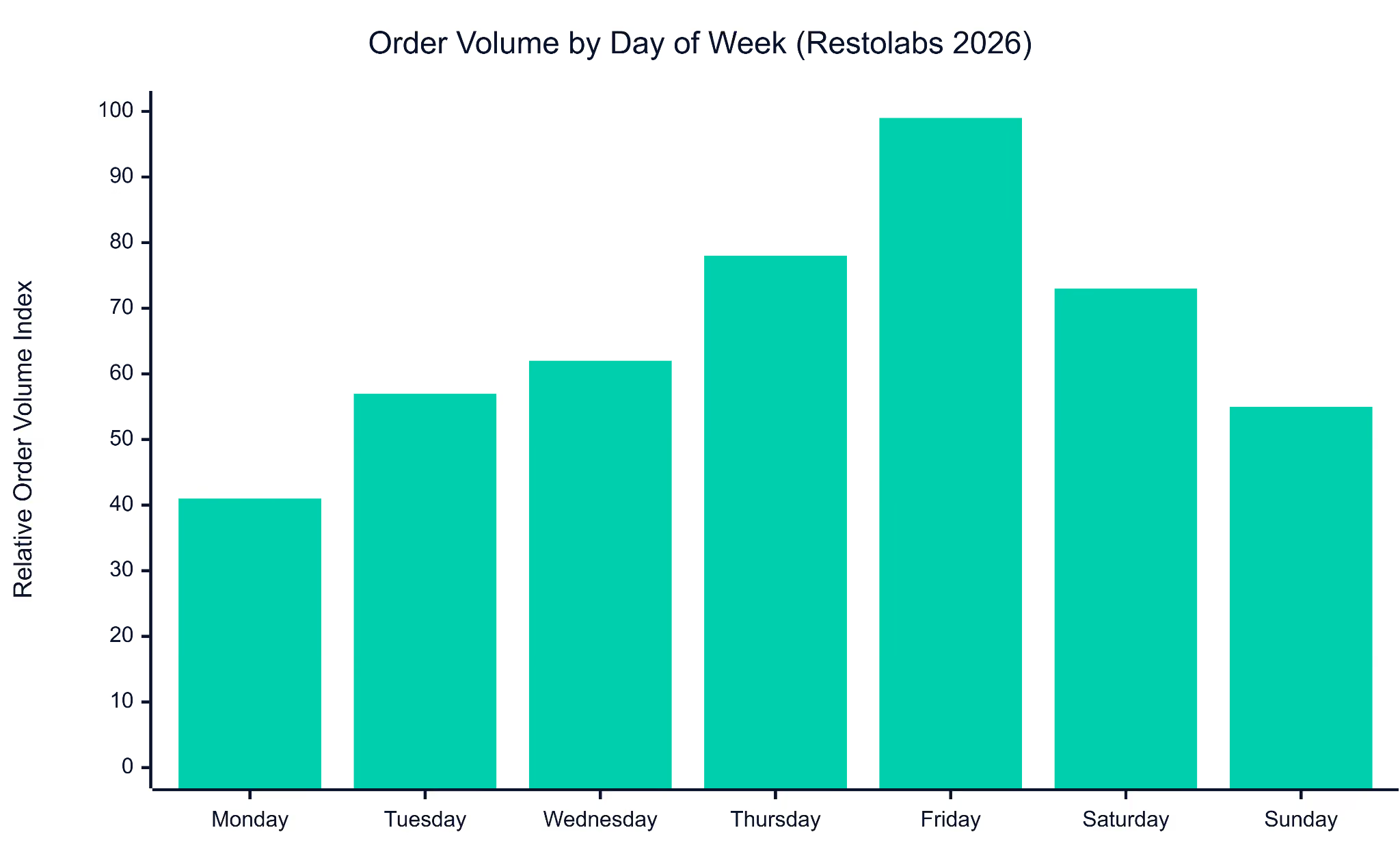
Friday dominates platform-wide order volume while Monday hits its lowest point, according to the Restolabs 2026 Order Analytics Dataset - making each day a distinct promotional opportunity for sandwich delis.
Tuesday and Wednesday have lower inbox competition. Your subject line isn't fighting eight other restaurant emails. The result: stronger open rates, lower CAC, and more attention per send.
Friday is when order volume happens. Tuesday and Wednesday are when promotional attention is cheapest. Don't confuse the two.
Monday is the lowest-volume ordering day in our 2026 dataset, which makes it ideal for win-back campaigns and loyalty incentives - not blast promos. We'll get to that.
4. The 2:30 PM - 4:00 PM "dead zone" recovery window
Most delis treat 2:30 PM to 4 PM as lost time. Don't.
This is when push notifications hit hardest. Inboxes are quiet. The lunch rush is over. Your loyalty cohort is at their desk, post-meal slump, looking for an excuse to procrastinate. A "snack-pack for the afternoon" or "free cookie with any half-sandwich until 4 PM" push converts at rates you won't see at 11 AM.
This is where a branded mobile app for push-notification promos earns its keep. Email open rates dip in the afternoon. Push notification engagement holds up.
Sample push copy that works:
- "🥪 3 PM slump? Half-sandwich + cookie, $9 until 4 PM."
- "Skip the vending machine. Snack pack ready in 12 min."
- "Late lunch? We're still open. Order in 2 taps."
Per Toast's 2023 restaurant marketing benchmarks, about 51% of consumers say they're more likely to visit a restaurant if they receive a promo or discount on social media - and that holds for push notifications too. The dead zone is your unfair advantage.
5. Thursday for the weekend catering pipeline
If Sunday evening captures Monday office catering, Thursday captures weekend catering - both B2B Friday lunches and B2C weekend gatherings.
Split your Thursday campaigns:
- Thursday 10 AM: B2B catering email to office contacts ("lock in Friday lunch")
- Thursday 6 PM: B2C catering email to consumer list ("game day, kids' parties, weekend trays")
The AOV math is the same - sandwich and deli catering pulls that $57.77 average up sharply. One captured platter order on Thursday can outpace a full Saturday of walk-in sandwiches.
6. Seasonal peaks - back-to-school, tax season, game day
Three deli-specific seasonal windows we see consistently across the platform:
August through mid-September: Back-to-school. Parents need lunch alternatives. Office managers restart team lunches after the summer slowdown. Sports teams need post-practice catering.
January through April: Tax-prep office catering season. Accounting firms, law offices, and tax-prep chains order catering at 2-3x their normal cadence.
September through February: Game-day platters. NFL Sundays, college football Saturdays, NBA evenings. Family and friend gatherings drive bigger ticket sizes than typical weekend traffic.
For each of these, the promo window shifts forward by a week - meaning August catering pushes should run in late July, and game-day platters need to be promoted by Thursday at the latest for Sunday consumption. We've published deeper guidance on seasonal and holiday promotion strategies that pairs with this calendar.
7. Right after their last order - the 11-to-21-day reactivation window
When a customer who buys a turkey club every other Wednesday suddenly goes silent for three weeks, that's not random. That's a reactivation window opening.
In our 2026 Order Analytics Dataset, sandwich and deli customers reorder on a median interval of 8.9 days between repeat orders. That means a regular who hasn't ordered in 14 days is already late. By Day 21, they're at real risk of churn.
The Day 14+ window is your highest-converting reactivation send. Beyond Day 30, reactivation cost climbs sharply and conversion drops. The math is simple: catch them while they still remember they liked your Italian combo.
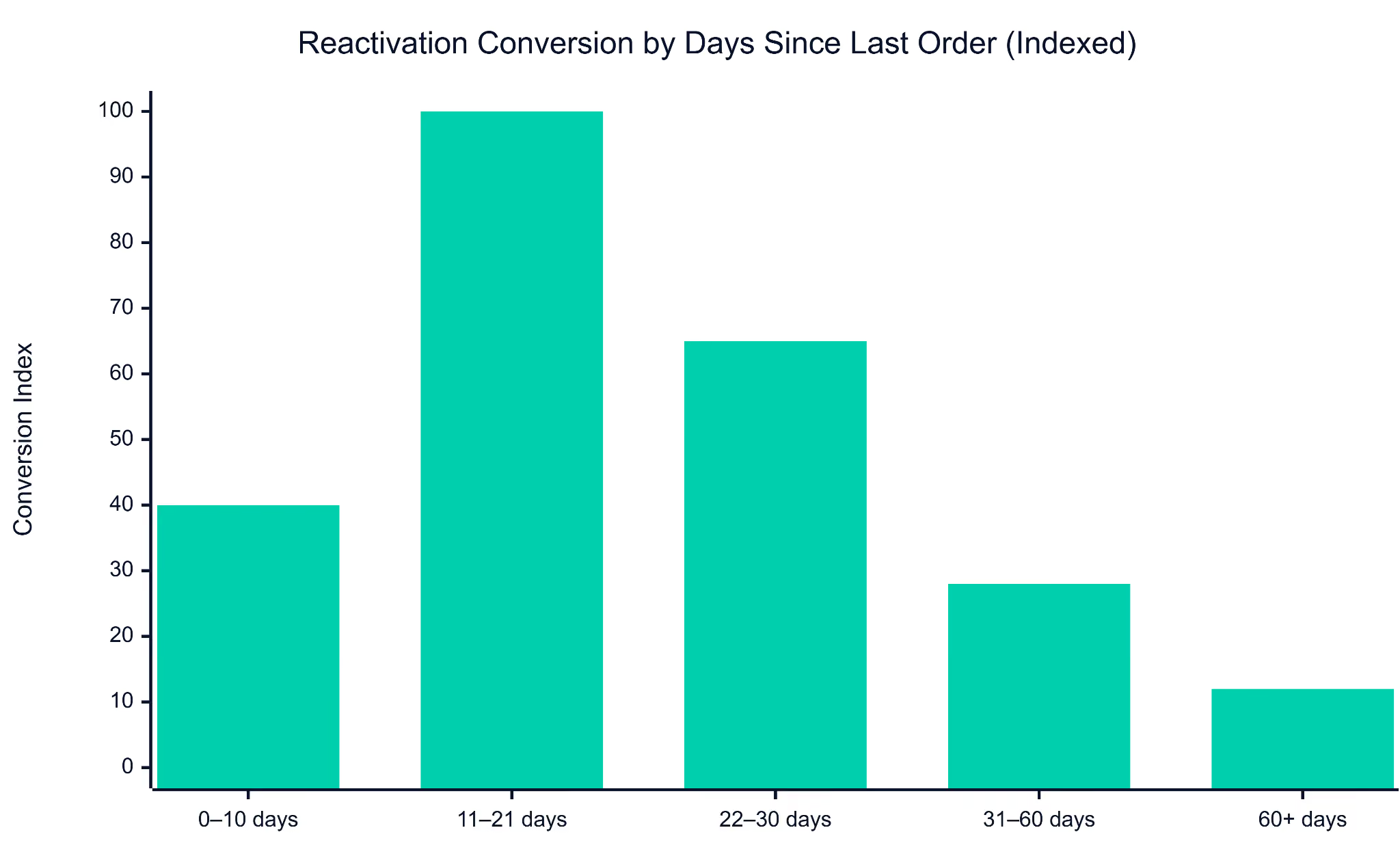
Sandwich and deli customers reorder on a median 8.9-day cycle in our 2026 dataset, making Day 14+ the sweet spot for win-back sends before reactivation cost climbs.
Per Square's 2023 Restaurant Marketing & Loyalty Insights, behavior-triggered email campaigns keyed to a customer's last order date can drive 3-5x higher conversion rates than generic newsletters. Behavior-triggered sends only work if you know each customer's last order date - which is exactly what loyalty software that times repeat-customer offers is built for. You can also build deeper repeat-customer loyalty with structured tiers that nudge customers back before Day 14 even arrives.
How to pick the right channel for each time window
Channel matters as much as timing. Here's how we'd map them:
Best for the pre-lunch window (10:30 AM weekdays) and Sunday-evening catering. Email earns its highest open rates when there's intent and a buying moment in the next 60 minutes.
SMS and push notifications
Best for dead-zone recovery (2:30 PM - 4 PM) and Day 14+ reactivation. Push beats email when inbox attention is low and immediacy matters.
Social (Instagram, TikTok)
Best for visual seasonal pushes - game-day platters, back-to-school lunches, holiday trays. Per the National Restaurant Association's 2024 State of the Restaurant Industry Report, nearly 70% of restaurant operators say they're planning to increase their use of social media marketing - which means inboxes will get cluttered. Visual platforms still convert.
In-app banners on your branded ordering site
Always-on, no send-time penalty. Use these for the promo you can't time-target precisely.
How to find YOUR deli's exact best times (using your own order data)
The seven windows above are starting points. Every deli has its own peak - driven by location, office density, weather, and customer mix. Your job is to find your version.
The steps:
- Pull order volume by hour over the last 90 days
- Identify your 3 highest-AOV hours (often different from highest-volume hours)
- Map your repeat customers' median repurchase interval
- Test one promo time against another over 4 weeks with everything else held constant
We built restaurant order analytics specifically to surface these patterns without you running queries by hand. Peak hours, AOV by hour, repeat-customer cycles, and channel performance all live in one place. If you operate multiple shops, the variance across locations is bigger than most operators expect - a downtown Tuesday looks nothing like a suburban Tuesday, and a single-tab view across your online ordering setup saves you from running the same promo at the wrong time in three different markets.
Common mistakes sandwich delis make with promo timing
A handful of patterns we see repeatedly:
Sending lunch promos at 11:45 AM. Already too late. The decision happened 45 minutes ago.
Treating all weekdays as equal. Tuesday is not Friday. Friday is not Monday. Order curves differ sharply by day in our 2026 dataset.
Ignoring the loyalty cohort's repurchase rhythm. 80% of orders come from returning customers across our platform. Your reactivation calendar matters more than your acquisition calendar.
Running the same promo time across multiple locations. Local data wins. A 10:30 AM email is right for an office-park deli and wrong for a college-town deli.
Promoting catering in the morning instead of the night before. Catering decisions happen at the end of the prior day, not the start of the order day.
The shortcut
Timing isn't a guess - it's a data question. The seven windows above are the blueprint, but your own order data is the answer key.
Book a Demo and we'll show you exactly which windows are working for your deli right now.

Sruthi Sekar specializes in brand strategy, growth, and user experience in the hospitality industry. As the driving force behind Restolabs, she helps restaurants harness technology to scale and thrive. With a background in design, branding, and entrepreneurship, she brings a sharp focus on crafting digital experiences that drive real business impact.
Frequently Asked Questions
The pre-lunch window of 10:30 AM to 11:15 AM weekdays converts best. Our 2026 Order Analytics Dataset shows the lunch rush hits at 11 AM to 1 PM local time, which means buying decisions are happening 30 to 60 minutes earlier - your promo needs to land before the decision is made, not after.
Tuesday and Wednesday for daily promos because inbox competition is lower than Thursday or Friday. For catering, Sunday evening captures Monday-rush orders and Thursday captures weekend orders.
Sunday evening (6 PM - 9 PM) for the Monday office rush, and Thursday for Friday and weekend catering. Sandwich and deli catering pulls the segment's average order value to $57.77 in our 2026 dataset, so each captured catering order is worth several solo lunches.
One to two daily promo sends per week is the right cadence, plus targeted reactivation sends keyed to the Day 14+ window for lapsing customers. Daily blasts burn your list - behavior-triggered sends preserve it.
Match the platform to the moment. Instagram and TikTok work best 9:30 AM to 10:45 AM for lunch capture and evening hours for catering, game-day, and seasonal pushes where visuals do the heavy lifting.
Mid-summer (June - July) and mid-winter (late January - February) tend to be the slowest stretches. Lean on loyalty reactivation campaigns, bundled family meals, and Day 14+ win-back offers rather than blast acquisition promos that won't convert at full price.
Pull your order volume by hour over the last 90 days, identify your three highest-AOV hours, and map your repeat customers' repurchase intervals. Restolabs analytics surfaces this automatically so you don't have to query the data by hand.




.webp)

.svg)
.webp)