
Key Takeaways
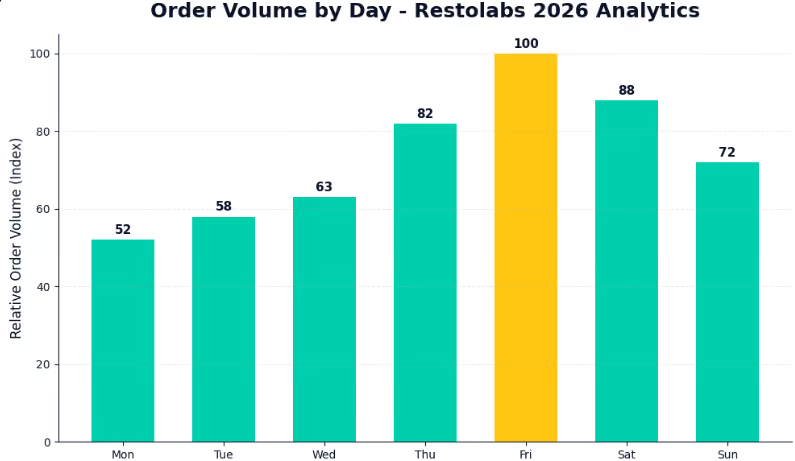
- Friday is the highest-volume ordering day in our dataset platform-wide, followed by Thursday and Saturday - schedule your biggest promos to land 4-24 hours ahead.
- The dinner peak window of 5:30 PM to 8:30 PM local time drives the bulk of daily order volume - post and push before 5 PM, not during.
- Monday is consistently the lowest-volume day across our platform - perfect ground for win-back campaigns and loyalty incentives.
- 77% of consumers say they're more likely to choose a restaurant that offers deals, per the National Restaurant Association's 2023 State of the Restaurant Industry Report.
- Turkish and Kebab restaurants on Restolabs average $38-$40 per order, giving solid margin to fund bundle and family-pack promos.
- 38.2% of customers across our dataset are repeat orderers - your timing strategy lives or dies on retention, not just new acquisition.
You're promoting at the wrong time.
That's the gap we see when we look at the kebab and Mediterranean operators publishing on social, running paid ads, and firing off SMS blasts. Everyone tells them how to promote. Almost nobody tells them when. And timing, more than creative, decides whether a promo lands or vanishes.
According to the Restolabs 2026 Order Analytics Dataset, which covers more than 4 million orders processed across the Restolabs platform spanning 2,126 locations and 479 brands from March 2025 to March 2026, the kebab order curve is sharper and more occasion-driven than the platform average. Turkish and Kebab restaurants in our dataset run an AOV of $38-$40 per order - squarely in line with platform-wide ordering, but with peaks that concentrate into narrow daily windows. If you miss those windows, you're paying to be invisible.
This guide breaks down the exact hours, days, seasons, and channels where promotion spend earns its keep. Every number here comes from real ordering behavior, not guesswork.
Why timing matters more for kebab restaurants than you think
Kebab buying behavior isn't smooth. It's spiky, weekend-loaded, and tied to social occasions - pub closing, family dinners, match nights, late-shift dinner runs. That makes timing a multiplier, not a tweak.
A generic restaurant might see promotions move sales 10-15%. A kebab shop pushing at the right hour can double order intake in a single evening. And the inverse holds: a discount fired during a dead zone is just margin you donated.
There's another wrinkle. The Restolabs 2026 Order Analytics Dataset shows 97.4% of orders were timezone-matched for time-of-day analysis, meaning we can read these patterns down to the hour. Most operators only see daily totals. That's the visibility gap closing this article aims to close for you.
The best hours of the day to promote a kebab restaurant online
Three windows do the heavy lifting in kebab ordering. Each one needs a different promotion approach.
The 11 AM lunch push window
Our 2026 data shows the lunch rush of 11 AM to 1 PM local time produces a sharp, predictable spike across kebab and Mediterranean concepts. The decision happens earlier than the order - usually between 10:30 and 11:00 AM, when office workers and students start scanning for lunch.
Post your wrap, doner, or bowl combo at 10:30 AM. Schedule push notifications for 10:45. By 11:15, your buyer has either decided or moved on.
The 4-6 PM dinner decision window
The dinner peak window of 5:30 PM to 8:30 PM local time drives the bulk of daily order volume in our dataset. But the decision moment sits 60-90 minutes upstream. By the time someone's at 7 PM hungry, they've already chosen.
This is the single most valuable promotional window for kebab restaurants. Reels, stories, SMS, and push should fire between 4:00 and 5:30 PM - never during the rush itself.
The 9 PM-midnight late-night surge
The late-night window of 9 PM to 11 PM is delivery-heavy across our platform. For kebab shops, it's also pub-and-bar-close traffic. Weekend skew is severe - late-night Friday and Saturday volume dwarfs midweek.
External reporting from Toast estimates orders placed between 5 PM and 8 PM account for roughly 40% of daily online restaurant orders, which lines up with what we observe at the platform level.
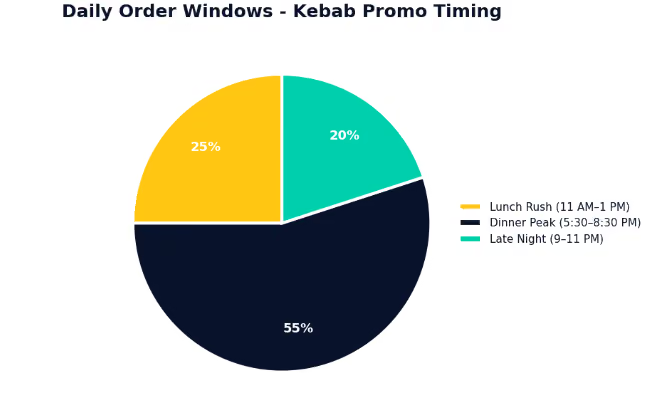
If you want to see your own version of this curve, you can track your peak ordering hours with restaurant analytics instead of guessing from third-party fragments.
The best days of the week to run kebab promotions
Thursday - the underrated pre-weekend push
In our 2026 dataset, Friday holds the position as the highest-volume ordering day platform-wide, followed by Thursday and Saturday. Thursday is where smart operators get ahead. People are planning Friday dinner, weekend catering, and family meals. A Thursday afternoon post sets up a Friday redemption.
Friday and Saturday nights - the volume anchors
Toast and Square's 2023 reporting estimates roughly a 20-30% lift in online restaurant orders on Fridays and Saturdays versus early-week days. For kebab, the lift is steeper. Don't waste discount dollars here - these are peak nights regardless. Use these windows for bundle upsells and AOV-lifting offers, not "20% off everything."
Sunday - the family-order spike
Sunday early evening pulls a different buyer: families ordering platters, mixed grills, and larger combos. Promote family bundles Saturday night through Sunday at 3 PM.
Slow-day strategy (Mon/Tue) - how to use promotions to flatten the curve
Monday is consistently the lowest-volume ordering day in our dataset, making it ideal for win-back campaigns and loyalty incentives. Every Monday order is true uplift - you're not cannibalizing a sale that would've happened anyway.
This is exactly where slow-season survival tactics earn their return. A Monday-only offer, sent Sunday night by SMS or push, costs you almost nothing in cannibalized margin.
The best seasonal windows to promote a kebab restaurant
Summer late-night demand (May-August)
Long evenings, outdoor crowds, post-bar appetite. Late-night ordering volume climbs from May, peaks in July, and stays elevated through August. Run extended late-night hours promos and lean into delivery zone expansion.
Ramadan and Eid (plan 3-4 weeks ahead)
If you serve a Muslim customer base, iftar windows reshape your entire daily curve. Pre-iftar ordering for delivery surges in the 60-90 minutes before sunset. Suhoor late-night orders spike too. Start your Ramadan campaign 3-4 weeks ahead - menus, family packs, scheduled push notifications, the lot.
Cold-weather comfort push (Oct-Feb)
National Restaurant Association reporting indicates roughly 42% of U.S. consumers are more likely to order takeout or delivery in winter than other seasons. Kebab plays directly to that demand - grilled, hot, hearty. October through February is the time to push warmer menu items and bundle upgrades.
Sports season spikes (World Cup, Cricket, Local Leagues)
Match nights are kebab nights. Plan your social calendar around fixtures - World Cup, EPL Saturdays, IPL evenings, NFL Sundays. Pre-match posts at the 2-hour mark convert. Live-match posts don't.
Best time to promote on each channel
Instagram and TikTok (Reels + Stories)
Post Reels at 11 AM, 4:30 PM, and 9:30 PM. Reels outperform static posts roughly 3-to-1 for kebab content because the format - grill flames, slicing the spit, wrap assembly - is visual. Stories work for time-sensitive bumps: "20 left tonight at the dinner combo price."
Google (local search + ads)
"Kebab near me" search spikes match our order curve almost exactly: 11 AM, 6 PM, and a smaller 10 PM peak. Bid aggressively in those windows and pull back midday and post-midnight.
SMS and push notifications
The 30-minute pre-meal rule applies. Fire dinner-hour pushes at 4:30 PM. Fire lunch pushes at 10:30 AM. Never push during the rush - people already ordering don't need a reminder, and people not ordering aren't going to flip on a buzz mid-meal.
A branded mobile app for push-notification timing gives you control over those windows in a way third-party apps never will.
Tuesday and Thursday afternoon, 2-4 PM. Open rates are stronger midweek, and Thursday afternoon catches both planners and impulse weekend orderers.
Third-party delivery apps (Uber Eats, DoorDash, Grubhub)
Run sponsored listings during the dinner peak window of 5:30 PM to 8:30 PM. Use third-party for visibility, not retention. You're renting reach - every commission you pay is margin you don't get back. Pair third-party visibility with commission-free online ordering for kebab restaurants to convert repeat customers off the platforms.
For operators running kebab ghost kitchens and virtual brands, this dual approach matters even more - third-party discovery, direct-channel retention.
Promotions that work best at each time window
Lunch-hour combos (11 AM-2 PM)
Speed and value. A wrap + drink + side at a sharp price hits the office crowd. Promote at 10:30 AM, redemption window closes at 1:30 PM.
Family bundles (6 PM-9 PM, weekends)
Mixed grill platters, family packs, multi-protein bundles. Push Saturday morning for Saturday evening, Sunday early afternoon for Sunday evening. Our 2026 dataset puts Turkish and Kebab averaging $38-$40 per order - bundles routinely push that figure 40-60% higher.
Late-night deals (after 10 PM)
Doner wraps, single-item value plays, small-group bundles. Promote at 8:30 PM on Friday and Saturday. Tie deals to local pub-close times if you know them.
Catering promotions (run Tue-Thu, 9 AM-11 AM)
B2B catering decisions happen during the workday, days ahead of consumption. A Tuesday 10 AM email or LinkedIn post for Friday-delivery catering catches office admins at the right moment.
The National Restaurant Association's 2023 report found 33% of consumers say special offers are the main reason they choose delivery over dine-in. The right offer at the right time isn't a nudge - it's the whole decision.
How to use your own order data to find your best time
The patterns above are platform-wide averages. Your shop has its own rhythm - a nearby college, a pub on the corner, a mosque two streets down, a Friday cricket league.
Generic advice gets you to the league average. Your own data gets you above it.
Track these five things weekly:
- Hourly order volume (15-minute buckets, not full hours)
- Day-of-week order share and AOV
- Channel source for each order (web, app, social click, SMS, third-party)
- Repeat-order rate within 30 days
- Promo redemption rate by time window
Across our dataset, the repeat-order rate sits at 38.2% - meaning roughly 4 in 10 customers come back. The median reorder window is 8.9 days. If you don't know your own version of those numbers, you're guessing.
Why direct ordering data beats third-party app data: on Uber Eats or DoorDash you only see commission-skewed slices. You don't know who the customer is. You can't retarget them. Direct channels give you the full picture, which is the whole point of running a restaurant loyalty program that rewards repeat orders - you turn one-time orderers into customers you can market to on your schedule.
Common timing mistakes kebab restaurants make
Posting promotions during the order window. Pushing at 7 PM during the dinner rush is too late. The decision happened at 5:30.
Running discounts on already-peak nights. Friday and Saturday don't need a discount. They need an upsell. Save the discount fuel for slow days.
Ignoring slow days entirely. Monday is the highest-ROI promo day in our dataset. Treating it like a write-off is a mistake.
Pushing the same offer year-round. A Ramadan family pack in March, a sports-night bundle in October, a winter comfort meal in January - rotation matters.
Relying only on third-party delivery promotions. You're renting traffic. The platform owns the customer.
For a fuller view on stacking these channels, how restaurant marketing software fits into a timing strategy is a useful companion read.
Closing
Promotions are 10% creative, 90% timing. The kebab operators winning in 2025 are the ones reading their order data weekly and adjusting promotion windows accordingly. If you want to see what your own order curve looks like - and run promotions against the right hours, days, and seasons - Book a Demo.

Sruthi Sekar specializes in brand strategy, growth, and user experience in the hospitality industry. As the driving force behind Restolabs, she helps restaurants harness technology to scale and thrive. With a background in design, branding, and entrepreneurship, she brings a sharp focus on crafting digital experiences that drive real business impact.
Frequently Asked Questions
It depends on your shop, but the default that works for most kebab operators is weekday 10:30-11:00 AM for lunch decisions and weekday 4:00-5:30 PM for dinner decisions. Our 2026 dataset shows the dinner peak window of 5:30 PM to 8:30 PM drives the bulk of daily order volume, so promote 60-90 minutes ahead of it.
Yes. Monday is consistently the lowest-volume ordering day across our platform, which makes it the highest-ROI promo day - every order is true uplift, not cannibalized demand. Pair a Monday-only push with a loyalty incentive and you'll see your weekly curve flatten.
Thursday and Friday, ideally between 4:30 PM and 7:30 PM. Thursday catches weekend planners; Friday catches same-day deciders. In our 2026 dataset, Friday is the highest-volume ordering day, so social content posted ahead of it earns the most conversion.
Tuesday through Thursday mornings, 9:00-11:00 AM. B2B catering decisions are made days in advance during work hours, so a Tuesday post or email for Friday catering catches admins and office managers at the right moment.
Yes, if you serve a Muslim customer base. Start planning 3-4 weeks ahead - iftar timing dictates daily push windows, with order spikes in the 60-90 minutes before sunset and again at suhoor. Family packs, pre-iftar bundles, and scheduled push notifications all earn their keep here.
Both, but with different goals. Use third-party platforms for visibility - that's renting reach. Use your direct channel for retention and loyalty, because every commission-free order keeps margin in your business and gives you direct customer data you can market against.
Run a monthly seasonal rotation layered with weekly tactical offers. Seasonal rotation handles weather, sports, and religious calendars; weekly tactical handles slow-day fill-ins like Monday loyalty pushes. Same offer year-round trains customers to ignore you.




.webp)

.svg)
.webp)