

Key Takeaways
A profitable bar food menu is not just a list of crowd-pleasers. It is a margin system: items need to be easy to prep, simple to sell, fast to order, and strong enough to bring guests back.
The challenge is that many bars build menus for the dining room first and online ordering second. That creates friction. Guests struggle to customize orders, staff spend time correcting mistakes, and third-party commissions can eat into the profit the menu was supposed to create.
This guide explains how to build a bar food menu that works across dine-in, takeout, and commission-free direct online ordering—without losing control of customer relationships or margins. In 2026, QR ordering, direct ordering versus third-party delivery, and customer-owned data now play a larger role in whether high-margin items actually stay profitable.
⚡ Quick Answer: Most Profitable Bar Food Menu
The most profitable bar foods combine low ingredient costs, fast prep, high perceived value, and strong upsell potential. Wings, nachos, loaded fries, sliders, flatbreads, and dips consistently deliver strong margins. To build a profitable bar food menu: understand customer demand, choose high-margin items, price using a food cost formula, design for upsells, publish online with direct ordering, and track item performance monthly.
Top 5 highest-margin bar foods:
- Wings — low cost, high volume, bundle-friendly
- Loaded Fries — minimal ingredients, premium perceived value
- Nachos — sharable, customizable, group-order ready
- Sliders — easy multiples, strong combo potential
- Flatbreads/Pizza — fast prep, flexible toppings, high markup
👉 Also Read: Say 'NO' To Discounts For Continued Growth Of Your Bar
.avif)
What Makes Bar Food Profitable?
Not every popular bar food is actually profitable. An item can sell well every Friday night and still quietly drain margin if the ingredient cost is too high, the prep time is too long, or the portion size is too generous.
The items that consistently produce strong margins share a recognizable set of traits. Understanding these traits helps operators choose the right items—not just the trendy ones.
Core profitability drivers for bar food:
- Low ingredient cost: Items like fries, nachos, wings, and dips use inexpensive base ingredients that can be sold at a significant markup.
- Simple, fast prep: Items that take less than 8–10 minutes to prepare allow the kitchen to handle high-volume nights without slowing service or increasing labor costs.
- Minimal waste: Ingredients with long shelf life or dual use across multiple dishes reduce spoilage and food cost variance.
- Shareability: Platters, boards, and baskets encourage group orders, increasing average check size without increasing per-item complexity.
- Alcohol pairing potential: Bar food that pairs naturally with beer, cocktails, or wine increases drink reorders and total ticket value.
- Upsell flexibility: Items with natural add-ons—extra toppings, dipping sauces, premium protein upgrades—let operators increase revenue per order without changing the base item.
- Online ordering suitability: Items that package well, are easy to describe digitally, and support modifier customization perform better on direct ordering platforms.
An item like loaded fries scores well on nearly every driver: cheap base ingredients, fast prep, easy to customize with premium toppings, shareable, pairs with drinks, and packages cleanly for delivery. That combination is why it appears on nearly every high-performing bar menu.
How to Create a Profitable Bar Food Menu
1. Understand your target audience
A profitable menu starts with knowing what guests already want to buy. If late-night customers keep ordering shareable snacks while weekday lunch customers want faster handheld options, the menu should not treat both groups the same.
Customer feedback is useful, but ordering data is usually more honest. If guests keep adding loaded fries to late-night orders or pairing wings with specific drinks, that behavior tells the operator where the real demand sits.
Restaurants that rely only on third-party platforms may not get full access to those customer insights. A direct ordering system gives operators a cleaner view of what guests buy, when they buy, and how often they return. Restaurant analytics from a direct ordering platform can replace guesswork with actual purchasing patterns.
a.Conduct Surveys
Surveys are an excellent way to gather customer feedback on their dining preferences, favorite dishes, and overall experience at your bar or restaurant. You can distribute surveys through various channels, such as email, social media, or even in-person, to gather valuable data on your customers' preferences.
b. Utilize Social Media
Social media platforms such as Instagram and Facebook can be a goldmine of customer insights. You can monitor customer comments and direct messages to identify popular menu items, areas for improvement, and customer complaints. You can also use social media to showcase your menu items and engage with customers to build brand loyalty.
c.Implement Feedback Forms
Feedback forms are a great way to collect customer feedback in real-time. By providing a simple form at the end of the dining experience, customers can provide feedback on their favorite dishes, areas for improvement, and suggestions for new menu items.
Once you have gathered customer insights, you can use this information to tailor your menu to their preferences. For example, if your target customers are health-conscious, you may consider incorporating more vegetarian and gluten-free options on your menu. Alternatively, if your target customers are more price-sensitive, you can adjust your pricing strategy to offer more affordable options.
2. Build a Bar Menu Strategy Around Margin, Demand, and Prep Time
Once the data is clear, the next step is deciding which items deserve prime menu space—and which ones are quietly dragging down margin.
a. Use Menu Engineering Techniques
Menu engineering involves mapping every item across two dimensions: popularity and profitability. Items that score high on both belong in the most visible positions on the menu. Items that are popular but low-margin need repricing or reformulation. Items that are high-margin but low-visibility need better placement or description.
The same logic applies to a digital menu. When operators can see which modifiers are selected most often, which items drive repeat orders, and which bundles convert best, those insights translate directly into smarter menu placement and pricing. Ordering data from a direct system makes this analysis faster and more accurate than manual review.
b. Prioritize Quality Ingredients
According to Mike Gallagher, co-founder of Brick Store Pub in Decatur, Georgia, using high-quality ingredients is key to creating a distinctive and profitable menu. Figuring out how to make it more distinctive than something that a customer might simply, and affordably, recreate at home, can elevate the dining experience and justify higher prices.
c. Offer Something Unique
People go out to eat and drink for a new experience. Offering something completely unique can draw in potential customers and help you stand out from the competition. This can be accomplished by creating signature dishes or drinks that showcase your bar's style and personality.
3. Design Your Menu to Sell High-Margin Bar Food
Menu design should make profitable choices easier to find. In a bar environment, guests often decide quickly, so the menu needs to guide them toward items that are fast to prepare, easy to customize, and worth the price.
a.Choose the Right Font Size and Color Scheme
Your menu should be easy to read, with a font size that is large enough for customers to see from a distance. Make sure to choose a font that is legible, and use a color scheme that complements your brand and evokes the right mood for your bar. For example, you might choose bold, bright colors for a lively, upbeat bar, or muted earth tones for a more relaxed, sophisticated atmosphere.
b.Create a Clear Menu Hierarchy
Organize your menu items in a clear and logical hierarchy, with easy-to-read headings and subheadings. This helps customers quickly find the section of the menu they are interested in and makes it easier for them to order.
c. Use Mouth-Watering Food Photos and Descriptions
Adding photos and descriptions of your food can help customers visualize what they'll be ordering and entice them to try new items. Use descriptive language that highlights the flavor and quality of your food, and make sure your photos are high-quality and appetizing.
d. Use Suggestive Selling Techniques
Incorporating suggestive selling techniques into your menu can encourage customers to order more items and increase your overall profitability. For example, you might include popular appetizer or drink pairings alongside certain menu items, or use descriptive language to highlight the most profitable or unique dishes.
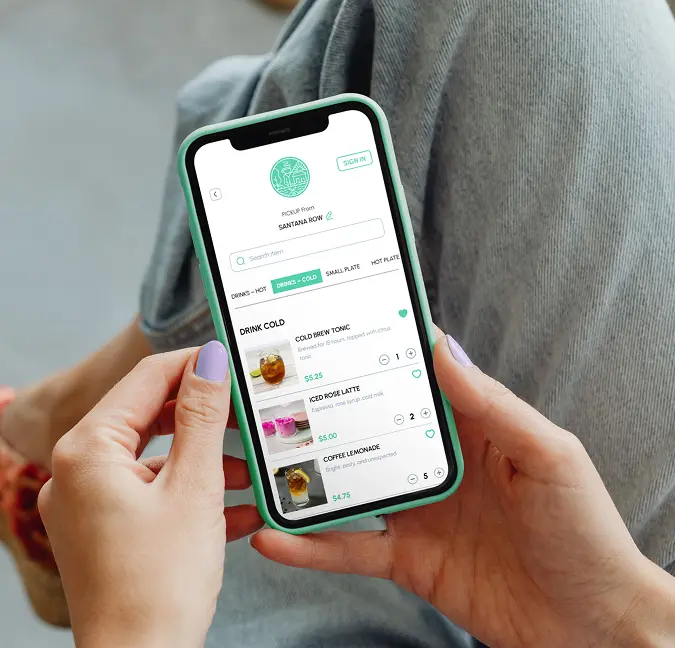
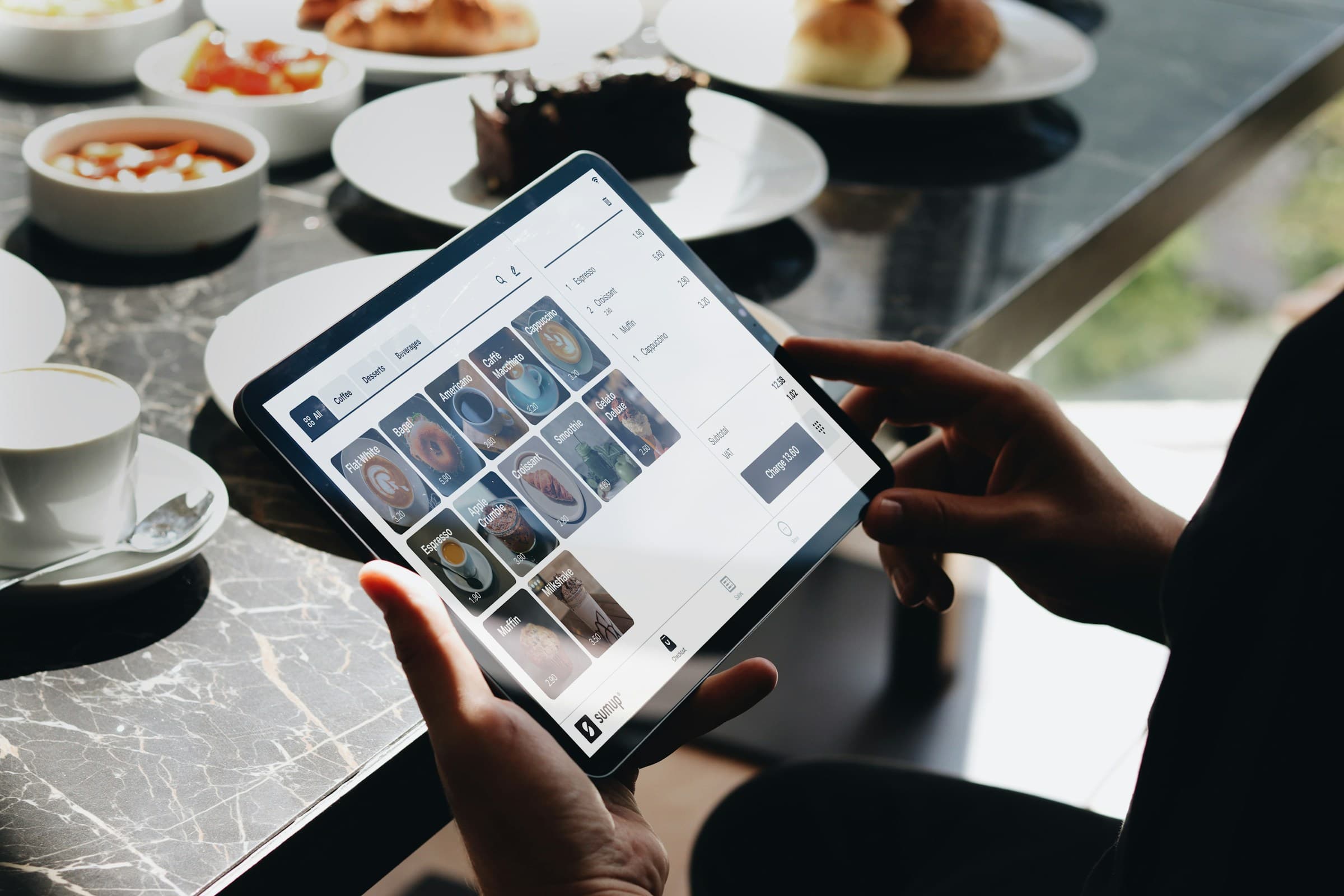
e. Make the online menu a direct revenue channel—not an afterthought
Online ordering should make the menu easier to sell—not more expensive to operate. If every profitable order runs through a third-party app, the bar may win the sale but lose a meaningful share of the margin.
A direct ordering system helps restaurants keep the customer relationship and avoid commission leakage. Restolabs gives bars and restaurants a commission-free way to accept online orders through their own branded ordering experience.
Clear categories, modifiers, photos, and item descriptions all matter. So does the ordering channel itself. When customers order directly through a restaurant's own system, the restaurant keeps more control over the experience, the data, and the margin. For operators managing multiple locations, real-time menu updates across all channels become a practical necessity, not a luxury.
👉 Also Read: Make Them Order More With These Menu Design Hacks
How to Price Bar Food for Profit
Pricing is where most bar food profitability is won or lost. A well-chosen item at the wrong price produces the wrong margin—or worse, drives guests away. The goal is to price each item so it feels like a fair value to the guest while delivering an acceptable margin to the kitchen.
The food cost percentage formula
Food cost percentage is the most common pricing benchmark in the industry:
Most profitable bar food items target a food cost percentage between 25% and 32%. Items below 25% food cost—like fries, nachos, or flatbreads with minimal toppings—offer the strongest margin potential.
What is the 30% rule in restaurants?
The 30% rule is an industry guideline suggesting that food costs should not exceed 30% of the menu price. For example, if loaded fries cost $2.50 to make, a menu price of $8.50–$10.00 keeps the food cost at or below 30%. This rule is a starting point, not a ceiling—premium items can justify lower food cost percentages based on perceived value.
Contribution margin approach
A $12 wings order that costs $3.50 to make contributes $8.50 per sale. A $16 premium burger that costs $7.00 to make contributes $9.00. The burger has a slightly higher dollar contribution, but the wings cost less, prep faster, and sell more frequently—making wings the stronger margin driver in a high-volume bar setting.
Pricing strategies that protect margin
- Bundle pricing: A wings-and-fries combo priced slightly below the sum of individual items feels like a deal while maintaining overall margin.
- Premium topping upsells: Base nachos at $9, premium nachos with guacamole and pulled pork at $14. The base price anchors perceived value; the upsell captures incremental margin.
- Portion tiering: Offer half-portions at a higher per-unit cost and full portions at the headline price. This increases revenue from lighter eaters while the full portion feels like the "better deal."
- Happy hour food pricing: Reduce prices on high-margin items (not high-cost items) during off-peak hours to drive traffic without sacrificing margin on the items that matter.
How to Analyze Your Current Bar Food Menu
Most bar owners build a menu, launch it, and rarely look back. But a menu that worked well 18 months ago may now include items that cost more to produce, move slower, or no longer match what the current customer base actually orders.
A monthly or quarterly menu review does not need to be complex. The framework below gives operators a structured way to evaluate each item and decide whether to keep, promote, reprice, or remove it.
Menu analysis framework
For each menu item, track the following metrics:
- Sales volume: How many units sold per week?
- Food cost percentage: Is it within target range?
- Contribution margin: How much gross profit per order?
- Prep time: Does it slow the kitchen during peak hours?
- Waste rate: How often are ingredients discarded unused?
- Modifier usage: Are guests customizing it? Which add-ons convert?
- Reorder rate: Do guests who order it once order it again?
Then apply the menu engineering quadrant (Stars, Plowhorses, Puzzles, Dogs) shown in the strategy section above to determine the right action for each item.
17 Profitable Bar Food Ideas and Why They Work
After reviewing the main profitability factors, these bar food ideas stand out because they support strong margins, easy customization, and repeat orders when priced and promoted correctly. Some bar foods look profitable on paper but fall apart when they hit takeout and delivery. The better options are easy to prep, easy to package, and simple for guests to customize online without slowing down the kitchen.
A bar and restaurant's profitability depends on factors such as pricing, ingredient costs, and demand from the specific customer base. Experiment with the menu, track item-level sales through restaurant analytics, and adjust monthly to find the right balance between guest satisfaction and margin.
Best Low-Cost Bar Snacks That Do Not Require a Full Kitchen
Not every bar has a full kitchen, a dedicated cook, or the storage capacity for a broad menu. For bars operating with limited space, staff, or equipment, a focused snack menu is often more profitable than a sprawling food program that stretches the operation thin.
These low-labor, high-margin options work well with minimal equipment and deliver strong perceived value when paired with drink recommendations:
- Chips and house-made dip: Near-zero prep, high margin, pairs with almost every drink category.
- Soft pretzels with beer cheese: Ready-to-heat, crowd-pleasing, naturally positioned as a beer pairing.
- Seasoned popcorn: Extremely low cost, easily customizable with flavors (truffle, spicy, cheddar), and delivers high perceived value at a premium price point.
- Mixed nuts or spiced bar nuts: Long shelf life, no prep, high margin per serving. An easy upsell alongside cocktails.
- Charcuterie-style boards: Requires assembly but no cooking. Cheese, cured meats, crackers, and fruit deliver a premium price point with straightforward ingredient sourcing.
- Simple flatbreads (par-baked): Add toppings and finish in a toaster oven or small pizza oven. Low labor, flexible toppings, and consistent results.
- Frozen fries (air-fried): A reliable high-margin staple that requires only a fryer or air fryer and minimal staff time.
The key for small-kitchen operators is selecting items with long shelf life and low waste. Every ingredient should appear on at least two menu items to reduce spoilage risk. On a direct online ordering menu, these items can be featured with upsell prompts—"Add a drink pairing for $X"—to increase order value without adding kitchen complexity.
How to Track, Test, and Improve Bar Food Profitability
Building the menu is only the beginning. The operators who sustain strong margins are the ones who review performance regularly, test changes methodically, and cut items that are not contributing before they become a drain on the operation.
What to track monthly
- Item-level sales volume and revenue
- Food cost percentage per item
- Modifier and add-on conversion rates
- Item waste and spoilage
- Reorder rates for repeat customers
- Customer feedback scores by item
- Kitchen prep time and order accuracy rates
What to test quarterly
- Item descriptions: clearer language or more sensory detail can increase order rates for high-margin items
- Photo updates: improved images on digital menus directly affect click-through and order rates
- Bundle pricing: test a new combo and compare average order value against the baseline
- Menu placement: move a high-margin "Puzzle" item to a more prominent position and track whether sales improve
- Price adjustments: small price increases on established favorites (5–10%) often go unnoticed by regular guests but improve margin meaningfully at scale
Restolabs gives operators access to item-level ordering data directly from their direct ordering channel—without relying on a third-party marketplace to share (or withhold) those insights. That data becomes the foundation for every menu decision that follows.
Ready to Sell Your Bar Food Menu Directly?
A profitable menu works harder when customers can order from it without friction. The easier it is to browse, customize, and reorder, the more chances a restaurant has to turn high-margin items into repeat sales.
Restolabs gives bars and restaurants a commission-free online ordering system built for direct orders, QR ordering, expert setup, and menu management. Restaurants can keep control of customer data while simplifying the ordering experience across pickup, delivery, and dine-in.
If the menu is ready but the ordering setup is not, Restolabs can help restaurants launch direct online ordering quickly. With expert setup, menu support, and integrations for payments, delivery management, and POS systems, restaurants can start selling online in as little as one day.
For operators ready to protect margins and grow direct sales, Restolabs makes the next step simple.
Book a demo
💡You Might Also Like...
👉 Should You Get A Branded Mobile Ordering App For Your Restaurant?

Team Restolabs is a group of hospitality tech experts, strategists, and innovators dedicated to helping restaurants thrive in the digital age. With deep expertise in branding, growth, product development, and restaurant technology, we provide insights on scaling, streamlining operations, and enhancing customer experience.
Frequently Asked Questions
Profitability comes from high-margin, low-cost ingredients, such as fries, nachos, and wings, which can be sold at a premium, especially during busy hours like happy hour.
Bars can increase profits by offering shareable platters, promoting signature items, and incorporating specials or combo deals that encourage larger orders.
%2520(10).avif)

.avif)




.webp)

.svg)
.webp)