
Key Takeaways
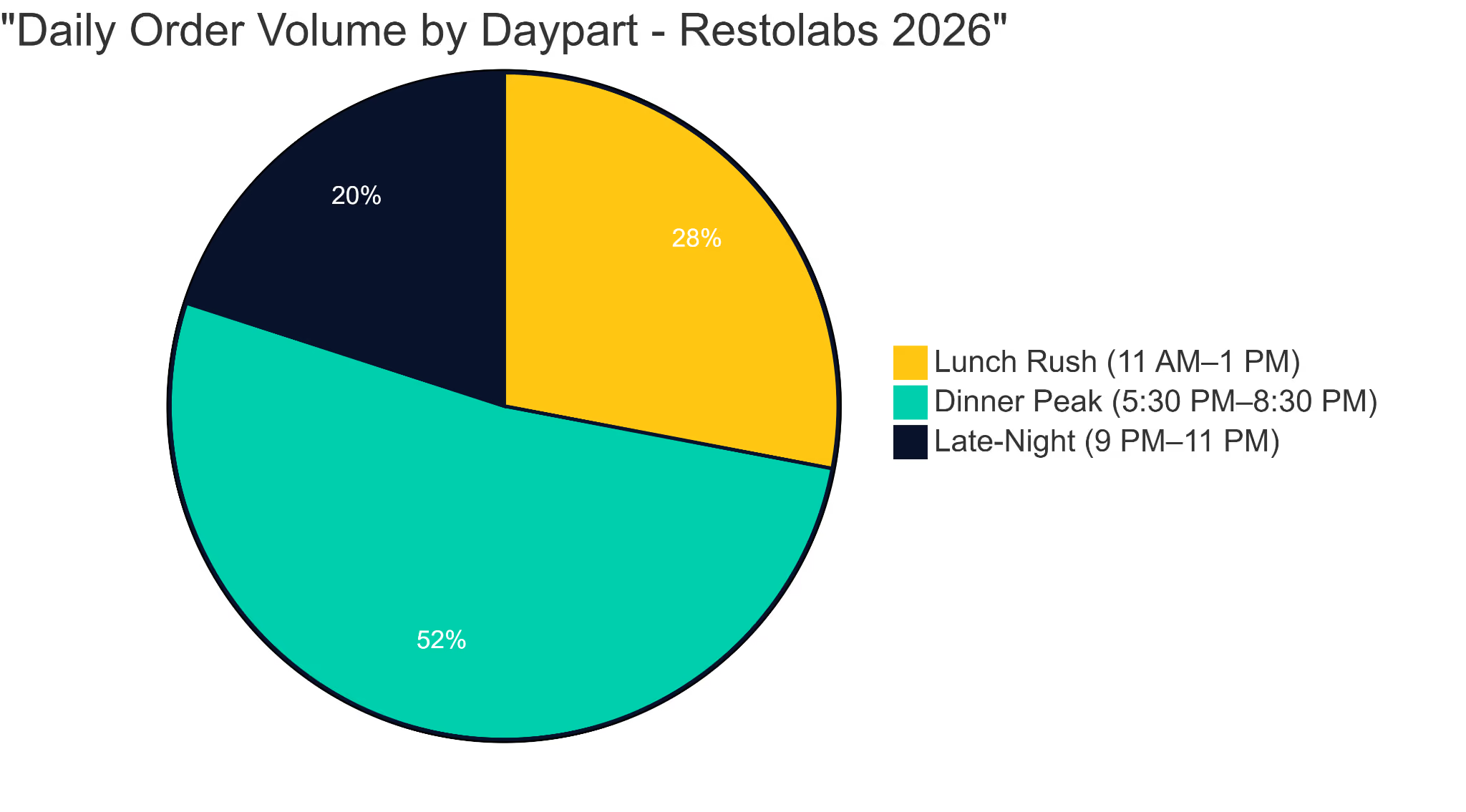
- Fast food online orders cluster into three daily windows: the 11 AM-1 PM lunch rush, the 5:30 PM-8:30 PM dinner peak, and a 9 PM-11 PM late-night tail.
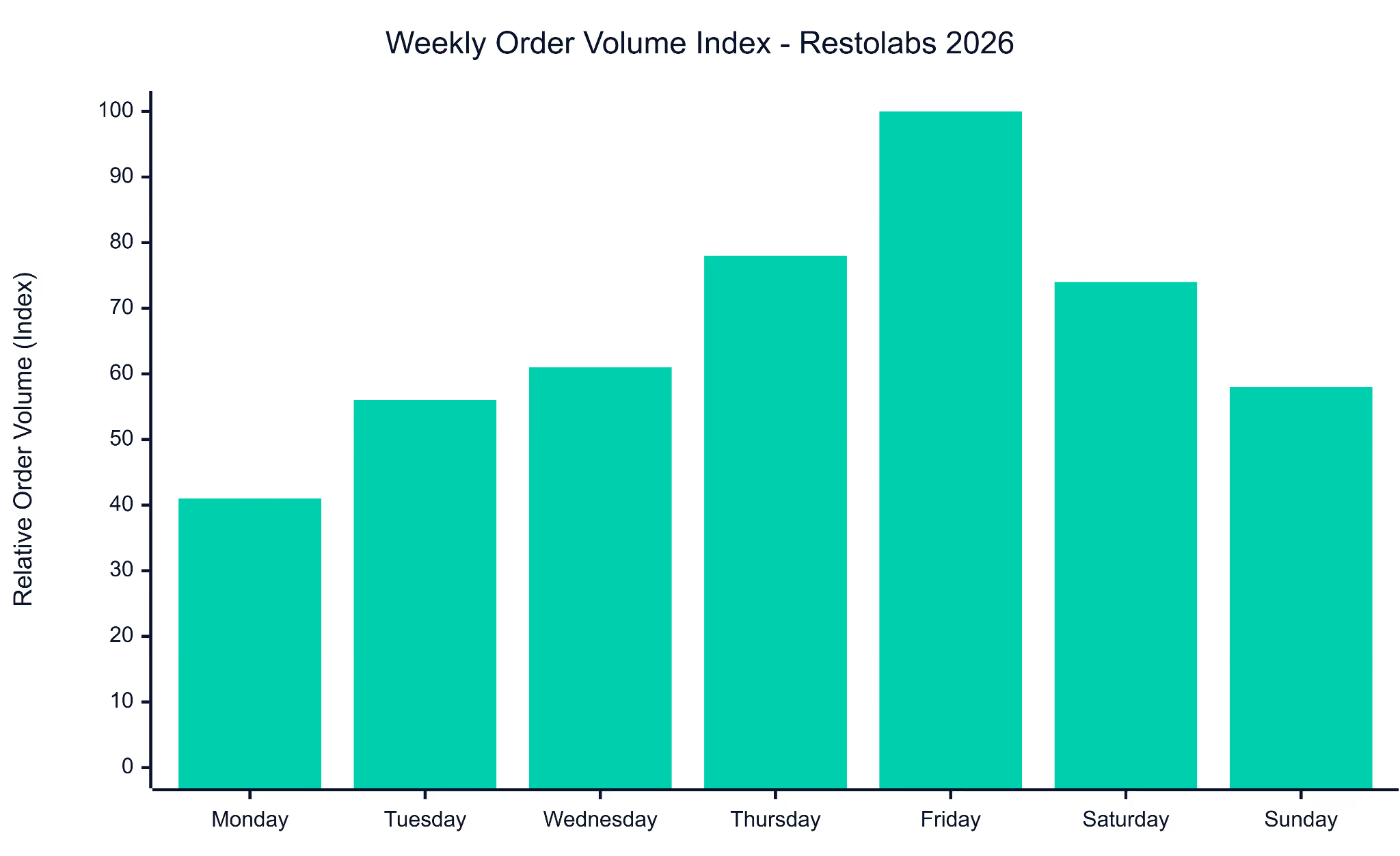
- Friday is the highest-volume ordering day platform-wide; Monday is the lowest, which makes it ideal for win-back campaigns rather than acquisition pushes.
- The median customer in our 2026 dataset reorders within 8.9 days - so the day 7-10 post-purchase window is your sharpest re-engagement moment.
- 80% of orders come from returning customers and only 20% from new ones, which should reshape how you split promo budget by audience.
- Channel timing matters: SMS and push convert closer to mealtime; email and social do better in the pre-meal scroll window.
- According to the USDA Economic Research Service, 58.9% of total U.S. food spending went to food-away-from-home in 2024, a record-high share - meaning the demand is there if your timing is.
Most fast food promos go out at the wrong time.
That's the quiet problem behind a lot of underwhelming campaign reports. Operators pick a clever offer, design a clean creative, and push it live at 9 AM on a Monday because the marketing calendar said so. Then they wonder why the redemption rate landed in the low single digits.
According to the Restolabs 2026 Order Analytics Dataset, which covers more than 4 million orders across 2,126 locations and 479 brands from March 2025 to March 2026, fast food ordering is a daypart-driven game. Two windows dominate the day. One day dominates the week. And 97.4% of orders we analyzed were timezone-matched, which means our timing reads are based on what your customers are doing in their local clock - not a smeared global average.
This guide walks through what we see in the data, hour by hour and day by day, so you can build a promo calendar that follows actual ordering behavior instead of guessing.
Why timing beats tactics in fast food promotions
A great offer sent at 3 PM does not beat a mediocre offer sent at 11:15 AM. That's the uncomfortable truth behind a lot of fast food marketing.
Fast food is impulse-driven and decision-fast. Customers don't sit on a coupon for three days the way they might for a fine-dining reservation. If your promo doesn't land inside the narrow window where someone is asking themselves "what's for lunch?", it's competing with whatever notification arrives next.
The global fast food market sits at $760.90 billion in 2025 and is projected to reach $808.84 billion in 2026, according to Fortune Business Insights. That growth flows to whoever shows up at the right moment.
The two timing windows that actually drive fast food orders
There are two windows you need to separate in your head: the decision window and the order window.
The order window is when checkouts happen. The decision window is the 30-60 minutes before that, when customers are scrolling, glancing at menus, and silently shortlisting. Promos hit hardest in the decision window. By the time the order window opens, the choice has usually been made.
This is why "send at peak" is one of the most expensive mistakes operators make. You're trying to influence a decision that's already been locked in. Promote into the decision window and your offer is actually part of the consideration set.
Best times of day to promote fast food online (hour by hour)
Three daily windows show up over and over in our 2026 order analytics data. Map your promo sends 30-45 minutes before each one.
Lunch daypart (10:30 AM - 1:30 PM)
In our 2026 dataset, the lunch rush of 11 AM to 1 PM local time is one of the two anchor windows for fast food order volume. That means your promo needs to be in someone's pocket by 10:30 AM at the latest.
A 10:15 AM SMS. A 10:30 AM push. A pre-scheduled social post at 10:45. These land inside the decision window. A noon push lands inside someone's lunch break, when the call is already made.
Afternoon snack window (2:00 PM - 4:30 PM)
Volume drops here, but the window is useful for impulse offers and limited-time experiments. Combos, snack-size promos, and bundle tests perform better here than in peak hours because there's less competition for attention.
Use the afternoon to push offers that need a nudge - not your hero promo.
Dinner daypart (5:00 PM - 8:00 PM)
The dinner peak window of 5:30 PM to 8:30 PM local time drives the bulk of daily order volume across the Restolabs 2026 Order Analytics Dataset. This is your single largest opportunity each day.
Send the dinner promo at 4:00-4:45 PM. Anything later and you're shouting into the order window. Anything earlier and it gets buried by other notifications.
Late night (9:00 PM - 11:00 PM)
The 9 PM to 11 PM late-night window in our data is delivery-heavy and pizza-dominant - but fast food has a real seat at this table too. Competition for attention is lower, mobile share is higher, and conversion intent is impulsive.
If you run a commission-free online ordering system and you're not running anything in the late-night window, you're leaving an underserved daypart on the table. Test a one-week late-night offer and watch the conversion rate against your lunch baseline. It's usually closer than people expect.
Best days of the week to promote
Day-of-week patterns are even more consistent than dayparts. Our 2026 data shows Friday as the highest-volume ordering day platform-wide, followed by Thursday and Saturday. Monday sits consistently at the bottom.
Weekday vs. weekend patterns
Friday's lead is large enough that it should reshape your weekly send calendar. Most operators we work with under-promote on Thursday - which is a mistake, because Thursday is where weekend planning behavior starts to show up.
Sunday evening is the other underrated slot. It rides the wind-down of the weekend and the dread of Monday.
The promo sweet spot day
Monday is consistently the lowest-volume ordering day in our 2026 dataset, making it ideal for win-back campaigns and loyalty incentives rather than full-price promotion. Don't burn your hero offer on Monday. Use it to re-engage customers who haven't ordered in a while.
Wednesday and Thursday are your sharpest acquisition days - they capture the planning behavior that turns into Friday and Saturday orders.
Channel-specific timing - when to promote where
Different channels have different latency between send and conversion. Match the channel to where the customer is in their decision cycle.
Email and SMS
Email gets read in batches. Send the lunch email around 10:30 AM and the dinner email around 4:15 PM, when most people are doing a quick inbox sweep.
SMS is different. It's read within minutes. Send SMS closer to mealtime - 11:00 AM for lunch, 5:00 PM for dinner - because the gap between read and action is so short.
Push notifications (branded app)
Push notifications are your sharpest timing weapon, but they're easy to burn out. The highest-CTR windows we observe are 11:00 AM for lunch and 5:30 PM for dinner. Cap the volume at four pushes per week.
If you don't have a branded mobile app for push notifications, you're outsourcing your most time-sensitive channel to third-party marketplaces - and paying their commissions for the privilege.
Social media (Instagram, TikTok, Facebook)
Social runs on pre-meal scrolling behavior. Post between 10:00 and 11:00 AM and again between 4:00 and 5:00 PM. Saturday late morning is the right window for weekend-targeted creative.
Paid search and Google Ads
Bid up during the 45-minute pre-peak windows. Bid down during the dead zones (2:30-4:00 PM, 8:30-10:30 PM). Dayparting in your ad platform can save 20-30% of monthly spend with no impact on conversion volume - and sometimes a lift, because you're concentrating budget on intent-rich hours.
Delivery marketplace promotions
If you run promotions on third-party marketplaces, the same 30-minutes-before-peak rule applies. Boost visibility into the decision window. Don't waste boost budget at 7:45 PM when the dinner decision has already been made.
Seasonal and calendar-based timing
Paydays move fast food order volume. So do game days, the first cold snap of fall, the first warm Friday of spring, and the back-to-school shift in September. None of these are guesses - they show up consistently year over year in our order analytics data.
Holiday timing deserves its own playbook. For one approach to seasonal promo design, see Restolabs' write-up on Black Friday restaurant promotions.
The U.S. limited-service segment generated about $550.7 billion in foodservice sales in 2024 according to the USDA Economic Research Service, and per-capita food-away-from-home spending hit a record $4,275 the same year. Seasonal peaks compound on top of that growing baseline. Showing up at the right calendar moment matters more than ever.
When to promote to existing vs. new customers
Our 2026 dataset shows a 20/80 split between new and returning customer orders, with returning orders dominant. That ratio should drive your promo budget split - most operators over-spend on acquisition and under-spend on retention.
New customer acquisition timing
Lunch dayparts work best for first-time orders. The ticket is lower, the perceived risk is lower, and the decision happens faster. Run acquisition offers Tuesday through Thursday during lunch.
Reactivating dormant customers
The median reorder interval in our 2026 data is 8.9 days. That makes the day 7-10 post-purchase window the optimal re-engagement timing, anchored on that 8.9-day median.
Wait too long and you're chasing a customer who has already drifted to a competitor. Send too soon and you're discounting an order that would have happened anyway. Use restaurant loyalty program software to automate sends inside that day 7-10 window and reserve manual win-back campaigns for the day 14+ dormant segment.
Promo timing mistakes that quietly kill conversion
A few patterns we see repeatedly across the restaurants on our platform:
- Sending at peak instead of pre-peak. Promos that hit during the order window influence almost no one.
- Over-promoting on Mondays. Monday is for win-back, not full-price hero offers.
- Treating all dayparts as equal. They aren't. Dinner is roughly twice the volume of lunch in our data.
- Ignoring abandoned cart timing. A 30-minute recovery prompt outperforms a 2-hour one, every time.
- Daily discounting. It trains customers to wait. It also wrecks margin.
For a structural way to plan around these, the restaurant marketing budget guide walks through how to allocate spend across channels and timeframes.
How to build a data-driven fast food promo calendar
Four steps. No fluff.
- Audit your own ordering data. Pull peak hours, peak days, and channel mix from the last 90 days. Use ordering analytics built for restaurants if you want this surfaced automatically.
- Map promo windows 30-60 minutes pre-peak. Lunch send by 10:30 AM. Dinner send by 4:30 PM. Late-night send by 8:30 PM.
- Assign channels to each window. SMS and push closer to peak; email and social earlier.
- Test, measure, repeat. Move one variable at a time. Don't change the offer and the send time in the same week.
A calendar built this way runs on what your customers actually do, not on what last quarter's marketing newsletter recommended.
Promote when your customers are deciding, not ordering
Timing is the lever most operators ignore and the one with the biggest payoff. The restaurants we work with don't have to guess about peak windows - the data is sitting right there in their order history.
If you want to see your own peak windows surfaced automatically alongside customer-level reorder timing, book a demo.

Sruthi Sekar specializes in brand strategy, growth, and user experience in the hospitality industry. As the driving force behind Restolabs, she helps restaurants harness technology to scale and thrive. With a background in design, branding, and entrepreneurship, she brings a sharp focus on crafting digital experiences that drive real business impact.
Frequently Asked Questions
Send 30-45 minutes before your customers' decision windows: around 10:30 AM for lunch and 4:15-4:30 PM for dinner. Our 2026 dataset anchors the lunch rush at 11 AM-1 PM and the dinner peak at 5:30 PM-8:30 PM local time, so working backward from those windows is the safest default.
Friday for same-day conversion - it's the highest-volume ordering day in our 2026 dataset. For promos targeting weekend planning behavior, Wednesday and Thursday sends perform best.
Send around 11:00 AM for lunch and 5:30 PM for dinner. Cap your total push volume at roughly four per week - beyond that, opt-out rates climb faster than conversion.
Yes. The 9 PM-11 PM late-night window is underserved by most QSR operators, mobile-heavy on the customer side, and impulse-driven, which makes it a strong test slot for limited-time offers.
Two to three active offers per month is the right cadence, with each one rotated across different dayparts. Daily discounting trains customers to wait and damages margin without lifting overall order count.
SMS for closest-to-meal urgency. Push for app-engaged customers inside the decision window. Email for next-day or weekend planning, where the read latency is less of a problem.
Look at your own order data segmented by hour and day of week. Restolabs' restaurant analytics surfaces this view automatically, so you're not stuck exporting CSVs and building pivot tables.




.webp)

.svg)
.webp)