
Key Takeaways
- Calculate total platform cost: Toast’s base pricing increases significantly once online ordering, marketing, loyalty, and other required features are added.
- Account for payment processing control: Toast controls payment processing and requires the use of Toast Payments, preventing restaurants from choosing providers with more competitive rates.
- Recognize ecosystem restrictions: Toast’s hardware requirements and supported integrations limit the ability to use preferred vendors or adjust infrastructure independently.
- Assess operational fit: Toast’s hardware design, interface behavior, and workflows may not align with every restaurant’s service model.
- Evaluate online ordering priority: Toast prioritizes in-store operations, with online ordering offered as an extension rather than as the primary system managing digital sales.
- Separate ordering from POS dependency: POS-independent ordering platforms allow restaurants to improve digital ordering without replacing their existing POS.
- Consider integrated ordering platforms: Solutions such as Restolabs allow restaurants to keep Toast for in-store operations while managing online ordering, payments, and fulfillment independently.
If you’re using Toast, you likely chose it because it brings Point of Sale (PoS), payments, and core Front of House (FoH) tools into one system. For many restaurants, that combination works well when you’re getting started and removes the need to manage multiple vendors.
As operations grow and online orders increase, the cost picture becomes harder to ignore.
Monthly software fees increase as features are added.
Hardware requirements limit flexibility.
Capabilities that sound basic often require higher plans.
So, what you pay ultimately becomes less connected to daily usage and more tied to staying within the platform. (We recently covered it all in a separate post.)
But you know what?
This article walks you through that evaluation. You’ll see why restaurants start exploring alternatives to Toast, how other platforms compare, and how to assess them based on pricing, flexibility, and operational fit.
Why Restaurants Should Consider Competitors of Toast
A handful of operational constraints drive this shift:
1. Total cost keeps rising after the value plateaus
Toast’s advertised plans of $0 or $69 per month don’t reflect what most restaurants actually pay once they start using the platform.
Direct online ordering adds around $75 per month. Marketing, loyalty, and email or SMS push that higher by another $175–$185 per month. That puts software costs at roughly $330 per month, before payroll, inventory, or advanced reporting enter the picture.
For busy locations, total software costs sometimes land between $400 and $800 per month per location, not including hardware purchases or delivery‑related fees.
In addition, all digital orders are processed as card-not-present transactions, which is 3.5% + $0.15 per order, compared to lower in-store rates. As this channel grows, processing costs rise quickly.
2. The ecosystem restricts operational choice
Toast requires restaurants to operate within its ecosystem. That means you must use Toast hardware, Toast Payments, and Toast-approved workflows.
You can’t choose a different payment processor. Hardware upgrades follow Toast’s product lifecycle, regardless of your operational needs. External tools can only be added if Toast supports them.
If you already rely on specific vendors or regional systems, your ability to adapt your technology stack becomes limited. This dependency also extends to the hardware and tools your staff use every day.
3. Brand control is limited by platform defaults
Toast prioritizes consistency across its network. Customization of ordering flows, visuals, and domain control is constrained or gated behind add-on products. If you want your restaurant’s digital presence to reflect its own identity, these limits show up quickly.
Top Toast Competitors in 2026
These are the most common Toast alternatives for restaurants seeking greater flexibility, lower costs, and better online ordering.
POS alternatives
1. Clover POS
Clover POS is a POS system that supports restaurants, retail, eCommerce, and service businesses from a single setup. It enables you to manage customers by storing order history, contact details, birthdays, and private feedback.
You can run built-in loyalty programs, promotions, and marketing campaigns via email, text, or the Clover mobile app. Schedule staff shifts, set role-based permissions, and track employee sales, tips, and refunds.
What Clover POS gets right
- Configure hardware, devices, accessories, and third-party apps to match your operational setup
- Track sales, refunds, deposits, and performance metrics in real time through custom dashboard reports
- Accept card, contactless, mobile wallet, and check payments using tap, dip, swipe, and scan options
- Enable online ordering and apply service or delivery charges automatically at checkout
What Clover POS could improve
- Pricing and contracts often require long-term commitments, including multi-year agreements that are difficult to exit
- System outages or frozen terminals during busy hours can make it difficult to ring up sales reliably
Clover POS pricing and fees
- Full-service restaurant plans typically start at around $150 per month (processing fees apply per transaction, for example, ~2.3% + $0.10 for card-present transactions)
2. Shift4
Shift4 is a restaurant-focused POS platform that centralizes ordering, payments, online sales, and customer-facing workflows in one system rather than across multiple vendors.
You can enable QR-based ordering and payment for customers using their own phones and manage loyalty programs from within the POS. Its fully integrated online ordering platform allows you to accept takeout and delivery orders through a custom online menu.
This end-to-end scope is why it’s often evaluated among competitors to Toast by full-service and fast-casual restaurants.
What Shift4 gets right
- Integrate the software with the majority of your tech stack, such as DoorDash, GrubHub, MailChimp, Pye, and more
- Access &B-specific features such as tips, tabs, and incremental authorizations, as well as offline processing capabilities
- Run tableside service using mobile ordering and pay-at-the-table tools like SkyTab Air
- Monitor performance using built-in reporting and analytics tools
What Shift4 could improve
- Fees can increase sharply over time, including significant jumps in monthly usage and settlement charges
- Account cancellation can be extremely difficult or opaque, with ongoing charges continuing even after service is no longer used or contract termination is requested
Shift4 pricing and fees
- Custom pricing (not publicly disclosed)
3. Genius POS
Genius POS is a payment-focused point-of-sale solution that helps you accept in-person and remote card payments using dedicated hardware or a virtual terminal.
You can process payments from a single touchscreen device that supports counter service, table service, and line busting. Track transactions and analyze customer trends using built-in analytics tools.
Genius POS is centered on face-to-face transactions and flexible payment acceptance, which is why it’s often reviewed alongside Toast competitors when evaluating restaurant and hospitality payment systems.
What Genius POS gets right
- Support a wide range of card networks and digital wallets including Visa, Mastercard, Apple Pay, Google Pay, and Alipay
- View and manage transaction records, and use the analytics feature to spot customer trends
- Process payments securely using encryption and tokenization embedded at the device level
- Print receipts directly from a built-in thermal receipt printer
What Genius POS could improve
- Kiosk and pay-at-the-table capabilities depend heavily on specific terminals, with many configurations explicitly unsupported
- The platform can take time to be fully set up; it comes with a steep learning curve
Genius POS pricing and fees
- Custom pricing (not publicly disclosed)
Online ordering alternatives
1. Restolabs
Restolabs is a commission-free online ordering platform that integrates directly with Toast POS.
Orders placed through your website, branded mobile app, QR table ordering, or shareable ordering links flow automatically into Toast. Your kitchen receives orders in the same queue, and reporting remains centralized.
Restolabs consolidates online ordering, loyalty programs, marketing tools, and analytics in one platform. Instead of adding separate paid modules, you can centrally manage customer engagement and order growth while maintaining predictable costs.
There’s no need for manual entry, additional hardware, or parallel systems and you always retain full ownership of your customer data.
In addition, Restolabs supports more than 50 payment gateways, allowing you to choose your preferred processor and negotiate competitive transaction rates.
It also integrates with delivery providers such as Uber Direct, DoorDash Drive, and Checkmate, giving you flexibility in how orders are fulfilled.
What Restolabs gets right
- Give you full control over your digital ordering storefront with branded websites, custom domains, and high-quality menu presentation without relying on marketplace templates
- Integrate deeply across your operational stack, including Toast POS systems, KDS, printers, payment gateways, and delivery partners, so orders flow cleanly from checkout to kitchen
- Regulate order volume using scheduling, throttling, pause rules, and advance ordering to protect service quality during peak hours
- Manage delivery economics with configurable zones, fees, minimums, and flexible routing across in-house and third-party couriers
- Support multilingual ordering across 10+ languages from a single menu setup, without duplicating configurations
- Centralize customer data and channel performance metrics to understand ordering behavior across web, app, QR, and links
- Drive repeat orders using built-in retention tools such as loyalty points, push notifications, coupons, banners, and combo offers
What Restolabs could improve
- AI marketing features are still evolving, with further enhancements expected soon
Restolabs pricing and fees
2. Olo
Olo is an enterprise restaurant technology platform that powers digital ordering, payments, delivery, catering, and customer engagement through web, mobile apps, and other direct ordering channels.
You can use Olo to accept orders through branded digital storefronts while managing menus, handoff modes, and fulfillment for pickup, delivery, and curbside orders.
The platform includes centralized menu management, customizable capacity rules, order throttling, and support for virtual brands, giving you control over availability and order flow across single or multi-location operations.
What Olo gets right
- Support AI-driven cross-selling and automated item recommendations during checkout
- Leverage APIs and webhooks for integration with POS, payments, and external systems
- Provide passwordless login and checkout for faster repeat ordering without traditional account credentials
- Apply customizable capacity rules and order throttling to control digital order intake based on location, time, and kitchen throughput
What Olo could improve
- Dashboard data doesn’t always refresh in real time, which can delay visibility into recent orders and activity
- Some users have reported experiencing occasional interface responsiveness issues
Olo pricing and fees
- Custom pricing (not publicly disclosed)
3. GloriaFoods
GloriaFood is a commission-free online ordering system.
You can customize menu layouts, configure ordering availability, and manage incoming orders through a web dashboard or mobile app. Built-in reporting helps you track order volume, sales performance, and customer activity across ordering channels.
The platform also provides a smart ordering link that can be shared across external channels, including your Google Business Profile, Yelp or TripAdvisor listings, and social media platforms such as Facebook, Instagram, and TikTok.
What GloriaFoods gets right
- Create and manage menus using an editor that supports categories, modifiers, and allergen indicators
- Accept and manage orders through the GloriaFood mobile app on Android and iOS devices
- Enable pre-orders and paid reservations, including options to accept orders in advance
- Embed “See Menu & Order” and “Table Reservation” widgets directly into your website
What GloriaFoods could improve
- Online payments and delivery features aren’t included in the base free version and require a paid subscription
- Customer support responsiveness can be inconsistent, with delays in resolving technical or operational issues
GloriaFoods pricing and fees
Why Restolabs Is a Seamless Online Ordering Alternative to Toast
If the tools above still feel like variations of the same tradeoff, higher cost, limited control, or pressure to replace your POS, the issue is generally the assumption that online ordering needs to be bundled into the POS.
Restolabs approaches ordering as a standalone layer and allows your existing Toast POS to continue handling in-store operations.
This separates your online ordering infrastructure from your POS, giving you flexibility to evolve your technology stack without disrupting customer ordering.
Launch ordering under your own brand
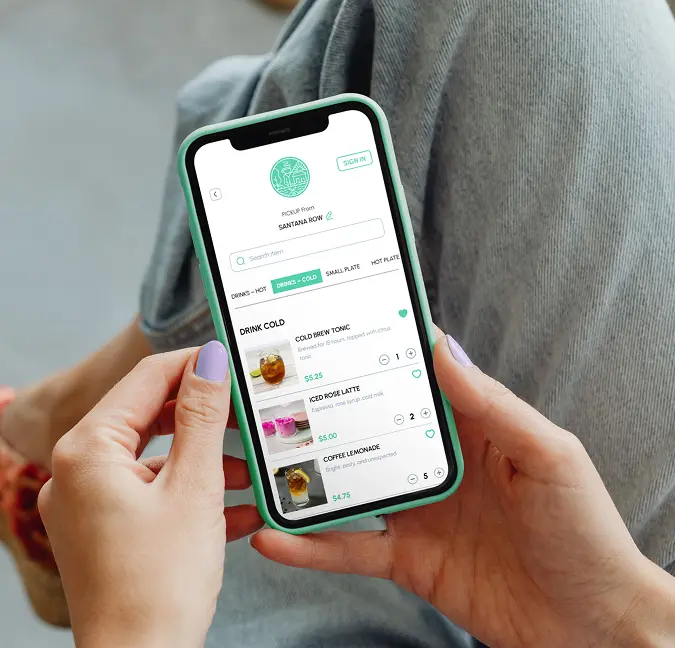
You can run ordering directly on your website or through a branded ordering page. Restolabs supports pickup, delivery, catering, and dine‑in QR ordering. Orders are captured directly by you rather than routed through a marketplace.
Payments are processed under your own merchant account, and customer data remains fully accessible within your system.
Manage menus, modifiers, pricing, and availability from one place
Any menu updates made in Toast POS, including item availability, pricing, modifiers, categories, and menu structure, automatically sync across all ordering touchpoints, including your website, branded ordering pages, and QR code menus.
The same configuration applies everywhere, eliminating the need to manually update multiple ordering systems.
Adjust delivery operations without changing the ordering flow
You can enable pickup, use in‑house drivers, or connect third‑party delivery services as needed. Controls such as order throttling, inventory limits, preparation times, advance orders, and catering orders are handled within the same system regardless of fulfillment method.
Pay a predictable monthly subscription
Restolabs pricing typically ranges from $69 to $99 per month and doesn’t increase based on order volume or online sales mix.
Online ordering, menu management, delivery workflows, and customer data access are included as part of the core platform rather than licensed as separate add-ons. This keeps costs predictable as digital ordering grows.
No proprietary hardware is required, and the platform runs on your existing tablets, phones, and desktop devices.
You can choose your preferred payment gateway, including Stripe, Square Payments, Clover Payments, Authorize.net, or FreedomPay, based on your current agreements or best rates.
Core capabilities such as online ordering, menu management, delivery workflows, and access to customer data are included within the subscription rather than split into separate paid modules.
Retain customer identity and order history
Every order placed through Restolabs is tied to a customer profile with names, contact details, and order history that you can access directly. All of that data remains yours and isn’t locked behind a third‑party marketplace.
Are you ready to discover how Restolabs helps restaurants own their online ordering with zero commission fees? Try it free for 30 days, then switch to subscription-based pricing so your costs stay flat even as orders increase.
Book a demo with Restolabs today.

Asavari drives content development at Restolabs. With over a decade of experience partnering with fast paced technology and marketing teams, she turns complex product and industry details into clear, meaningful communication for restaurant partners.
Frequently Asked Questions
Most Toast competitors are still POS-first systems that treat online ordering as a secondary feature. Their primary focus remains in-store operations such as terminals, payments, and hardware, with digital ordering added later as an extension. Online ordering platforms are built the other way around. They focus on how guests place orders, how menus are controlled across channels, and how pickup, delivery, and dine-in ordering are managed.
They can be, depending on where complexity starts to appear. With many POS-led platforms, multi-location functionality often comes with higher plans, additional hardware, or custom pricing. Menu updates, hours, and delivery rules become harder to manage as more locations are added. Online ordering platforms tend to prioritize centralized control with location-level flexibility. This allows restaurant groups to manage menus, branding, and ordering rules from a single place while accounting for differences between locations.
Start by identifying the source of friction. If the biggest challenges are happening in-store, such as staff workflows or floor operations, a POS change may be justified. If pressure comes from online ordering fees, delivery constraints, limited menu control, or restricted access to customer data, POS-independent platforms usually offer a clearer path forward.






.webp)

.svg)
.webp)