
Key Takeaways
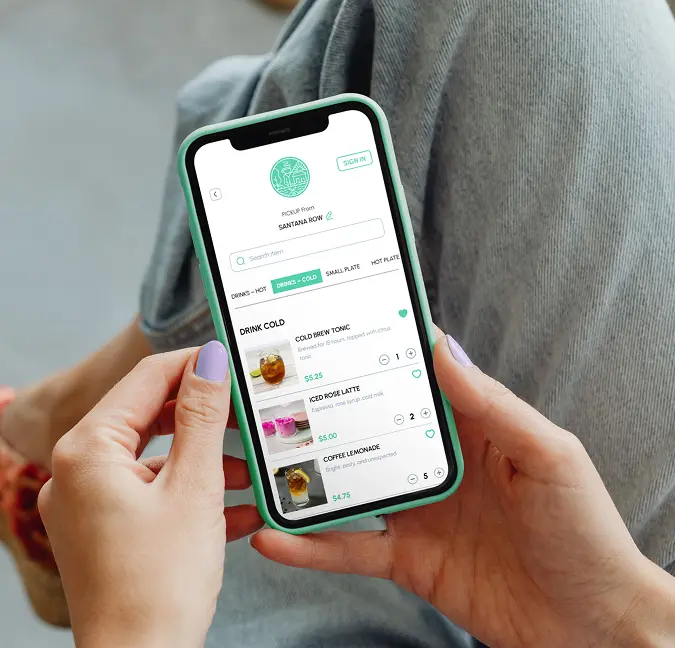
- Use direct digital ordering to protect repeat sales
Mobile ordering, loyalty programs, and email campaigns work best when customer relationships stay with the coffee shop—not a third-party marketplace. - Boost foot traffic with local SEO
Optimize your Google Business Profile, encourage customer reviews, and target local keywords like "coffee near me" to attract nearby coffee lovers actively searching for their next cup. - Turn your café into a community hub
Host coffee tastings, music nights, or workshops, and collaborate with local vendors to deepen community ties and make your shop a go-to neighborhood destination. - Engage customers where they scroll
Use Instagram, TikTok, and micro-influencers to showcase seasonal drinks, behind-the-scenes moments, and customer stories that build social proof and brand affinity.
Differentiate while keeping the customer relationship direct
Sustainability, seasonal drinks, and community events can bring customers in. Direct ordering and owned data help bring them back.
A coffee shop owner does not lose growth only because the latte down the street tastes better. Growth leaks out in smaller ways: missed pickup orders, long morning lines, third-party commissions, weak repeat-customer data, and promotions that never reach the right guests.
That is why coffee shop marketing in 2026 has to do more than create buzz. It needs to move customers from discovery to direct ordering, from one-time visits to repeat purchases, and from anonymous transactions to owned customer relationships. With the U.S. coffee industry projected to reach over $150 billion in the next decade and specialty coffee revenue climbing rapidly, operators face both immense opportunity and fierce competition.
Many of the ideas below work best when a coffee shop has the right ordering foundation. Restolabs helps restaurants accept direct online orders, manage customer data, connect ordering to digital marketing channels, and avoid the commission fees that can quietly drain profit from every sale.
Why Coffee Shop Marketing Needs an Operations Layer
Promotions can bring people in, but operations decide whether they come back. If a customer orders ahead and still waits ten minutes, the campaign did its job—but the system failed the experience.
For coffee shops, the best marketing tools are often operational tools in disguise: direct online ordering, automated loyalty, menu control, delivery integrations, and customer data that stays with the business.
This guide covers 17 top coffee shop marketing ideas organized by outcome—visibility, retention, revenue, and community. Each idea is paired with the operational context that makes it work, so you can move from concept to execution without guesswork. Whether you run a single neighborhood café or a growing multi-location brand, these strategies are built to scale with your business and connect marketing directly to online ordering results.
How to Build a Coffee Shop Marketing Plan Before Choosing Tactics
Jumping into tactics without a plan is how budgets disappear. Before choosing which of the 17 ideas below to pursue, spend thirty minutes answering four questions: Who is your target customer? What does your current foot traffic and order mix look like? Which channels do your best customers already use? And what outcome do you need most right now—new customers, repeat visits, or higher average order value?
From those answers, you can build a simple plan: define one primary goal, pick two or three tactics that directly support it, set a 30-day and 90-day milestone for each, and assign a budget range. The table below can help you map goals to the right tactics quickly.
Coffee Shop Marketing Goals: What Should You Optimize For?
Not every coffee shop has the same problem. A new café needs first-time visitors. An established neighborhood spot needs to turn regulars into loyalists. A commuter café needs to move faster during the morning rush. Matching your goal to your tactic is what separates effective marketing from activity that looks busy but changes nothing.
How Much Should a Coffee Shop Spend on Marketing?
Most independent coffee shops should allocate 3–6% of monthly revenue to marketing. The right split depends on business stage. A new café needs heavier upfront investment in visibility. A mature shop should shift spend toward retention and loyalty. A multi-location brand needs consistent spend across channels plus local adaptation per site.
Top Coffee Shop Marketing Ideas by Goal: Visibility, Retention, Revenue, and Community
The 17 coffee shop marketing ideas below fall into two categories. The first group covers digital and revenue-focused tactics—online ordering, loyalty, local SEO, automation, mobile order-ahead, delivery, reputation management, and data personalization. The second covers creative and community-focused ideas—events, local partnerships, social media, influencers, seasonal menus, sustainability, visual identity, charitable causes, and pop-ups.
This section explores each strategy with the context you need to act on it—not just the idea, but the operator scenario that makes it click.
- Digital and Revenue-Focused: Proven tactics that deliver measurable results and can grow with your business.
- Creative Local Coffee Shop Marketing Ideas That Build Community: Unique, community-focused approaches that set your coffee shop apart.
Digital and Revenue-Focused Coffee Shop Marketing Ideas
1. Offer Online Ordering and Pickup for Faster Coffee Sales
Every order that goes through a third-party app costs your café a commission. Over time, that quiet drain compounds into a significant margin loss—money that could fund a new espresso machine, a barista hire, or a seasonal marketing campaign. A commission-free direct ordering setup changes the math entirely.
With over half of Americans visiting coffee shops weekly and mobile pre-orders growing as a share of morning transactions, digital convenience is now table stakes, not a differentiator. The question is not whether to offer online ordering—it is whether the order comes through a channel you own or one that owns your customer data.
- A commission-free online ordering system gives coffee shops a direct path to orders without giving away margin on every transaction. Think customizable drink options, bakery add-ons, and pickup or curbside workflows built for the morning rush.
- Integrate your ordering page with your website and social media so customers can order from wherever they find you.
- Highlight online-exclusive offers—a free syrup upgrade with a pre-order, for example—to shift habitual in-person buyers toward digital channels you control.
Operator tip: Restolabs helps coffee shops launch commission-free online ordering in a single day—with customizable menus, add-on upsells, pickup and delivery workflows, and full customer data ownership baked in from the start.
2. Create a Coffee Shop Loyalty Program That Drives Repeat Visits
A customer who buys a cappuccino every weekday should not feel like a stranger every time they walk in. A digital loyalty program helps coffee shops recognize that habit, reward it, and bring the customer back before another café becomes part of their routine.
Programs like Starbucks Rewards contribute nearly half of domestic sales. Even small coffee shops can see a 25% increase in repeat visits by investing in a loyalty program designed to retain customers. The key is connecting that program to your ordering system so tracking and redemption happen automatically—not manually.
- Offer points for every order, whether customers buy in-store or online.
- Trigger personalized offers based on favorite drinks or visit frequency—a free oat milk upgrade for a regular, a birthday drink on the house.
- Connect loyalty rewards to your online ordering system so redemption feels effortless, not transactional.
3. Optimize Your Google Business Profile and Local SEO
When someone types "coffee near me" at 7:45 a.m. on their commute, the shops that appear first in the map pack win the morning. Showing up there is not about luck—it is about a complete, well-maintained Google Business Profile backed by consistent review velocity and location-specific keywords.
Backed by coffee shop market research, optimized local listings are proven to increase both foot traffic and online orders.
- Complete your Google Business Profile with high-quality photos, menu links, updated hours, and Q&A responses.
- Encourage satisfied customers to leave positive reviews, responding promptly to every piece of feedback—positive or negative.
- Use location-specific and drink-specific keywords (e.g., "organic cold brew in [city]" or "specialty espresso near [neighborhood]") to improve map-pack ranking.
- Keep your photos fresh—Google rewards profiles with recently added images. Aim for at least two new photos per month.
Stop paying commissions. Start owning every orders.


.svg)
4. Streamline Operations with AI and Automation
Major chains use AI tools to optimize operations and minimize waste. Mid-sized cafes that implement effective inventory management systems report up to a 15% reduction in spoilage and a 30% decrease in staff training time. For an independent café, those efficiencies can fund a marketing campaign or a menu refresh.
- Use predictive tools to forecast demand for popular or seasonal drinks—so you are never over-ordering perishable milk alternatives or under-stocked on a trending syrup.
- Automate order notifications, pickup alerts, and customer follow-ups through your management platform to reduce staff load at the counter.
- Implement AI-driven scheduling to ensure peak hours are always covered without overstaffing slow afternoons.
5. Capture Morning Rush with Mobile Order-Ahead
The morning coffee buyer is usually not browsing. They are trying to get caffeine before work without being late. If mobile order-ahead saves them five minutes once, it can become part of their daily routine—and every routine is recurring revenue.
Drive-thru chains capture a significant share of morning business because of speed, not superior coffee. Understanding how to run a coffee shop effectively includes eliminating friction at the pickup counter—and mobile order-ahead is the most direct way to do that.
- Promote "skip the line" perks for pre-orders on your website and social channels.
- Use digital signage in-store to remind guests about order-ahead options.
- Offer a standing incentive for mobile users—a discounted pastry, a loyalty double-point day—so the habit sticks.
Operator tip: Restolabs integrates mobile order-ahead directly with your pickup workflow, so orders land in your system in real time—no manual handoff, no missed orders during the morning rush.
6. Offer Delivery and Catering Services
Most cafés think of delivery as an afterthought. The shops that treat it as a dedicated revenue channel—with its own landing page, catering menu, and ordering workflow—consistently outperform those that bolt it onto a third-party app and hope for the best.
Office coffee catering and local delivery meet the needs of remote workers, businesses, and event organizers. Expanding into coffee delivery and catering is an increasingly important part of the coffee shop business model as hybrid work persists. The key is building a connected ordering workflow—not a patchwork of apps.
- Set up a dedicated online ordering page for catering packages and group orders, with clear pricing and lead times.
- Add office coffee subscription plans—weekly or monthly recurring drops—for businesses within your delivery radius.
- Partner with local businesses to provide regular coffee drops or meeting refreshments.
- Promote delivery via social media, email, and in-store signage.
Operator tip: Restolabs connects delivery and catering ordering with the same platform that handles in-store pickups—so payment, fulfillment, and customer data all flow through one system, not three.
7. Monitor and Respond to Customer Feedback
A five-star review can bring a new customer through the door. A thoughtful response to a bad review can keep one from leaving for good. Reputation management is not a passive activity—it is one of the most cost-effective marketing channels available to independent coffee shops.
Positive online reviews directly influence new customer acquisition, while promptly addressing concerns can turn a negative experience into a loyal patron. Consistent efforts to improve coffee quality compound over time in your review score.
- Set up alerts for new reviews on Google, Yelp, and Facebook so no feedback goes unnoticed for more than 24 hours.
- Thank customers for positive feedback publicly and address any issues with empathy—and a concrete solution, not a generic apology.
- Highlight glowing reviews in your marketing materials, on your website, and in your social media content.
8. Use Customer Data to Personalize Coffee Shop Offers
When a coffee shop relies only on third-party marketplaces, the order may come in—but the customer relationship often stays outside the business. Direct ordering changes that.
A coffee shop does not need more vague dashboards. It needs to know who orders cold brew every Monday, who adds a pastry at checkout, who has not returned in three weeks, and which offer brought them back last time. That insight turns marketing from guesswork into timely, relevant outreach.
- Build customer segments based on favorite drinks, order frequency, average spend, and last order date.
- Send win-back offers before regular guests disappear for good—a targeted SMS at the three-week lapse mark can recover a habitual customer.
- Use loyalty and direct ordering data together to personalize rewards—birthday drink on the house, double points on a slow Tuesday.
- Track which campaigns drive direct orders instead of relying on marketplace reports that obscure your customer relationships.
Operator tip: With Restolabs, customer data from direct orders belongs to the restaurant—not to a third-party platform. That means operators can segment, retarget, and retain guests using data they actually own.
Use Email and SMS Marketing to Bring Customers Back
Email and SMS are the two most direct lines between a coffee shop and its regulars—and the most underused. Most independent cafés collect emails at checkout and do nothing with them. A basic automated sequence can change that dynamic significantly without requiring a dedicated marketing team.
- Set up a welcome sequence for new loyalty signups: a thank-you message, a first-visit offer, and a follow-up at 14 days.
- Send a birthday reward 3 days before a customer's birthday—not on the day, so they have time to plan a visit.
- Use SMS for time-sensitive promotions: slow Tuesday afternoon, new seasonal drink launch, or last-day-of-a-promotion reminders.
- Segment lists by purchase behavior—dairy-free buyers get oat milk promotions, morning regulars get order-ahead reminders.
Run Daypart Promotions to Fill Slow Hours
Most coffee shops have two problems: a morning rush they can barely handle and an afternoon slump they cannot fill. Daypart promotions address both. They are targeted, time-specific offers that give customers a reason to visit outside their default window.
- 2 pm cold brew special: a discounted cold brew between 2 and 4 pm to pull in the post-lunch crowd.
- End-of-day bakery bundle: half-price day-old pastries after 4 pm, reducing waste and driving afternoon traffic.
- Weekday loyalty multiplier: double points on orders placed Tuesday through Thursday to smooth out the mid-week dip.
- Promote daypart offers via SMS, social stories, and digital in-store signage—channels that reach customers close to the decision moment.
Build a Coffee Shop Website That Converts Visitors Into Orders
A coffee shop website is not a digital brochure—it is a conversion asset. If someone lands on your site and cannot find the menu, the hours, or an order button within ten seconds, they are already opening a competitor's page. Every element of the site should reduce friction between curiosity and the first order.
- Place an "Order Now" button in the header, above the fold, and at the end of every menu section.
- Include high-quality photos of your top drinks—not stock images, but real photos from your actual counter.
- Add a catering page with clear pricing, lead times, and a dedicated order form for group orders.
- Include a loyalty signup form, an event calendar, and an email capture popup for first-time visitors.
- Ensure the site loads fast on mobile—most coffee shop searches happen on a phone, often while someone is already near your location.
Creative Local Coffee Shop Marketing Ideas That Build Community
9. Host Local Events and Workshops
Community-driven cafés thrive by offering more than just coffee—they become hubs for art, music, and education. An evening latte art class does not just generate ticket revenue. It creates a story a customer tells their coworkers the next morning. Smart decisions about how you design a coffee shop space can further amplify event potential and word-of-mouth buzz.
- Organize latte art classes, coffee tastings, or home brewing workshops—these are shareable experiences, not just visits.
- Partner with local artists for live music nights or rotating gallery displays to build a recurring audience.
- Use your digital channels to promote upcoming events and enable RSVPs via your website so you capture attendee contact data.
10. Collaborate with Local Businesses
Cross-promotions with bakeries, bookstores, or fitness studios create win-win scenarios—your customers discover their brand, theirs discover yours, and both shops gain visibility without paying for ads.
- Develop co-branded products (e.g., a "Book Lover's Latte" with a nearby bookstore).
- Bundle offerings for events, such as "coffee and pastry" mornings at local offices.
- Feature local products—like honey, chocolate, or granola—on your menu to showcase regional flair and support your supply chain story.
11. Use Social Media, UGC, and Contests to Grow Your Coffee Shop
Over half of American coffee shop customers are influenced by Instagram and TikTok. The cafés that win on social are not necessarily the ones with the biggest budgets—they are the ones that post consistently, respond to comments, and give their community something to engage with. Referencing top restaurant Instagram accounts can inspire seasonal drink posts or hashtag campaigns that drive thousands of engagements.
- Share behind-the-scenes videos of baristas crafting signature drinks—process content consistently outperforms polished ad-style posts for independent cafés.
- Run hashtag contests (e.g., #MyLocalCoffeeMoment) encouraging customers to share photos for a chance to win a free drink.
- Spotlight customer stories and user-generated content to build social proof—repost a tagged photo every week and acknowledge the customer by name.
- Use TikTok for drink launch videos and "how it's made" content. Use Instagram Stories for time-sensitive promotions and daily specials. Use Facebook for event announcements and community groups.
12. Use Influencers and Micro-Influencers
Authentic recommendations from trusted local voices can introduce your shop to new market segments—especially among younger coffee drinkers who treat their feed as a restaurant guide. A micro-influencer with 5,000 engaged local followers will often outperform a macro-influencer with 500,000 passive ones.
- Invite influencers to exclusive tasting events or menu launches—give them an experience worth posting about.
- Provide custom discount codes so their referrals are trackable and their followers have a tangible reason to visit.
- Start with product trades or comp visits before negotiating paid arrangements—many local food creators will post authentically in exchange for a great experience.
- Highlight influencer visits and reviews on your own social channels to extend the content's life beyond their original post.
13. Create Limited-Time and Seasonal Menu Items
Limited-time offers drive urgency in a way that a permanent menu item never can. A pumpkin spice latte in October or a lavender cold brew in June creates a visit reason that expires—and that scarcity nudges customers to come in now, not next week.
- Feature seasonal flavors and ingredients sourced from local farms to reinforce your community story.
- Announce new items via email, SMS, social media, and your digital menu simultaneously to maximize launch-day traffic.
- Build a teaser campaign: announce the name a week before launch, post an ingredient reveal three days out, then drop the full item with a photo on launch day.
- Encourage feedback and suggestions for future specials—it makes customers feel invested in your menu.
14. Emphasize Sustainability and Ethical Sourcing
Nearly half of coffee shop patrons prefer brands using sustainable packaging and fair-trade beans—a powerful marketing differentiator with parallels to the farm-to-table restaurant concept. For millennials and Gen Z in particular, this is not just a nice-to-have; it is a filter they apply before choosing where to spend money.
- Highlight your use of biodegradable cups, composting programs, or direct-trade partnerships on your website and in-store signage.
- Share stories about your farmers and supply chain partners on social media—origin stories outperform product shots on engagement.
- Offer discounts for customers who bring reusable cups, making sustainability a habit they associate with your brand.
15. Build a Strong Visual Identity
A cohesive visual identity—logo, packaging, signage, photography style—makes your shop instantly recognizable and ensures every piece of content looks like it belongs to the same brand. In a world where customers discover cafés through Instagram before they ever walk past the door, visual consistency is a conversion tool.
- Invest in branded merchandise: mugs, tote bags, or t-shirts that customers wear beyond the café.
- Use eye-catching chalkboard signs to showcase daily specials—hand-lettered, local, and impermanent, which makes them feel worth photographing.
- Ensure your coffee cups, sleeves, bags, and packaging reinforce your brand colors and message at every touchpoint.
- Develop a clear brand voice that carries across your menu descriptions, social captions, and email subject lines so your shop feels the same everywhere a customer encounters it.
16. Support Local Causes and Give Back
Customers are more likely to support businesses that champion causes they care about. A coffee shop that donates to a local food bank or sponsors a neighborhood youth program is not just doing good—it is building a brand story that travels through word-of-mouth faster than any paid campaign.
- Organize "coffee for a cause" days where a portion of proceeds supports local non-profits.
- Encourage customers to round up their orders for charity at checkout—digital or in-person.
- Publicize your initiatives through press releases, social posts, and in-shop displays to ensure the story reaches beyond your existing customer base.
17. Expand Your Reach with Pop-Ups and Mobile Carts
A pop-up at a farmers' market or a mobile cart at a local festival introduces your brand to audiences who would never have walked past your front door. It is low-commitment, high-visibility marketing—you pay for one day, and the impressions can last weeks through social sharing.
- Set up a mobile cart at local farmers' markets, festivals, or sporting events.
- Promote your pop-up schedule via your website and social media in advance so regulars can find you.
- Offer exclusive "mobile menu" specials—drinks only available at pop-ups—to create scarcity and encourage trial.
Measure Your Coffee Shop Marketing Results
Running a campaign without tracking it is like adding a new drink to the menu and never checking if anyone ordered it. Measurement does not need to be complex—but it does need to be consistent. Pick a handful of KPIs that map to your primary goal and review them monthly.
Coffee Shop Marketing Checklist for the Next 30 Days
- Audit your Google Business Profile—update photos, hours, and menu link.
- Set up or review your commission-free online ordering system.
- Launch or refresh your loyalty program and promote it at the counter and online.
- Write a 3-email welcome sequence for new loyalty members.
- Plan one daypart promotion for your slowest two-hour window.
- Post three pieces of behind-the-scenes content across Instagram and TikTok.
- Respond to every unanswered review on Google and Yelp.
- Identify one local business for a cross-promotion or co-branded product.
- Plan a seasonal or limited-time menu item for the next calendar quarter.
- Add an email signup form to your website homepage.
- Check that your website loads in under 3 seconds on mobile.
- Set up one SMS campaign promoting mobile order-ahead.
How to Put These Coffee Shop Marketing Ideas Into Action
The most effective coffee shop marketing strategies share one trait: they connect the customer experience to a system the café controls. Loyalty rewards that sync with online orders. SMS campaigns driven by real purchase data. Catering inquiries that flow into the same workflow as pickup orders.
Restolabs helps coffee shops accept direct online orders, launch loyalty programs, manage customer data, and connect ordering with the channels customers already use. With commission-free ordering and flexible plans, Restolabs gives operators a simpler way to grow without handing away margin on every order.
- Launch and manage loyalty programs that keep customers coming back
- Personalize marketing offers based on real-time customer data that belongs to the business—not a third-party platform
- Integrate online ordering with your website and social platforms for maximum convenience
- Track sales, customer feedback, and campaign performance from a single dashboard
Ready to turn these coffee shop marketing ideas into direct, measurable growth? Book a Demo.
Team Restolabs is a group of hospitality tech experts, strategists, and innovators dedicated to helping restaurants thrive in the digital age. With deep expertise in branding, growth, product development, and restaurant technology, we provide insights on scaling, streamlining operations, and enhancing customer experience.
Frequently Asked Questions
The best coffee shop marketing strategies include: (1) optimizing your Google Business Profile for local SEO, (2) launching a digital loyalty program, (3) offering commission-free online ordering, (4) running email and SMS campaigns to bring customers back, (5) using Instagram and TikTok for social proof, (6) hosting community events, (7) partnering with local businesses, (8) creating seasonal limited-time menu items, and (9) actively managing and responding to online reviews. The most effective approach combines digital tools with community presence and connects marketing to the ordering systems that generate measurable revenue.
Offering a seamless online ordering experience is crucial for meeting customer expectations for speed and convenience. It opens up new revenue channels like pickup, curbside, and delivery. A commission-free online ordering system tailored to coffee menus allows customizable drink options, easy upsells, and integration with your website and social media.
A digital loyalty program incentivizes frequent visits and boosts customer retention. Programs like Starbucks Rewards contribute nearly half of domestic sales. Even small coffee shops can see a 25% increase in repeat visits by offering points for purchases, personalized offers based on preferences, and frictionless reward redemption through the online ordering system.
Start by defining your primary goal—new customers, repeat visits, or higher average order value. Then identify your target audience and the channels they use (Google, Instagram, email, SMS). Select two to three tactics that map directly to your goal, assign a monthly budget, and set 30-day and 90-day milestones. Review your KPIs monthly and adjust tactics that are not performing. A simple, focused plan outperforms a broad, unfocused one every time.
Most independent coffee shops should allocate 3–6% of monthly revenue to marketing. A new café should spend $500–$1,500 per month on visibility: local SEO, photography, signage, and paid social. A growing café should invest $1,500–$3,500 per month on retention and loyalty: email/SMS tools, events, and influencer collaborations. Multi-location brands typically spend $3,500 or more monthly across analytics, brand campaigns, and catering promotion.
When people search for "coffee near me," you want your shop to appear as the top result. An optimized Google Business Profile with updated details, photos, and positive reviews is proven to increase both foot traffic and online orders from local customers searching nearby.
The fastest path to new customers combines Google Business Profile optimization, review generation, and a limited-time offer. Claim and complete your profile today, ask your last ten satisfied customers to leave a review this week, and post a new customer offer on Instagram and TikTok. For faster reach, run a geo-targeted social ad within a one-mile radius promoting a first-visit discount. These three steps together can generate new foot traffic within days, not months.




.webp)

.svg)
.webp)