
Key Takeaways
- Diwali is your biggest revenue window of the year. Start promoting three weeks out, not three days out.
- Friday is the highest-volume ordering day platform-wide in our 2026 dataset, followed by Thursday and Saturday. Plan your spend accordingly.
- Our dinner peak window of 5:30 PM to 8:30 PM local time drives the bulk of daily order volume across the platform. Send promos 30-60 minutes before it opens.
- Indian restaurants should treat festival timing as primary and weekday timing as secondary, never the other way around.
- Monday is consistently the lowest-volume ordering day in our data, making it ideal for win-back campaigns and loyalty incentives rather than acquisition pushes.
- The median reorder interval across the platform is 8.9 days, which sets the rhythm for repeat-purchase prompts between festivals.
Timing decides whether your promotion sells out or flops.
Picture this. You run a 20% off promo on a random Wednesday in February and barely move a few extra biryanis. You run the exact same offer the week before Holi and the kitchen is buried by 8 PM. Same creative. Same channel. Same discount. The variable was the timing window.
That's the problem most Indian restaurant operators are actually trying to solve when they search for the best time to promote Indian restaurant online. They don't need another listicle of marketing tactics. They need a calendar. According to the Restolabs 2026 Order Analytics Dataset, which covers more than 4 million orders processed across the Restolabs platform spanning 2,126 locations and 479 brands from March 2025 to March 2026, the operators who plan around timing windows consistently outperform those who chase channels. This guide is built directly from that data.
Why timing beats tactics for Indian restaurant promotions
Most operators over-invest in the what and under-invest in the when. New creative. New influencer. New 15% off. None of it matters if the demand isn't already in motion.
A mediocre offer launched into peak intent outperforms a brilliant offer dropped into a dead window. That's the whole game. The Indian cultural calendar bunches demand into predictable spikes, and the generic restaurant marketing advice you'll read elsewhere completely ignores that pattern.
India's restaurant sector is enormous and increasingly digital. USDA FAS pegged the broader Indian restaurant market at roughly $52 billion with 6 million direct jobs and 8 million indirect jobs as of 2017, and IBISWorld estimated U.S. Indian restaurants growing at a 2.1% CAGR from 2019 to 2024. That growth is real, but it isn't evenly distributed across the year. It clusters around festivals, weekends, and dinner hours.
In our 2026 dataset, where 97.4% of orders were timezone-matched for time-of-day analysis, the order curve for Indian restaurants follows a sharper festival-and-evening pattern than the platform average. If you ignore that shape, you're funding promotions that work against the wave instead of with it.
The Indian restaurant promotion calendar, festival by festival
This is the centerpiece of your year. Most operators treat all festivals as roughly equal. They aren't.
Diwali (October-November): the single biggest window
Diwali is your Super Bowl. The week leading up to it produces the highest concentration of catering inquiries, large-group orders, and mithai add-ons we see all year. If you have one promotion you absolutely must get right, it's this one.
Start promoting three weeks out. The first wave should target catering and corporate gifting. The second wave, around ten days out, hits family group orders. The final wave, 72 hours before, captures last-minute single-household orders.
Don't discount on Diwali itself. Bundle instead. Demand is already there, and operators who hold prices while offering thoughtful combos protect margin without losing volume.
Holi (March): the casual-gathering driver
Holi orders skew smaller in ticket size but higher in frequency. Lunch and afternoon snack windows spike noticeably. Think chaat platters, thandai, snack boxes for housing-society gatherings.
Start ten days out. Lean into Instagram and WhatsApp rather than catering email blasts. Holi customers decide late and impulsively.
Eid (date varies)
Eid drives high average order values and concentrated catering. The iftar window shifts your daypart focus toward the late evening for the weeks of Ramadan, then the post-Eid celebratory week brings family-style orders.
Plan a three-week ramp. Iftar combos and bulk family platters convert hardest in the final ten days.
Navratri (September-October): the dietary window
Navratri isn't a discount window. It's a menu-transparency window. Customers searching for vrat-friendly, no-onion-no-garlic, and sattvic-compliant options want to know exactly what they're ordering.
Update your menu listings before you spend a single dollar on ads. Operators who do this capture diners who would otherwise default to home cooking.
Karva Chauth: the post-sunset order spike
Karva Chauth is one of the most concentrated demand windows in the entire year for North Indian restaurants. Orders cluster sharply after moonrise. We see a narrow post-sunset window do most of the day's work for restaurants that promote it correctly.
Send your push notification 60 minutes before local moonrise. Couples-targeted offers, premium thali combos, and dessert add-ons all index high.
Raksha Bandhan, Ganesh Chaturthi, and regional celebrations
These are smaller windows, but conversion is sharp when your customer base matches the demographic. A Mumbai-leaning delivery zone needs Ganesh Chaturthi planning. A Punjabi-heavy zone needs Lohri and Baisakhi.
Match by the actual demographics of your delivery radius, not by national averages.
Independence Day and Republic Day
These produce strong social engagement and weaker direct order lift. Treat them as brand-building windows. Combo plates with tricolor presentation work well for content; don't expect catering-level revenue.
Pongal, Onam, and Baisakhi: regional powerhouses
For South Indian, Kerala, and Punjabi-specific restaurants, these matter more than Diwali. Onam sadya pre-orders open three weeks out. Pongal sweets cluster in the final five days. Baisakhi drives Punjabi catering for community functions.
This is also why cloud kitchens running Indian concepts often outperform multi-cuisine ghost kitchens on these windows. A focused regional concept owns its calendar instead of diluting across ten festivals.
Best days to promote your Indian restaurant online
Weekly timing matters almost as much as seasonal timing. The Restolabs 2026 Order Analytics Dataset shows Friday as the highest-volume ordering day platform-wide, followed by Thursday and Saturday. Monday is consistently the lowest-volume ordering day, making it ideal for win-back campaigns and loyalty incentives rather than acquisition spend.
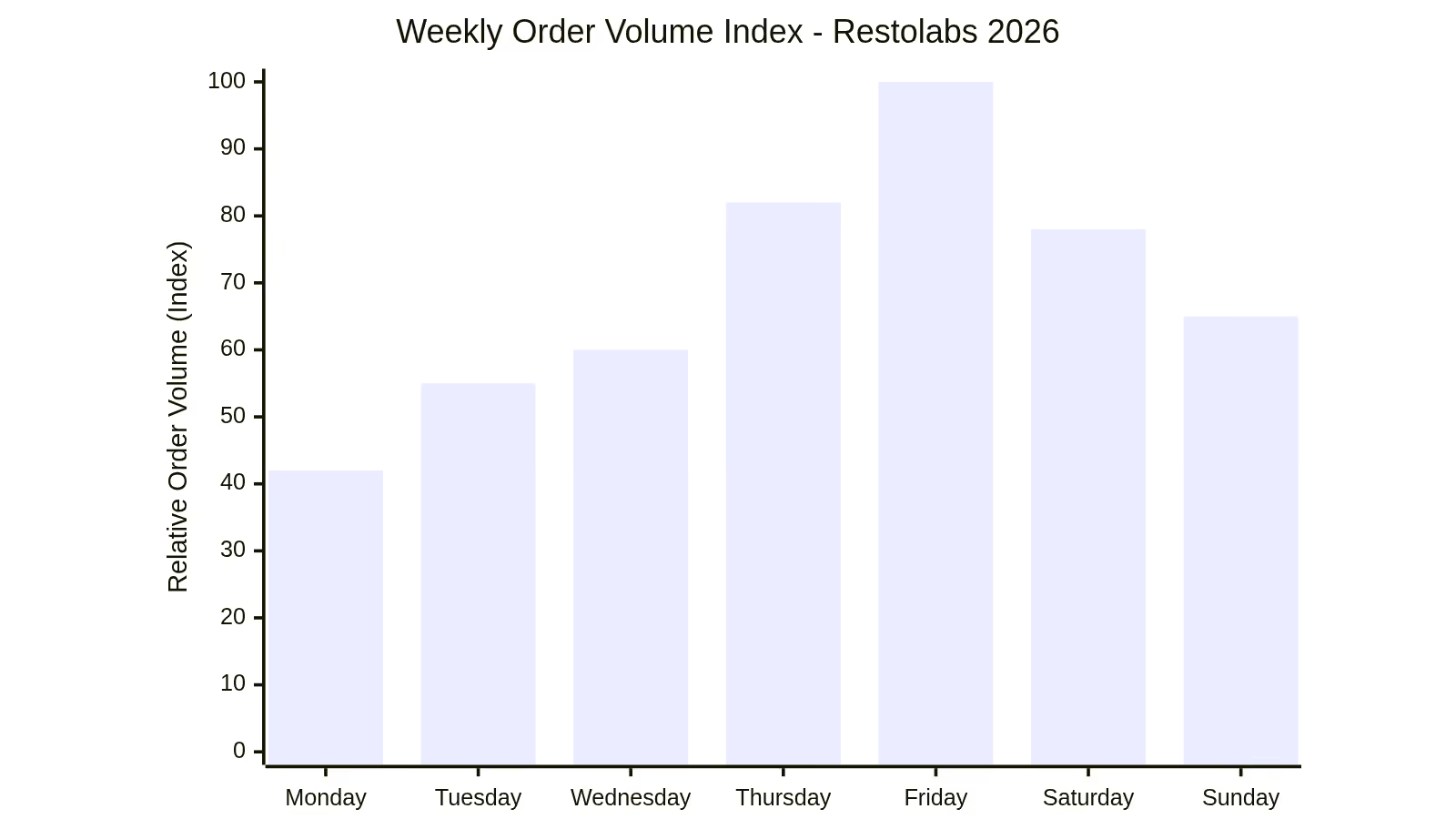
Practical takeaways. Push acquisition offers Thursday afternoon for Friday-night conversion. Save loyalty offers and lapsed-customer wins for Monday and Tuesday, when your most engaged diners are the only ones placing orders anyway. Saturday handles itself; don't waste promo budget propping up a day that's already strong.
Best times of day to run Indian restaurant promotions
Daypart timing is where most operators lose the easiest money. Our order analytics dataset shows the dinner peak window of 5:30 PM to 8:30 PM local time driving the bulk of daily order volume, with the lunch rush of 11 AM to 1 PM local time forming a clear secondary peak.
.avif)
The pre-lunch window from 10:30 to 11:30 AM is the right time to catch lunch decision-makers. The pre-dinner window between 4 and 5:30 PM owns dinner planning. The late-evening window between 9 and 10 PM works for next-day order setup and reservation prompts.
When not to send. Avoid the 2-4 PM dead zone. Avoid sending right at peak - by then customers have already decided, and your message gets buried under order confirmations.
Pre-festival lead times: how early to start promoting
Most operators promote too late. They wake up three days before Diwali, panic-launch a flat 20% off, and wonder why catering didn't materialize. Catering decisions happen weeks earlier.
Optimal lead times in our experience:
- Major festivals (Diwali, Eid): start three weeks out
- Mid-tier festivals (Holi, Navratri): ten to fourteen days
- Single-day events (Karva Chauth, Raksha Bandhan): five to seven days
The logic is straightforward. Catering and large-group orders are planned decisions made by households and offices well in advance. Single-household orders compress into the final 72 hours. If your promotion only runs in that final 72-hour window, you've already missed the entire catering revenue tier.
Channel timing: matching promotion type to window
The right channel depends on how far out you are from the demand peak.
SMS and WhatsApp
Best three to seven days before a festival. Highest open rate of any channel; lowest tolerance for over-use. One message per festival, not three. Save it for the moment you genuinely have something the customer needs to act on.
Two to three weeks before for catering offers. One week before for new menu launches and à la carte promotions. Email is your catering workhorse - long-form, image-rich, easy to forward to the person actually placing the office order.
Instagram and Facebook organic
Daily ramp-up in the ten days before a festival. Reels of preparation, plating, and packing outperform static menu posts during festival prep. Behind-the-scenes content converts because it signals you're actually ready to handle the volume.
Paid social and Google Ads
Geo-targeted, seven to fourteen days before the event. Pause spend during the festival day itself - CPMs spike, intent is already captured, and your dollars buy less. This is also where a behavioral marketing approach pays off, because you're matching message to intent stage rather than buying eyeballs at random.
Branded mobile app push notifications
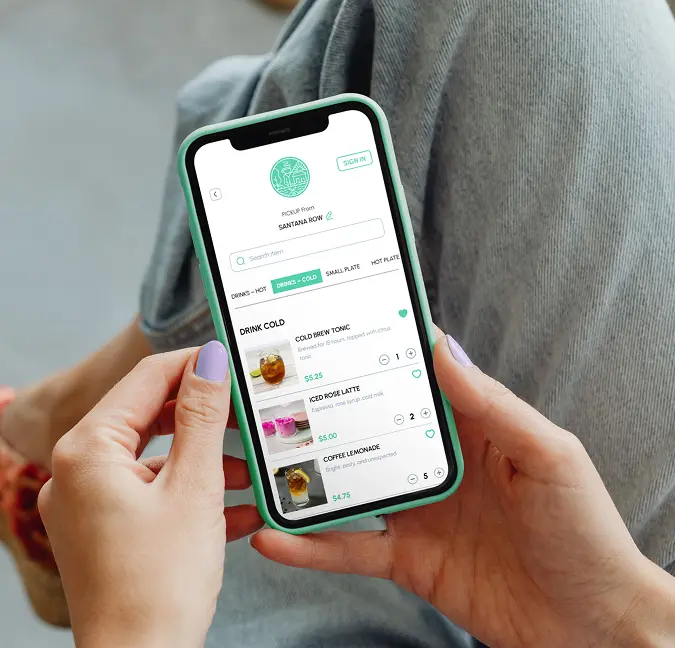
Same-day, daypart-aligned, sent 30 to 60 minutes before the peak ordering window. This is the highest immediate-conversion lever you own. Branded mobile app push notifications sit on the customer's home screen at zero marginal cost per send, which is why operators who invest in an owned app outperform those who depend entirely on SMS over time.
Non-festival promotion windows that still work
If you over-rely on festivals, your revenue line looks like a roller coaster. Smooth it out with these:
- Monsoon comfort-food window: July through September, Pakora and chai combos index high on rainy days
- Cricket season, especially IPL: match-evening windows behave like mini-festivals, particularly during weekend matches
- Wedding catering season: October through February drives the bulk of high-AOV catering inquiries for Indian restaurants serving the diaspora
- Diaspora-specific calendar moments: U.S. Memorial Day, U.K. bank holidays, UAE national holidays
These aren't as concentrated as Diwali, but they're predictable, defendable, and far less competitive on ad inventory.
How to build your own restaurant promotion calendar
The general calendar above is a starting point. Your actual calendar should be built from your own order data.
A practical five-step process:
- Pull your last twelve months of order data from your POS or ordering platform
- Map the peaks against the cultural and seasonal calendar
- Identify your top five personal windows - the ones that are demonstrably yours, not just industry averages
- Plan promotion start dates working backward from each peak using the lead times above
- Pre-build creative in batches so you're never scrambling 48 hours out
This is where restaurant order analytics earns its keep. You can't optimize timing if you can't see what your own order patterns actually look like by hour, by day, and by week.
Common timing mistakes Indian restaurants make
- Promoting on festival day itself instead of pre-festival. By festival day, customers have already ordered or made a plan.
- Treating all festivals as equal. Diwali, Eid, and a regional Sankashti Chaturthi are not the same promotion.
- Ignoring regional micro-festivals when the delivery zone demographics demand them.
- Sending promotional SMS at 2 PM, when the recipient won't act for another five hours.
- Discounting during peak demand instead of bundling. You're giving up margin you don't need to give up.
- No follow-up plan for the post-festival quiet week. Use a restaurant loyalty program to re-engage the festival diners as everyday regulars during the lull.
That last one is where the 8.9 days median reorder interval between repeat orders becomes useful. Our data identifies the day 7-10 post-purchase window as the optimal re-engagement timing, anchored on the 8.9-day median reorder interval. A festival customer who orders on Diwali day is statistically ready for their next order roughly nine days later. That's your trigger.
The right time isn't a date. It's a rhythm.
A year-round, data-informed cadence beats a handful of well-timed promo blasts every single time. The best Indian restaurant operators we work with treat their calendar as the product, with offers, channels, and creative serving the calendar - not the other way around. For more on the offers and creative side, the broader Indian restaurant marketing playbook pairs cleanly with the timing framework here. Book a Demo to see what your own order calendar looks like.

Sruthi Sekar specializes in brand strategy, growth, and user experience in the hospitality industry. As the driving force behind Restolabs, she helps restaurants harness technology to scale and thrive. With a background in design, branding, and entrepreneurship, she brings a sharp focus on crafting digital experiences that drive real business impact.
Frequently Asked Questions
Diwali week. Across our 2026 dataset, it consistently produces the heaviest concentration of catering and large-group orders of any window in the year. If you only run one major campaign, run it for Diwali - and start three weeks out, not three days out.
Three weeks for catering and corporate gifting, ten days for family group orders, and 72 hours for single-household last-minute orders. Catering decisions are planned weeks in advance, so a campaign that only runs in the final week misses the highest-AOV tier entirely.
Before. Festival-day customers have already decided where they're ordering from, so promoting on the day mostly wastes spend. Pre-festival promotion captures the decision while it's still being made.
Thursday for weekend dining decisions, since Friday is the highest-volume ordering day in our 2026 dataset followed by Thursday and Saturday. Monday is consistently the lowest-volume ordering day, which makes it the right slot for loyalty offers and win-back messages rather than acquisition spend.
30 to 60 minutes before the peak ordering window for the daypart you're targeting. For dinner, that means a send between 4:30 and 5:00 PM, since our dinner peak runs 5:30 PM to 8:30 PM. For lunch, send around 10:30 AM ahead of the 11 AM to 1 PM rush.
Hold prices and bundle instead. Demand is already high during festival weeks, so a flat discount erodes margin you don't need to give up. Bundles, family packs, and add-on mithai offers convert just as well without compressing your unit economics.
Yes. Monsoon comfort food, cricket season especially during IPL evening matches, wedding catering season from October through February, and diaspora-specific holidays all produce predictable lifts. They're not as concentrated as Diwali, but they're defendable and far less competitive on ad inventory.




.webp)

.svg)
.webp)