
.webp)
Key Takeaways
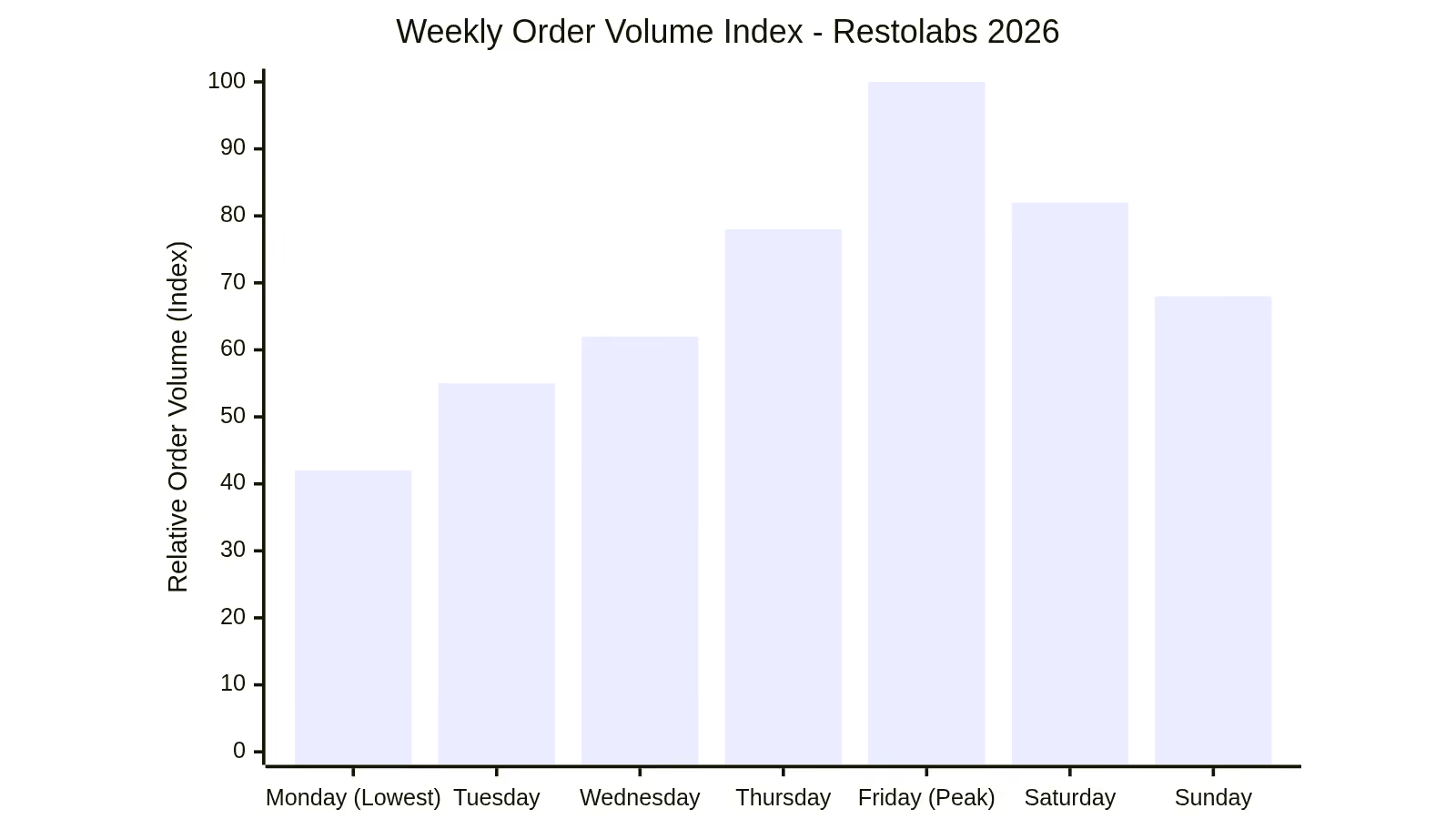
- Friday is the highest-volume ordering day platform-wide; Monday is consistently the lowest, which makes it the best day for win-back campaigns.
- The 7 AM to 10 AM weekend window is when coffee and bakery orders surge - a window most operators don't promote into.
- Cafe and coffee orders sit at approximately 14% of platform orders, with more than 75% landing as pickup and dine-in.
- The median reorder interval is 8.9 days between repeat orders, which sets the cadence for your follow-up promos.
- Average ticket for cafe and coffee runs $15-$20 per order, compensated by exceptionally strong repeat rates and order frequency - so the lever you want to pull is frequency, not discount depth.
Most coffee shops promote on instinct, not data.
You post when you remember. You discount when sales dip. You queue up a "Pumpkin Spice is back!" Instagram caption the morning of the launch, then wonder why engagement looks flat. According to the Restolabs 2026 Order Analytics Dataset, which covers more than 4 million orders processed across the Restolabs platform spanning 2,126 locations and 479 brands from March 2025 to March 2026, the highest-volume revenue windows for coffee shops sit in places most operators aren't promoting into strategically.
The good news: the timing is knowable. Order data tells you exactly when your customers are buying, which means it tells you exactly when a promotion has the best chance of landing. This guide maps the windows - by hour, by day, by season, by channel - so your calendar can stop being reactive.
Why timing beats tactics for coffee shop promotions
A mediocre promotion at the right time outperforms a great promotion at the wrong time. That's the thesis, and it's the one thing competitor articles on coffee shop marketing skip entirely.
Here's the contrast. Most shops we talk to plan promotions around what's happening - a new latte, a slow week, a holiday. The data says you should plan promotions around when your customers are already deciding. Those are two very different calendars.
Coffee is a habit purchase, not a destination purchase. Per Statista, almost 40% of Americans order from coffee and snack shops more than once a week, which means your promotion's job isn't to convince someone to try coffee - it's to insert your shop into a routine that's already running. Routines have time signatures. So should your marketing.
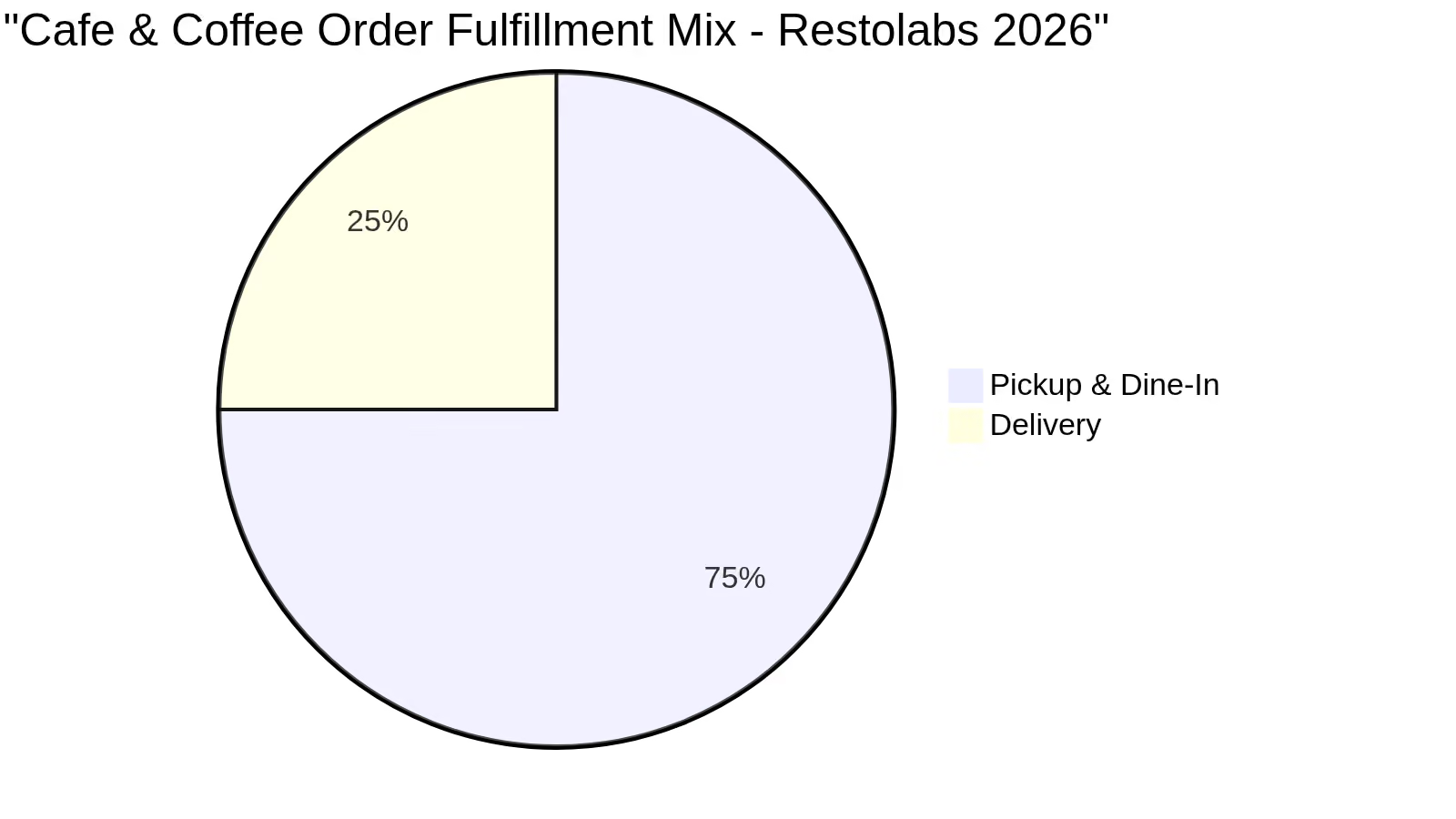
That pickup-heavy mix matters for timing. If three out of four orders are walking through your door, your promotion needs to land before the walk happens - not while the customer is debating delivery options from their couch.
The best times of day to promote your coffee shop online
Daypart wins. Most owners think "morning" is one block. The order curve says it's three.
The pre-commute window (5:30-7:00 AM)
By the time a typical owner opens their laptop to queue up a Tuesday post, the day's first revenue window is already half-gone. This is the window for push notifications and pre-scheduled emails - not for live posting. If you're using a branded mobile app for push notifications, a 6:15 AM nudge with the day's special outperforms a 9 AM social post almost every time.
The mid-morning lull (9:30-11:00 AM)
This is the remote-worker and late-starter window. The first rush is done. Your team is catching breath. It's the ideal time for a low-friction social post - a photo of the special, a quick reel, a Google Business Profile update.
The afternoon slump (2:00-4:00 PM)
The second peak. Energy is dropping across every office and dorm in your trade area. Loyalty points pushes, BOGO afternoon drinks, and SMS blasts all over-index here. If you're running a loyalty program software that supports point multipliers, this is the window to switch one on.
Evening pre-order windows for next-day pickup
Underused. From 7 PM onward, customers are planning tomorrow. A "schedule your morning order now" prompt - pushed via email or app - captures intent before competitors even wake up.
The best days of the week to promote (and why)
Day-of-week patterns are sharper than most owners realize. Our 2026 dataset shows Friday as the highest-volume ordering day platform-wide, followed by Thursday and Saturday. Monday is consistently the lowest-volume ordering day, making it ideal for win-back campaigns and loyalty incentives.
Monday morning reset promotions
Don't fight Monday - fund it. A small Monday-only incentive (double points, free pastry with drink) recovers traffic on the slowest day without cannibalizing weekend volume.
Mid-week loyalty pushes (Tuesday-Thursday)
Thursday is the runner-up peak. Tuesday and Wednesday are your "loyalty layer" days - when a regular is most receptive to a "you're 1 stamp away" nudge. Reorder timing matters here too. In our 2026 dataset, the median reorder interval is 8.9 days between repeat orders, so a Tuesday promo to last Sunday's customers lands right in the decision window.
Weekend experience promotions (Saturday/Sunday)
The 7 AM to 10 AM weekend window is when coffee and bakery orders surge. This is where experience promotions - new menu drops, brunch bundles, local artist features - outperform discount-led campaigns. Don't discount into your peak. Use it to launch.
Seasonal promotion windows that actually convert
Seasonality is real. But generic holiday lists miss the inflection points that matter for coffee.
Winter (November-February): comfort and gifting
Start your holiday push earlier than instinct says. Per Joe Coffee's 2025 data, roughly 70% of drink orders are hot beverages by November - the routine shift is already complete. By the time most shops launch a "holiday drinks are here!" campaign, customers have been ordering hot drinks for three weeks. Gift card promotions belong in early-to-mid November, not December 15.
Spring (March-May): routine rebuilding
Daylight saving, tax season, return-to-routine. This is the window for re-engaging customers who drifted off in February. Cafe and coffee orders represent approximately 14% of platform orders, with high repeat rates and loyalty-driven behavior - meaning your spring play is reactivation, not acquisition. The same logic that drives online ordering for cafés and bakeries applies here: lean on the loyal base before chasing the new.
Summer (June-August): cold brew and tourist capture
Per Joe Coffee, just 30% of drink orders are hot beverages by mid-July - meaning cold drinks dominate roughly 70% of summer demand. That inflection happens earlier than most operators launch their summer menu. If your iced LTO drops in late June, you're a month behind the demand curve.
Fall (September-November): back-to-routine and PSL economy
Back-to-school is the second-strongest reset window after January. Teacher and student promotions land hardest in the first two weeks of September. The PSL window opens earlier each year - late August now reads as "early fall" for a meaningful share of customers.
Channel-specific timing - when to promote where online
Different channels reward different timing. Don't blast the same content across all of them on the same schedule.
Email - send times that beat the 6 AM default
Most coffee shop email tools default to 6 AM. Everyone's inbox is full of competitor coffee shop emails at 6 AM. Try 5:45 AM (pre-commute) or 1:45 PM (pre-slump) instead.
Instagram and TikTok - when engagement peaks for food content
Mid-morning (9:30-11 AM) and early evening (6-8 PM) consistently outperform for food creative. Save the in-store action shots for the morning slot. Save the brand storytelling for evening.
Push notifications via branded app
Push is your sharpest time-of-day weapon. A 6:15 AM push, a 2:15 PM push, and a 7:30 PM "order ahead for tomorrow" push covers all three revenue windows without overwhelming the subscriber.
Google Business Profile posts and promotions
GBP rewards consistency more than timing. A weekly post - same day, same window - beats sporadic high-effort posts. Friday morning works well, since that's also our peak ordering day.
SMS - the underused lunch-hour lever
SMS open rates dwarf email. Use it sparingly and time-sensitively. A 1:45 PM "afternoon pick-me-up - next 90 minutes only" text is the cleanest off-peak revenue lever in the channel mix.
When NOT to promote your coffee shop online
The contrarian section every competitor article misses. Sometimes silence sells better than discounts.
Don't discount your peak hours. Cafe and coffee AOV runs $15-$20 per order, compensated by exceptionally strong repeat rates and order frequency. If your peak window is already full, a discount during peak doesn't add volume - it just trims the ticket. Promote to fill off-peak windows. Use peak windows to launch new items at full price.
Don't race to the bottom on holiday discounts. Every coffee shop in your trade area is doing 20% off on the same days. The customers who respond are price shoppers, not loyalty customers. The shops winning the holiday window in our data are the ones running gifting bundles and experience promotions, not percentage-off blasts.
Don't promote when your team can't deliver. If you're already understaffed on Saturday morning, the last thing you need is a successful Saturday morning promotion.
How to build your coffee shop promotion calendar (step-by-step)
A real calendar takes about an afternoon to build. Here's the order.
Step 1 - Pull your own order data first
Before you plan a single promotion, look at your last 90 days of orders by hour and by day. If your ordering platform doesn't make this easy, that's your first gap to close. Strong restaurant analytics should surface these patterns at a glance, not require a CSV export.
Step 2 - Identify your three peak windows
Most coffee shops have a morning peak, an afternoon micro-peak, and a weekend morning surge. Mark them on a weekly grid. These are the windows you protect - not the ones you promote into.
Step 3 - Map promotions to off-peak recovery windows
Monday all day, Tuesday and Wednesday afternoons, mid-morning weekdays. These are your promotional targets. Anything that grows volume here is pure margin.
Step 4 - Layer seasonal campaigns on top
Holiday gifting in early November. Cold drinks by early June. Back-to-school the last week of August. Lock these in before competitors get there.
Step 5 - Test, measure, repeat
One promotion at a time. Two-week test windows. Compare against the same daypart and day-of-week from your baseline. If you don't know which performance metrics matter, the broader frame on top restaurant performance numbers translates directly to coffee operations.
Tools that make promotion timing easier
You don't need a stack of fifteen tools. You need four things working together.
- An ordering platform that surfaces timing data - peak hours, day-of-week mix, repeat windows. Online ordering for coffee shops built around analytics, not just transactions, is the foundation.
- A loyalty layer that lets you target inactive customers and reward frequency on slow days.
- A push and SMS channel for time-sensitive nudges in the three daily revenue windows.
- A Google Business Profile schedule running consistent weekly posts at your strongest engagement window.
Coffee is a habit business. The platforms that win are the ones that make it easy to ride the habit, not interrupt it.
The operators winning at promotion timing aren't guessing. They're reading their own data and shipping promotions into the windows that already work. Book a demo to see how the Restolabs setup surfaces your peak hours, repeat windows, and off-peak opportunities side by side. Book a Demo.

Sruthi Sekar specializes in brand strategy, growth, and user experience in the hospitality industry. As the driving force behind Restolabs, she helps restaurants harness technology to scale and thrive. With a background in design, branding, and entrepreneurship, she brings a sharp focus on crafting digital experiences that drive real business impact.
Frequently Asked Questions
The two highest-leverage windows are the pre-commute slot (5:30-7:00 AM) for push notifications and scheduled emails, and the afternoon slump (2:00-4:00 PM) for loyalty pushes and SMS. Both windows convert because they sit just before customer demand peaks, not during peak.
In our 2026 dataset, Friday is the highest-volume ordering day platform-wide, but Monday is the best day to promote - it's consistently the lowest-volume day, which makes it the highest-ROI window for win-back and loyalty incentives. Save Friday for launches and full-price campaigns.
Early-to-mid November, not late November. Per Joe Coffee's 2025 data, hot beverages already represent around 70% of drink orders by November, meaning customers have completed their seasonal shift before most shops launch their holiday push.
Three to five posts per week with a consistent cadence beats sporadic high-volume bursts. With a median reorder interval of 8.9 days between repeat orders, a steady weekly rhythm keeps you in front of customers right at the moment they're deciding whether to come back.
Usually no. Cafe and coffee orders average $15-$20 per order, and your peak windows are already full at full price - discounting into them trims margin without adding volume. Promote to fill off-peak windows; use peak windows to launch new items.
Push notifications and email for repeat customers, Google Business Profile for local discovery, Instagram and TikTok for brand storytelling, and SMS for time-sensitive afternoon nudges. Match the channel to the window - push at 6:15 AM, SMS at 1:45 PM, Instagram mid-morning.
Earlier than most operators expect. By mid-July, only about 30% of drink orders are hot beverages per Joe Coffee's 2025 data, meaning the cold-drink shift is well underway by late spring. Plan iced LTO launches for late May rather than mid-June.




.webp)

.svg)
.webp)