
Key Takeaways
- Base pricing isn’t the full cost: Toast advertises a Starter Kit at $0/month and a Point of Sale plan at $69/month, but upfront costs, hardware costs, payment processing, additional devices, implementation, and add-on software can change the final monthly bill. Toast also notes that its published pricing applies to new customers and single locations.
- Hardware limits flexibility: Toast services can only be used on approved Toast hardware, so restaurants can’t simply use their own hardware for the POS. And while Toast supports products beyond the warranty period, older devices may eventually stop receiving new feature enhancements and automatic software upgrades, firmware, security, and bug-fix updates.
- Processing costs add up: Online orders are card-not-present transactions, which Toast says carry higher processing fees than card-present payments because of the higher fraud risk. Toast POS also requires Toast Payments, so restaurants can’t shop outside processors for a different rate.
- Menus require heavy upkeep: Modifier-heavy menus, location-specific configurations, and sync issues create ongoing operational overhead, especially for multi-store brands.
- Delivery gets expensive: Toast’s limited dispatch radius and per-order courier fees can quickly inflate costs, particularly for restaurants with high delivery volume.
- Restolabs brings control: With open hardware, processor choice, unified menu management, and flexible delivery workflows, Restolabs provides predictable pricing and cost efficiency without lock-ins.
If you’ve ever tried to figure out what Toast actually costs, you already know it’s not as simple as the pricing page makes it look.
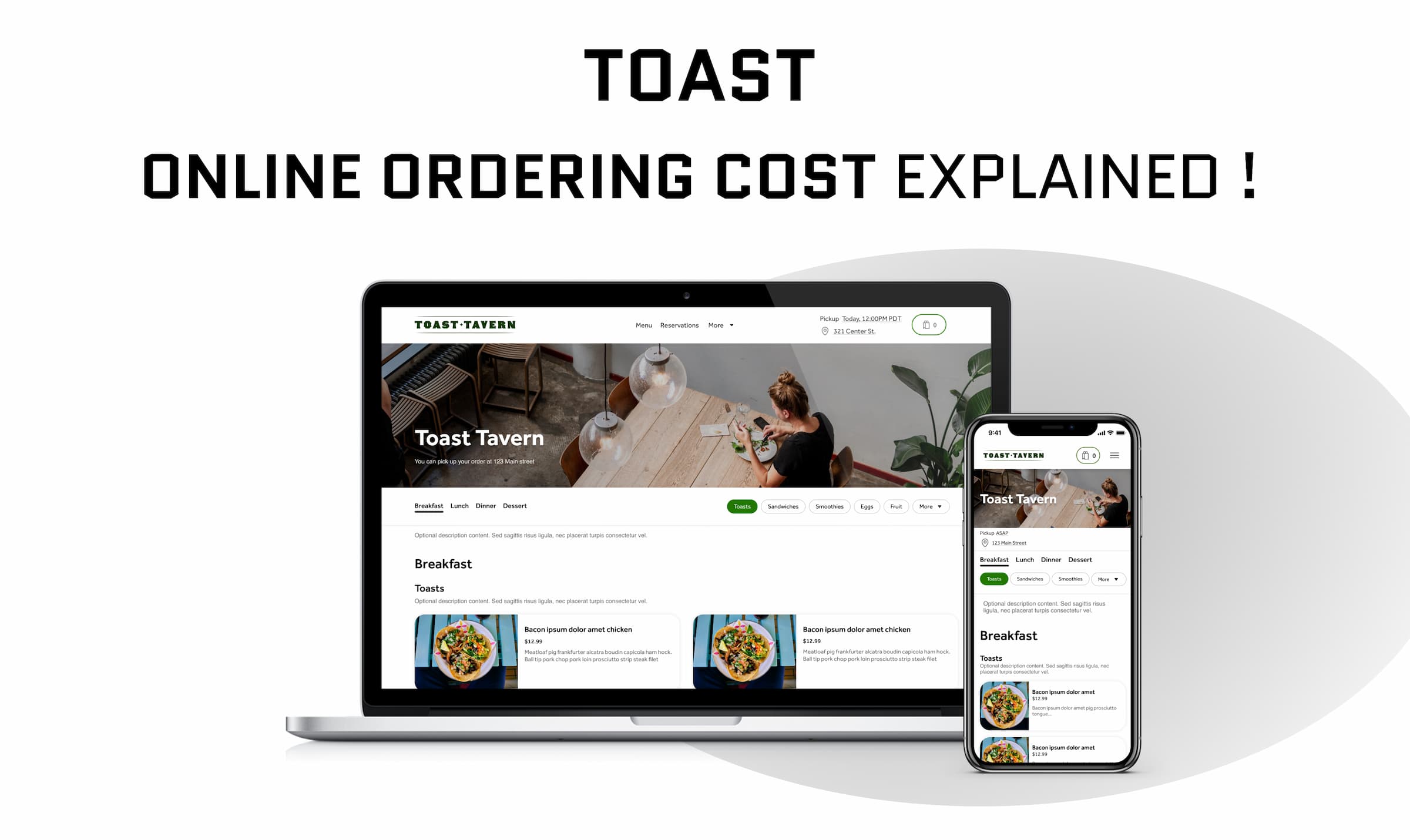
Yes, Toast advertises plans that “start at $0/ 0/month” or “from $69/month.” But the real number restaurant owners end up paying often looks very different once they factor in online ordering, payment processing, Toast-required hardware, add-ons, delivery fees, and per-location upgrades.
This doesn’t make Toast a bad system—far from it. It’s polished, powerful, and designed for restaurants that want an all-in-one POS ecosystem. The fact is calculating total online ordering cost on Toast requires more detail than what most owners expect.
That’s exactly what this blog post covers. We’ll walk you through the core Toast costs, the add-ons that quietly stack up, how the platform structures payment fees, and what restaurants typically overlook when trying to calculate their monthly or annual spend.
Why Does the Toast Online Ordering Cost Vary?
Before we discuss its pricing, let’s get a few questions out of the way.
What Is Toast?
It’s a restaurant-focused point-of-sale and management platform combining purpose-built hardware, cloud-based software, and integrated payments. Toast offers modules for online ordering, menu management, reporting, kitchen display systems, payroll, marketing, and loyalty.
Why Understanding Costs Truly Matters
The reasons are clear:
1. Hardware lock-in is real
Toast runs on proprietary hardware. If device requirements change, you might need to upgrade even if your existing hardware still works.
2. Toast’s platform is modular
The Toast platform spreads functionality across several product suites, including Digital Storefront, Marketing, Team Management, Payroll, Restaurant Management, and Supplier & Accounting.
Depending on your configuration, adding online ordering, loyalty programs, team management tools, inventory management, or food cost analytics can increase the total software cost beyond the base Toast POS plan.
3. Payment processing is mandatory
Toast is a payment facilitator rather than the underlying card processor, but restaurants using Toast POS are required to use Toast Payments. That creates an integrated, PCI-compliant payments experience, but it also means there’s no option to bring an outside processor and shop the broader market for rates.
4. True cost varies by restaurant model
A single-location coffee shop using a Starter Kit plan can have very different Toast POS costs from a busy full-service restaurant or a brand operating across multiple locations, especially as hardware, processing volume, and additional Toast features change.
What Does Toast Online Ordering Cost in 2027?
Below is a clean, realistic breakdown of what Toast online ordering typically costs a restaurant, including the operational factors that drive the total cost above expectations.
1. Software subscription
Toast has three main plan structures:
Toast currently lists Online Ordering within its Digital Storefront Suite. Its public pricing page doesn’t break out one universal standalone software fee for online ordering, so the exact package, monthly fee, and included features should be confirmed in the restaurant’s quote.
2. Toast-required hardware
Toast’s restaurant-grade hardware is available under different pricing structures, including traditional pricing where you pay for hardware upfront and pay a monthly software subscription, as well as Pay-as-You-Go options designed to reduce initial hardware setup costs. Current Toast Shop examples include:
- Toast Go 3 (Wi-Fi) → $599 + $50/month
- 14" Toast Flex with Counter Stand → $749 + $50/month
- 14" Toast Flex for Kitchen with Wall Mount → $749 + $35/month
- Toast Receipt Printer → $329
Your actual hardware costs depend on the devices, number of terminals, installation requirements, and pricing model you choose.
3. Digital storefront suite (Toast direct online ordering software)
Toast places Online Ordering within its Digital Storefront Suite, alongside products such as Websites, Branded Mobile App, Toast Delivery Services, third-party delivery integrations, and Toast Local.
Toast doesn’t currently publish one universal standalone online-ordering monthly fee on its main pricing page, so the exact cost depends on the package and quote.
Since Toast bundles this suite separately, restaurants that want direct online ordering will see this added on top of their base POS subscription.
4. Payment processing fees
Toast is a payment facilitator (PF), meaning it underwrites merchants and sets its own rates. But the underlying processor network, such as First Data or Fiserv, handles settlement. This matters because Toast applies different fees depending on how a payment is taken:
- Card-present (in-store) → Lower fee
- Card-not-present (CNP) → Higher fee
What’s more, restaurants using Toast POS are required to use Toast Payments, with no option to bring an outside processor.
Toast currently advertises 2.49% + $0.15 for eligible in-person transactions on its traditional Point of Sale pricing, but it does not publish one universal online-ordering processing rate. Card-Not-Present rates are higher than in-person card swipes.
5. Delivery
Toast supports two different delivery workflows. Toast Delivery Services can use Uber Direct to fulfill orders placed through a restaurant’s own Toast ordering channels for a flat per-order fee, with delivery available up to 10 miles.
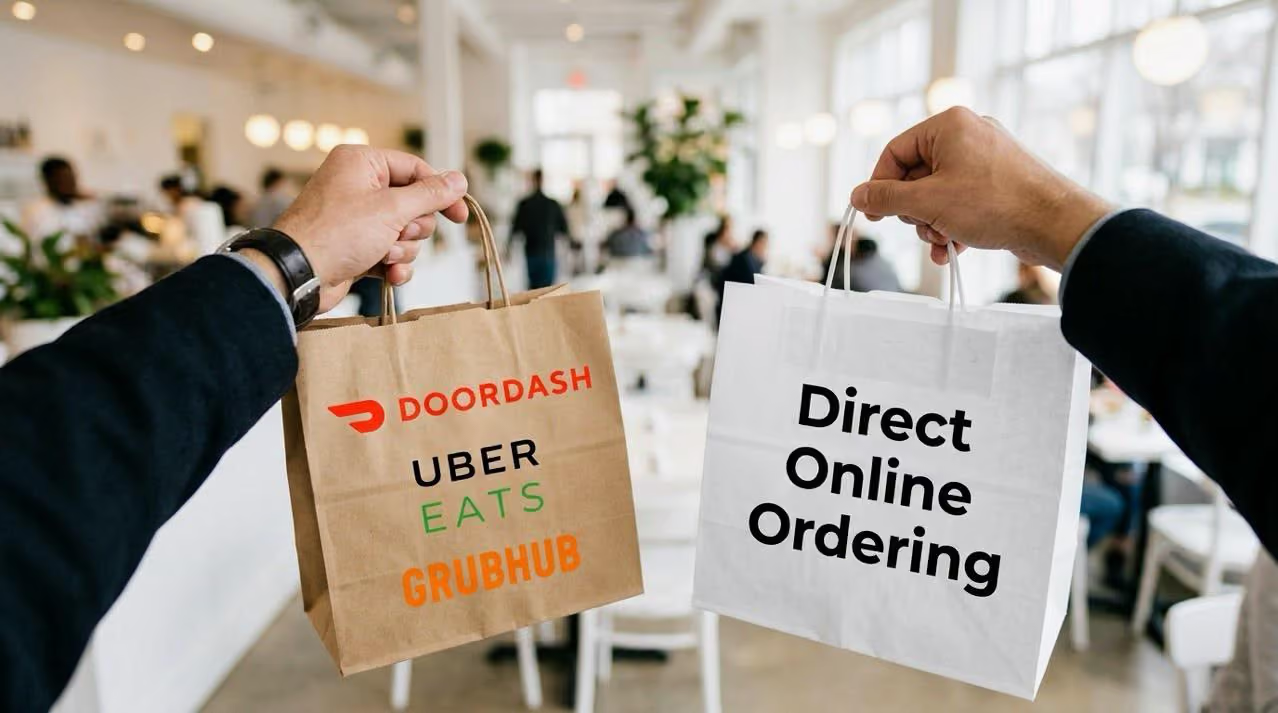
Separately, Toast integrates with third-party marketplaces such as DoorDash, Uber Eats, and Grubhub so marketplace orders can flow into the Toast POS and kitchen workflow.
6. Marketing suite
Marketing capabilities are spread across multiple add-ons, costing:
- Loyalty → ~$50/month
- Gift Cards → ~$50/month
- Email/SMS Marketing → ~$75/month
These features are essential for repeat ordering, but each is a separate subscription.
7. Payroll suite
Toast Payroll requires a custom quote, but the public bundles show: $69/month + $9 per employee/month for the payroll bundle. This is often one of Toast’s most expensive suites for multi-location or high-staff restaurants.
8. Management and analytics tools
Toast also offers multi-location management, benchmarking, inventory management, and xtraCHEF food cost analytics across its Restaurant Management and Supplier & Accounting suites.
How Does Toast Compare With Other Online Ordering Platforms?
How does Toast compare with other tools in the industry? Let’s find out.
Toast vs. Restolabs
Unlike Toast, which bundles online ordering into a hardware-dependent POS model, Restolabs gives restaurants a fully customizable, fully branded ordering system that:
- Runs on any device
- Works with the payment processor of your choice
- Supports both in-house and third-party delivery
- Offers flat, transparent pricing
Restolabs easily scales with multi-location brands and delivers advanced customization and menu control without forcing you to pay for expensive add-on features or custom quotes.
Toast vs Other Leading Platforms
Just for context, Toast doesn’t exist in a vacuum. Restaurants comparing online ordering systems almost always stack Toast against other well-known solutions like ChowNow, BentoBox, Square Online, and Owner.com.
And in nearly every case, the contrast comes down to the same three themes: pricing transparency, device flexibility, and delivery control. Let’s take a look:
Is the Toast Online Ordering Worth It?
Toast is one of the strongest restaurant-first POS platforms in the market, with tightly integrated hardware, payments, team management, and front-of-house tools consolidated into a single operating system. If what you want is a POS-led stack with one vendor responsible for terminals, tickets, and payments, Toast makes a lot of sense.
But Toast is still a POS-first product. Almost everything guests touch outside the four walls—online ordering, loyalty, marketing, gift cards, even payroll and team management—sits on top as paid software modules.
In practice, the headline Toast POS plan price is only one part of the cost. Toast currently advertises a $69/month Point of Sale plan.
However, the final monthly bill can also include hardware subscriptions or upfront hardware, online ordering, marketing, payroll, team management tools, inventory and cost-management products, additional terminals, and payment processing.
That makes it difficult to assign one universal software total to a busy full-service restaurant.
A restaurant using only core POS will have a very different Toast online ordering cost structure across online ordering, loyalty, payroll, inventory, marketing, and multiple locations.
This is where Restolabs pairs neatly with Toast POS instead of replacing it. You can continue using Toast as the in-store operating system for tables, checks, and staff while using Restolabs for the direct online layer.
Restolabs Basic starts at $69/month for online ordering with pickup and in-house delivery, Growth starts at $99/month with additional delivery integrations, and Pro starts at $199/month with a broader branded digital package.
Restaurants can therefore choose the online-ordering setup that fits their channels rather than assuming every guest-facing capability is included in a $69 plan.
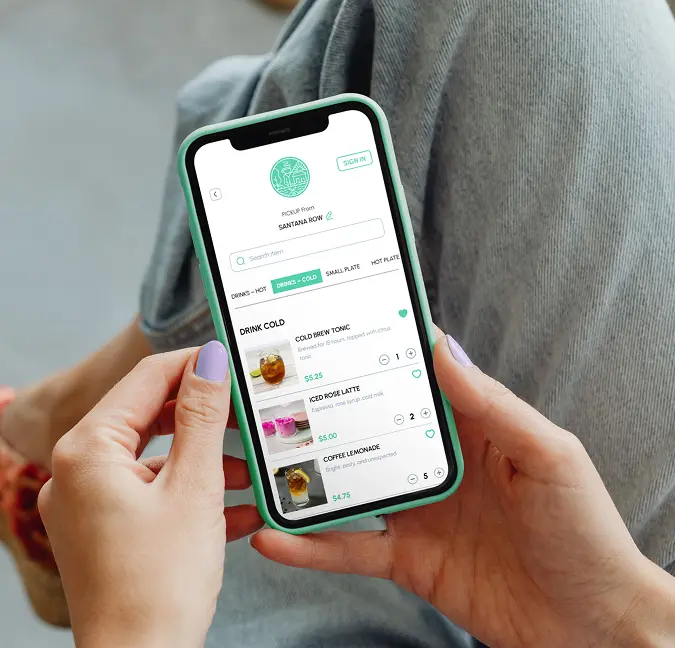
Restolabs is a commission-free, device-agnostic online ordering platform with a direct Toast POS integration. Menus and orders can sync between the online ordering layer and Toast, so online orders flow into the existing POS workflow without requiring manual re-entry.
For Tinku Saini of Tarka Indian Kitchen, a multi-location restaurant, price and flexibility were important factors: “There were other options, but I opted for Restolabs given its price point and that it came recommended to me. The branding and ease of integration were also key factors.”
Talk to the Restolabs team today!

Asavari drives content development at Restolabs. With over a decade of experience partnering with fast paced technology and marketing teams, she turns complex product and industry details into clear, meaningful communication for restaurant partners.
Frequently Asked Questions
Toast advertises a Starter Kit at $0/month and a Point of Sale plan at $69/month, while Online Ordering is offered within its Digital Storefront Suite. The public pricing page does not list one universal standalone online-ordering fee, and the total can also include hardware costs, implementation, additional devices, and payment processing. Standalone online ordering platforms may use a simpler flat monthly fee structure because the online ordering product is not tied to a complete POS and hardware ecosystem.
Yes. You can optimize your online ordering costs by shifting repeat customers from delivery to pickup, using throttling to eliminate kitchen bottlenecks, consolidating your menu to reduce operational waste, and auditing your Toast workflow quarterly to eliminate redundant processes. These optimizations reduce labor inefficiencies and refund-triggering errors.
Toast’s Merchant Agreement includes early termination fees in certain situations. If a merchant terminates before the end of the current term, Toast states that the fee may equal the remaining software subscription fees; for Pay-as-You-Go subscriptions, the agreement specifies $150 multiplied by the number of months remaining in the term. Other contract conditions and exceptions can apply, so restaurants should review these potential cancellation fees before signing. Contract terms are an important part of evaluating potential hidden costs, not just the headline monthly price.
Yes. Restolabs can work for food trucks that want direct online ordering without investing in another proprietary ordering terminal. It integrates with existing restaurant technology and supports multiple payment gateways, which can be useful for mobile businesses that want a lighter setup and flexible payment options.
It can be. A coffee shop or other small-format restaurant can use Restolabs for pickup, in-house delivery, online payments, loyalty, analytics, and order management. That can make it suitable for single location restaurants that want direct ordering without building their online channel around a larger POS package. Restolabs is designed specifically around restaurant ordering, however, so a general retail store with primarily non-food retail workflows should evaluate a retail-focused commerce platform separately.
Yes. Restolabs supports more than 50 payment integrations, giving restaurants flexible payment options across supported gateways, cards, digital wallets, and other payment methods. This differs from Toast’s payment processing model, where Toast Payments is tied to the Toast POS ecosystem. Restaurants should still compare each provider’s transaction rate or order processing fee, because using Restolabs does not eliminate normal payment-processing charges.
Restolabs provides a centralized dashboard for multi location restaurant brands, allowing teams to monitor orders and manage menus and operations across stores from one backend.
Restaurants can also configure location-specific pricing, delivery zones, taxes, and operating hours rather than maintaining a completely separate own plan and workflow for every outlet.
For restaurants comparing order management digital menus and centralized online-ordering controls, this can reduce the amount of manual work required across locations.
No. Restolabs is primarily an online ordering, delivery, loyalty, payments, and restaurant-management platform; it is not positioned as a replacement for Toast payroll or broader team management products.
A restaurant can keep those Toast tools while using Restolabs for the customer-facing ordering layer. That separation can also give the restaurant direct access to customer data, order history, and buying behavior generated through its direct ordering channels.








.webp)

.svg)
.webp)