

Key Takeaways
- Table-side POS systems can save up to 5 minutes per customer, dramatically improving table turnover
- Bill-splitting features increase guest satisfaction for group dining experiences
- Cashless payments reduce checkout lines and boost transaction security
- Real-time feedback collection helps improve service quality and guest retention
- Streamlined checkout processes directly impact customer loyalty and repeat business
A restaurant guest check is the itemized bill that details what customers ordered, including food items, beverages, taxes, and any additional charges. Unlike a simple receipt, guest checks serve as both an ordering tool and payment document, helping staff track orders from kitchen to table while providing customers with a clear breakdown of their dining experience.
Guest checks play a crucial role in restaurant operations by ensuring order accuracy, facilitating payment processing, and providing an audit trail for both front-of-house and back-of-house operations. For independent restaurant owners, efficient guest check management directly impacts table turnover rates and overall profitability.
How Guest Checkout Works in Restaurants
The guest checkout process typically follows these key steps:
- Order Completion: Staff confirm all items have been served and the dining experience is complete
- Check Presentation: The itemized guest check is presented to customers for review
- Payment Processing: Customers choose their preferred payment method (cash, card, mobile, etc.)
- Transaction Completion: Payment is processed and receipt/confirmation is provided
- Table Turnover: Table is cleared and prepared for the next guests
Modern technology has streamlined this process significantly, with POS systems, mobile payments, and digital ordering platforms reducing wait times and improving accuracy at each step.
For independent restaurant owners, every minute saved at checkout means happier guests and more table turns. Here are actionable strategies tailored to help small and midsize operators speed up the checkout process:
1. Using POS Technology to Simplify Guest Checkout
Renowned food chains have already gotten along using the PoS terminals on the tables to enable customers to place orders and make payments. The advantages of this are twofold – it speeds up the ordering process as well as the payment process. Statistics estimate that PoS systems can save up to five minutes per customer on every table. For the customer, they need not compromise on the safety of using their credit card as they will be the ones using it. No more need to stand in long queues to pay the bills!
If you feel setting up table PoS devices can be costly, handheld PoS devices come to you at cheaper costs. Having just one or two handheld PoS devices again would mean clogging during peak hours. You can possibly hand over a couple of them to your waiters and leave a couple on the front desk so that the guest checkout process is quicker and smoother.
Restolabs' platform integrates seamlessly with leading POS systems, enabling instant order processing and payment collection. Unlike generic solutions, our commission-free model ensures you keep 100% of your profits while providing guests with lightning-fast checkout experiences.
2. Easy bill splitting options
There may be diverse groups of people visiting your restaurant – families to young kids coming over to celebrate a party or a group of colleagues joining in for dinner, and so on. In these cases, people may prefer to pay their check by splitting it among themselves. Ensure that your PoS system (handheld or table mounted) has the bill splitting option so that waiters can split the checks on different cards as per the customer's request.
Restolabs makes bill splitting effortless with built-in features for groups. Our platform automatically calculates individual portions and processes multiple payment methods simultaneously, eliminating the back-and-forth that slows down table turnover.
3. Modern Payment Options and Cashless Solutions
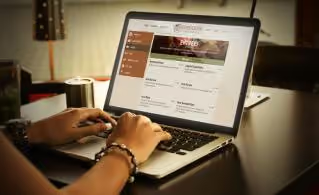
As the world moves towards digitalization, the need for cash is not the same as it used to be a few years ago. Mobile wallets and Unified Payment Interfaces (UPI) are now changing the way how people make payments. With the number of mobile phone users in the world is expected to pass the five billion mark by 2019, customers are making the move towards using their smartphones to make payments. This eliminates the need to carry a physical credit card at all times and getting worried about compromising the security.
Payment Method Comparison
When it comes to cashless payments, the major players include Apple Pay, Google Wallet, Android Pay, and contactless card payments. However, in the last few years, there have been lots of cashless payment apps that have come into the market. For instance, in the Indian market, apps such as PayTM, Google Pay, Phone Pe, etc are cashless payment apps or mobile wallets that have earned more prominence. Most retail outlets have started to accept payments from these mobile wallets in an effort to move to a digital future.
This is a huge opportunity for restaurants—and Restolabs' platform lets your guests pay with any major cashless app, right at the table or counter. Unlike generic POS systems, Restolabs offers direct integration with leading payment providers for a frictionless experience. Also, with irresistible offers from these cashless payment app providers such as cashbacks, 50% off on the first five payments, etc., means more customers are tempted to use this facility. Overall, it's a win-win situation for both the restaurant as well as the customer.
4. Customer Feedback Collection and Utilization
Most restaurant businesses fail to listen to their customer feedback. Moreover, few restaurants never take the step to get feedback from their customers. Feedback helps to emotionally connect with the customer – both in case of a positive or a negative experience. Customer feedback makes guests feel that you care for them. You can either incorporate a feedback app within your PoS system that shows up once your customer pays the bill. Otherwise, never mind! Go the traditional paper way! It's better doing it rather than not. Ask your customers about their experience, and leave out any comments. Feedback helps you in finding out the star performers in your team and earn them an appreciation or even a pay rise.
Best Practices for Checkout Feedback Collection
- Digital Integration: Use POS-integrated feedback forms that appear automatically after payment
- Quick Surveys: Keep feedback forms to 2-3 questions maximum to avoid checkout delays
- Incentivized Responses: Offer small discounts or loyalty points for completed feedback
- Real-time Alerts: Set up notifications for negative feedback to address issues immediately
- Staff Recognition: Use positive feedback to recognize and reward exceptional service
How Streamlined Checkout Drives Repeat Business
Ideally, everyone who walks out of your restaurant should have had the most satisfying experience. Serving delicious meals in a timely fashion and keeping the FOH moving swiftly are musts for a restaurant's success. Following the tips provided above will ensure that you take the right steps towards generating as much positive word of mouth about your restaurant as possible.
Benefits of Streamlined Guest Checkout
Optimizing your guest checkout process delivers measurable benefits that directly impact your bottom line:
- Increased Table Turnover: Faster checkout means more guests served per shift
- Enhanced Guest Satisfaction: Reduced wait times improve overall dining experience
- Improved Order Accuracy: Digital systems reduce human error in billing
- Better Cash Flow: Faster payments improve daily revenue collection
- Staff Efficiency: Automated processes free up staff for guest service
- Data Insights: Digital checkout provides valuable analytics on guest behavior
Common Tools and Supplies for Guest Checkout
Modern restaurants rely on a combination of traditional and digital tools to streamline the checkout process:
Essential Checkout Tools
- Guest Check Pads: Traditional paper checks for order tracking and billing
- Check Presenters: Professional folders for presenting bills to guests
- POS Terminals: Digital systems for order management and payment processing
- Handheld POS Devices: Mobile payment solutions for tableside service
- Card Readers: Contactless and chip-enabled payment processors
- Receipt Printers: For customer receipts and kitchen tickets
- QR Code Displays: For mobile payment and digital menu access
Next Steps
Ready to modernize your checkout process and boost table turnover? Here's how to get started:
- Audit your current checkout process to identify bottlenecks
- Research POS systems that integrate with your existing operations
- Train your staff on new payment technologies and procedures
- Implement feedback collection systems to monitor improvements
- Start with a Book a Free Demo to see how Restolabs can streamline your entire operation

Bharti Batra has extensive experience in restaurant technology and business operations. She writes about digital transformation in the hospitality industry, helping restaurants streamline processes and enhance efficiency. With a deep understanding of scaling and optimizing restaurant tech, she shares insights to help businesses grow.
Frequently Asked Questions
Check out as guest' typically refers to the process where customers pay for their meal without creating an account or providing extensive personal information. This streamlined approach speeds up the payment process, especially for first-time visitors or customers who prefer not to share personal details.
Guest checks serve as both order tracking tools and billing documents. Staff use them to record customer orders, track items served, calculate totals including taxes and tips, and present the final bill. Modern digital systems have largely replaced paper checks, offering real-time updates and integrated payment processing.
Typically, servers or front-of-house staff manage guest checkout, though the specific roles vary by restaurant type. In casual dining, servers handle the entire process, while quick-service restaurants may have dedicated cashiers. Some establishments use self-service kiosks or mobile apps to let guests manage their own checkout.
Digital checkout systems offer faster processing times, improved order accuracy, integrated payment options, automatic receipt generation, and valuable data analytics. They also reduce staff workload and can integrate with loyalty programs and customer feedback systems.
Restaurants can reduce wait times by implementing tableside payment devices, offering multiple payment options including contactless methods, training staff on efficient checkout procedures, using digital ordering systems, and ensuring adequate staffing during peak hours.





.webp)

.svg)
.webp)